How do we bring topics of sustainable urbanism to classrooms, extracurricular spaces and alive in discussions and activities with youth of different ages?
This is one of a few questions at the heart of the Pedestrian Space ‘Sustainable Urbanism & Planetary Health’ curriculum that I began developing earlier this year.
I am in the final year of my PhD program, and earlier this year I was also working intensively at a Polish bilingual school as a Native English teacher. My plate was extremely full, but there was a method to the apparent schedule madness that had to do with concentrating on further weaving my different roles together.
As I approached the end of my PhD program, also reflecting on how much I enjoy working with youth, it seemed clear that rather than seeing my different roles as ‘different hats’, the challenge and opportunity can be to embody the experience of the diverse roles in a broader project, role, and life path.
As an academic often approaching themes of sustainable urbanism with a lot of disciplinary jargon that, frankly, may only engage other academics and some municipal employees inclined to that language and as someone who appreciates public outreach and multigenerational engagement, it seemed obvious to me what I needed to do.
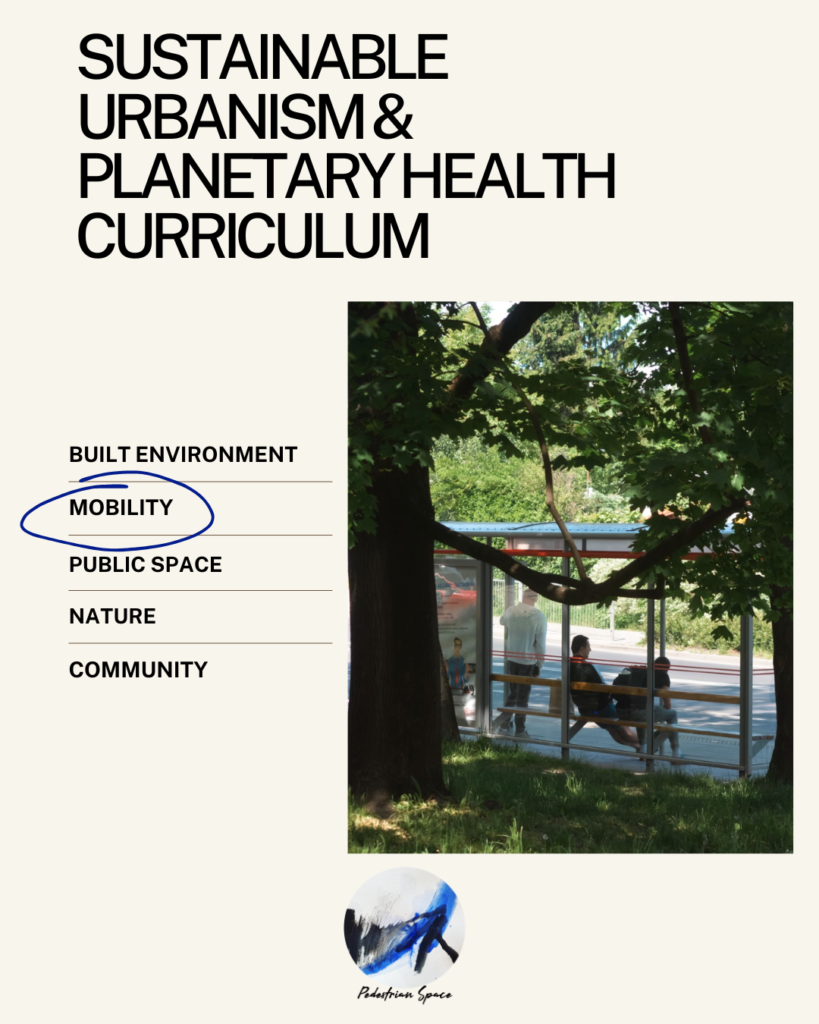
Earlier this year, I began shaping the Pedestrian Space ‘Sustainable Urbanism & Planetary Health’ curriculum. It is designed around 5 thematic modules, one of which I have been piloting activities for in our new city of residence deep in northwestern Poland.
Last month I visited 4 different classes, engaging kids from age 6-10 in topics of urban and sustainable mobility. The photos below are from some of the workshops I had with the students for piloting activities for the ‘Mobility’ module. The pilot has served as a way for me to ease myself in and pilot different activities with youth, which has already been extremely valuable in highlighting potential challenges as well as opportunities with the curriculum.
One of the most exciting and interesting opportunities that became clear over time was that not only is the curriculum a way to engage different generations in topics of urbanism, community, environment, and quality of life, it is also a path for English language acquisition, albeit in a creative, organic and immersive way.
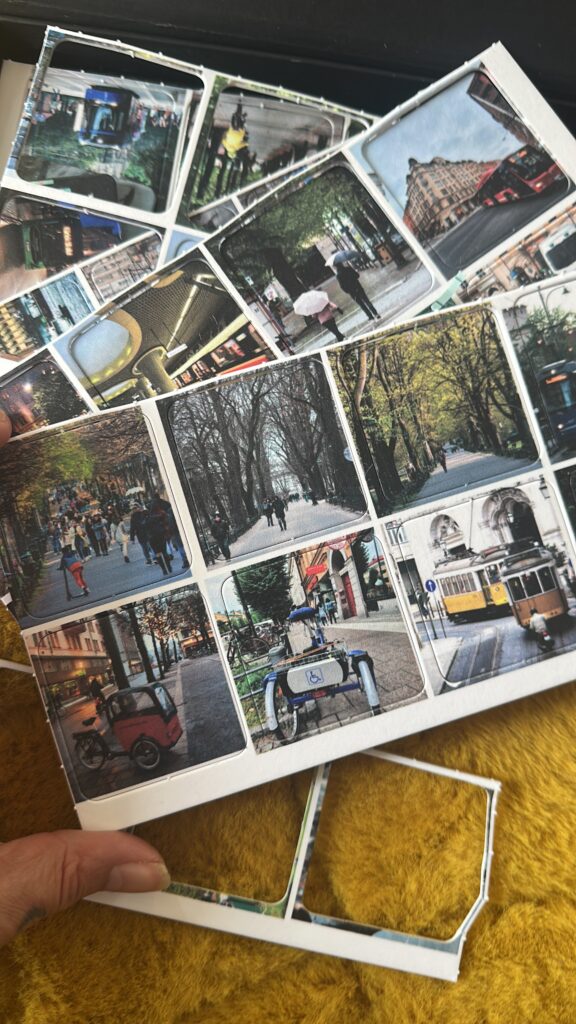
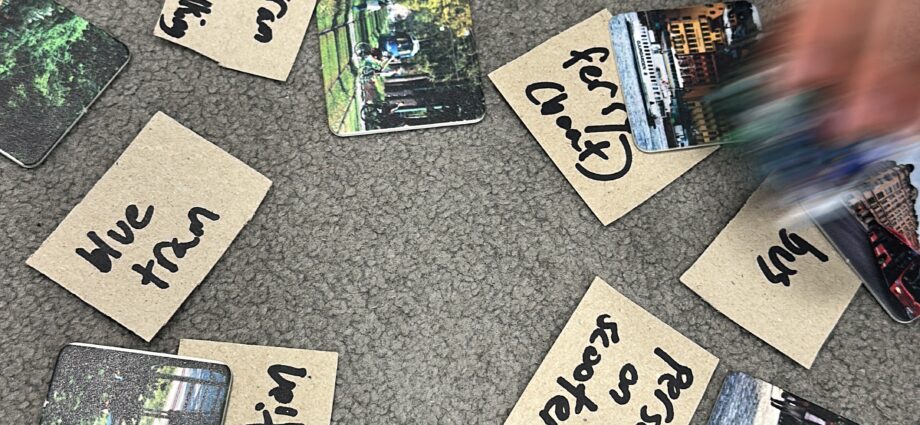
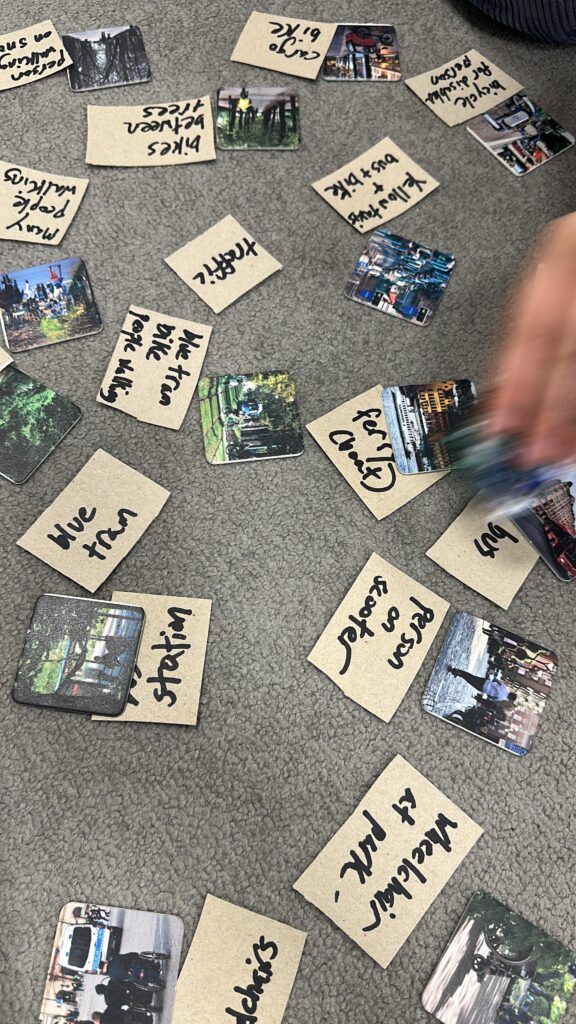
The photo below is of the ‘Mobility MEMORY’ game that I designed, making use of several of the urban mobility photos I’ve snapped over the years. Now all those photos of buses, trams, trains and sidewalks become even more useful for creative and educational activities! I realized after a couple pilot workshops how I could enhance the game by adding in word cards, which I plan to do (temporary ones seen here).
I am really looking forward to having more time to now devote to this curriculum development and being able to offer it within my local community, to begin with! The big vision is to be able to design a kit and workbook so educators in other parts of the world who are interested in the approach can use it.
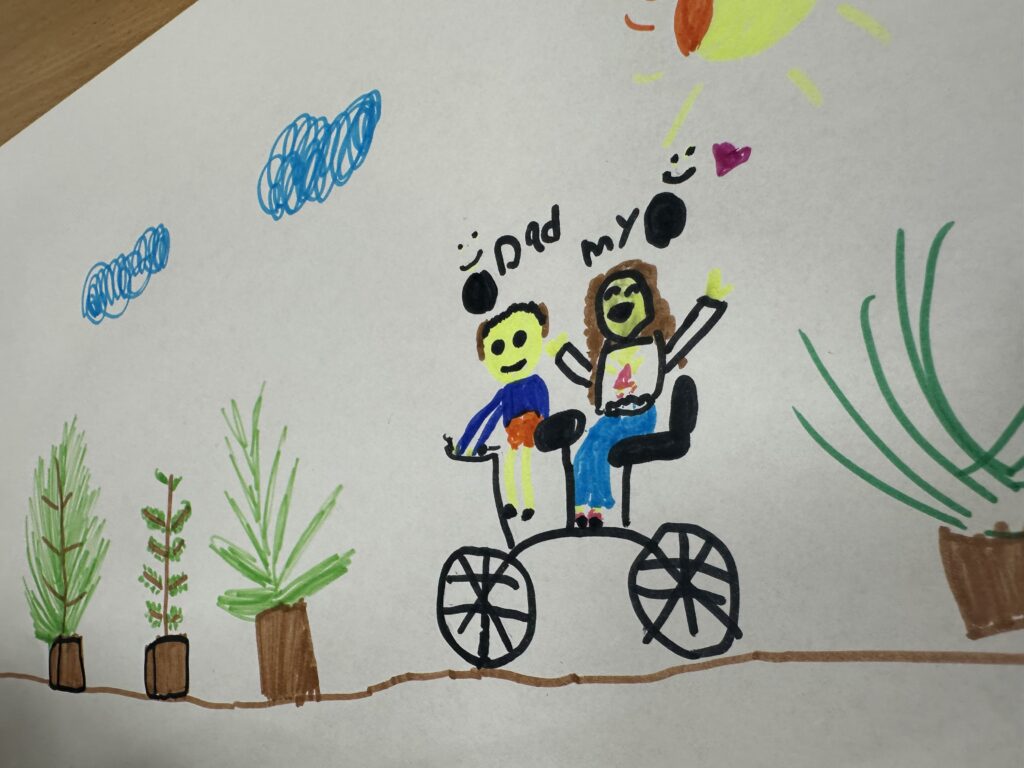
We also dedicated significant time during the pilots to artwork, for the children to draw scenes of mobility, city, and community. In describing the artwork below, one student shared, ‘That’s my dad, and that’s me, riding the bike.’
‘Look how happy you look!’ I exclaimed.
The student looked at her art, quietly beaming.
More reflections from our very first pilot to come!
-Annika
Visit our project Substack at https://urbanismeducationarts.substack.com/