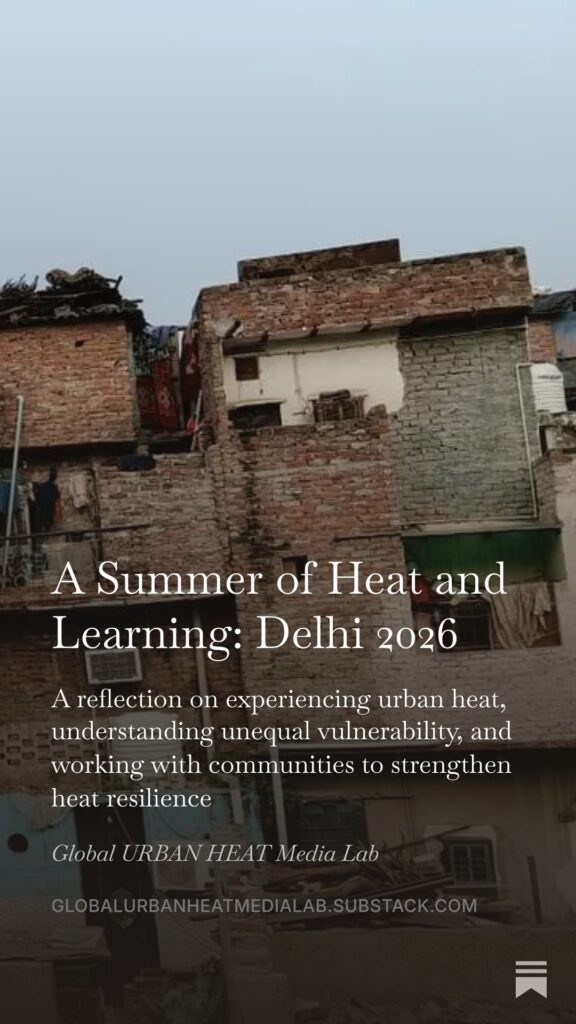
Excerpt from ‘A Summer of Heat and Learning: Delhi 2026’ by Ajoy Ghosh, one of our Global URBAN HEAT Media Lab network members.
Excerpt:
This summer has changed the way I look at urban heat. Working on heat vulnerability assessments, heat action planning and community-level interventions has taught me that the problem is more complex than identifying the hottest locations on a map. We must also understand the people living there, their homes, work, healthcare access and resources during extreme heat.
I now believe heat adaptation must be rooted in everyday realities. Better housing design, passive cooling, accessible drinking water, reliable electricity, shaded public spaces, stronger community health systems and targeted support for vulnerable populations must be part of the conversation.
Ultimately, a heat-resilient city is not simply one with lower temperatures. It is a city where a construction worker can find shade and drinking water, a pregnant woman can access a safe and cool indoor environment, an older person is not left without support during a heatwave, and frontline health workers can recognise and respond to heat-related health risks.
The real measure of heat resilience is not just how well a city manages its temperature, but how well it protects the people who are most exposed to it.
Read the full article here
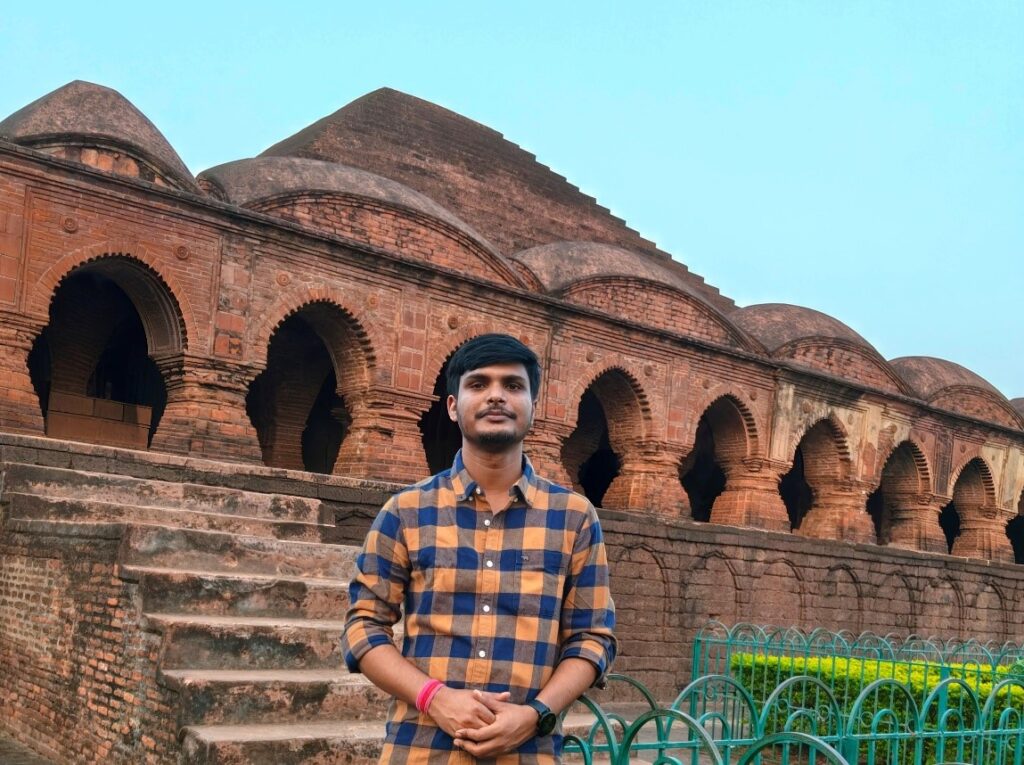
Ajoy is an architect and city planner based in New Delhi. Since completing his Master’s in City Planning at IIT Kharagpur, he has been working on urban heat and its impacts on vulnerable populations. He currently works with IRADe, a research think tank in New Delhi, where his work focuses on heat action planning and understanding how extreme heat affects vulnerable groups, particularly pregnant women, lactating mothers, and infants. He has also helped to develop a training manual to help frontline health workers manage heat-stress events among these groups. Ajoy is also working on the relationship between heat, housing, and the built environment. He joins the Global URBAN HEAT Media Lab with great interest in the knowledge. sharing aspects of the network and connecting research and practice on urban heat globally.
Read more about his work with Pedestrian Space here: https://pedestrianspace.org/tag/ajoy-ghosh/
The ‘Global URBAN HEAT Media Lab’ is an initiative supporting international and interdisciplinary knowledge exchange, individual and collaborative research, awareness-shaping, and media creation regarding urban heat mitigation and adaptation.