By Arghyadip Hatua
There are some places in Ahmedabad where you don’t feel like rushing. You feel like slowing down and walking.
I felt that during a recent heritage walk with Saanji Virasat at Sarkhej Roza. I had seen pictures of the place before, but being there was different.
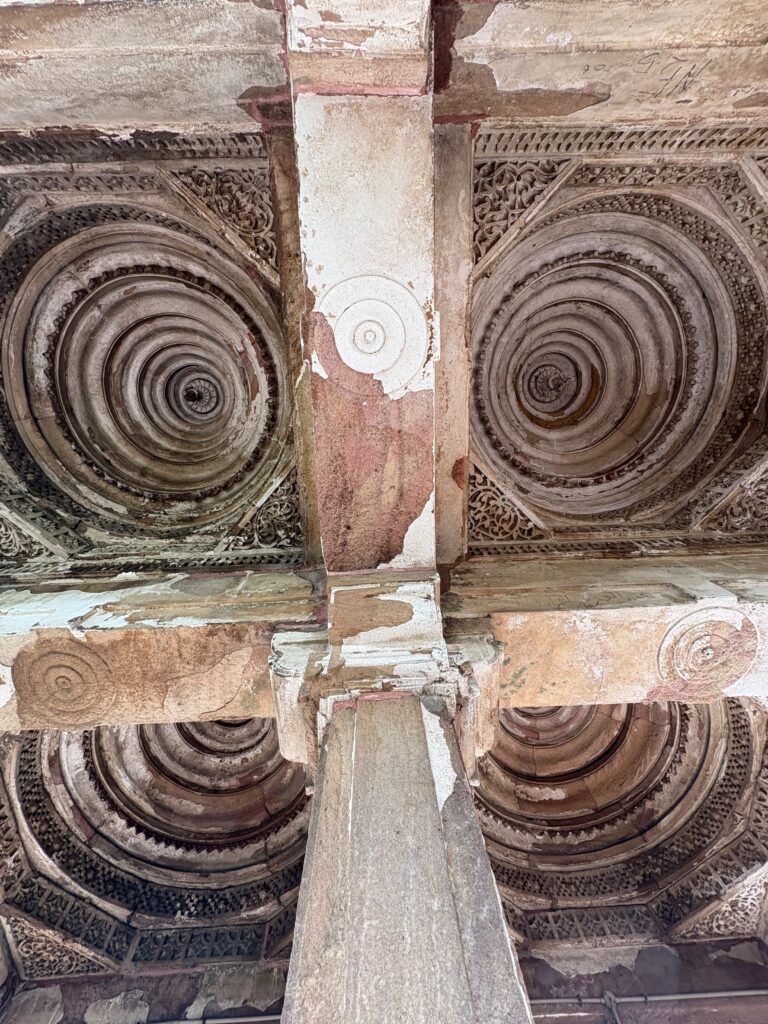
When you walk through the Roza, you start noticing things that a photograph doesn’t really show you — the details carved into the stone, the old pillars, the jaalis, the domes, the worn-out surfaces, and the way light falls through the structure.
But strangely, the thing I kept thinking about wasn’t the architecture.
It was the lake.
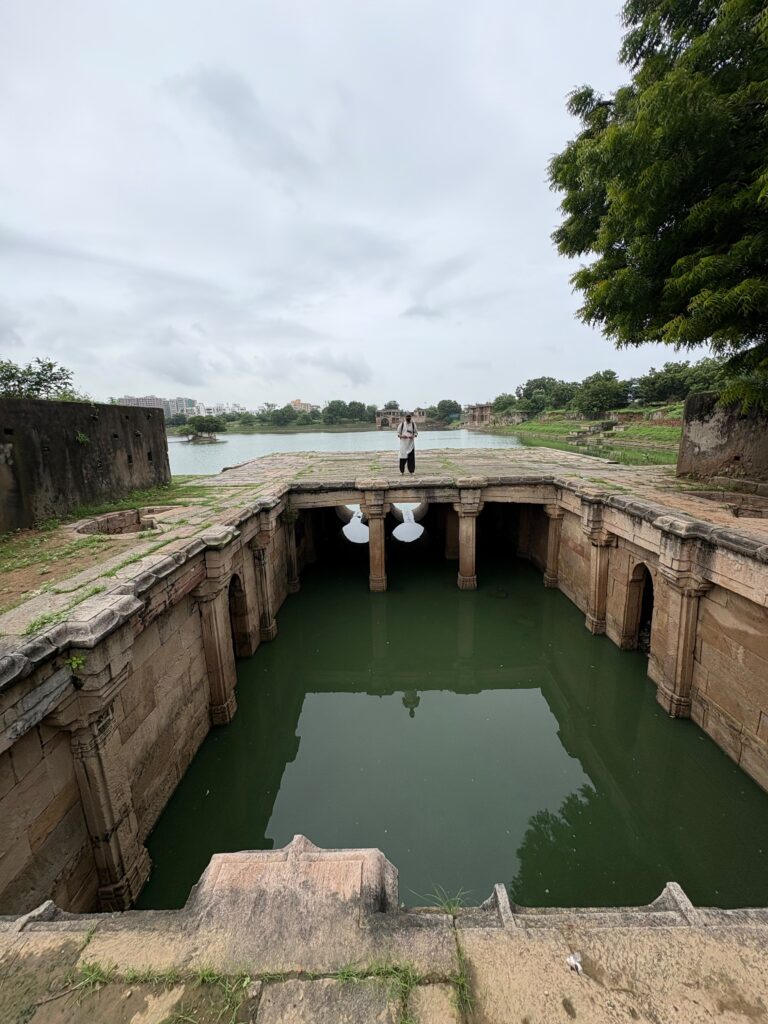
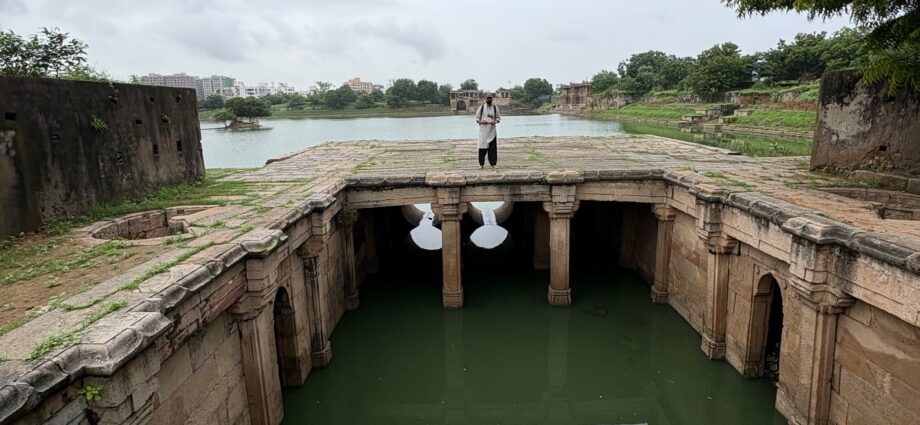
I stood there for a while looking at the water and wondered what this place must have felt like when the entire landscape was functioning the way it was meant to.
Sarkhej was never just a monument sitting next to a lake. The water, the ghats, the pavilions, the open spaces, and the buildings were all connected. They belonged to the same landscape.
Today, that connection feels very fragile.
What really bothered me during the walk was seeing the condition of the water. The presence of sewage and polluted inflows in a historic water body is difficult to ignore when you’re standing right beside it.
And I kept asking myself — how did we allow this to happen?
We talk a lot about heritage conservation. We talk about repairing old buildings, restoring stonework, and protecting architectural details. And yes, all of that is important.
But what about the landscape around the monument?
What happens when the water that was once an essential part of that landscape is neglected?
Can we really say that we have restored Sarkhej if the lake continues to suffer?
For me, this is where heritage and walkability become connected.
A heritage walk isn’t simply about going from one famous building to another, taking a few photographs and leaving. When you walk, you start noticing the relationships between things.
You notice where the water is.
You notice where the trees are.
You notice where people naturally want to sit.
You notice whether there is shade.
You notice whether the path is comfortable.
And sometimes, you also notice what is wrong.
That becomes even more important in Ahmedabad because of something we cannot ignore anymore — heat.
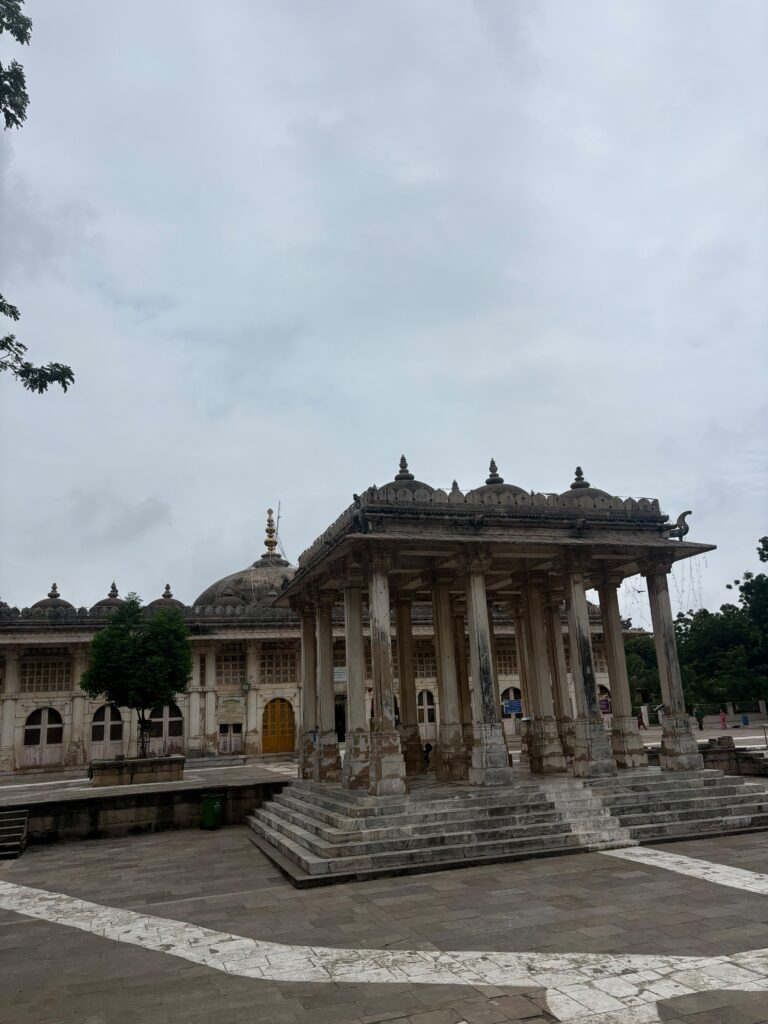
Ahmedabad is a hot city, and our urban spaces need more trees, water and shaded public areas. Lakes aren’t just beautiful features on a map. They are part of the city’s ecological system and can help create cooler local environments.
So when we talk about restoring Sarkhej’s lake, I don’t think we should see it only as an attempt to save something from the past.
It could also be an investment in Ahmedabad’s future.
Imagine Sarkhej with clean water again.
Imagine walking beside the lake under a canopy of trees.
Imagine being able to sit there without feeling that the heat is pushing you away.
Imagine seeing the historic ghats and pavilions reflected in clean water.
Imagine people actually spending time there — walking, talking, sitting, observing, learning.
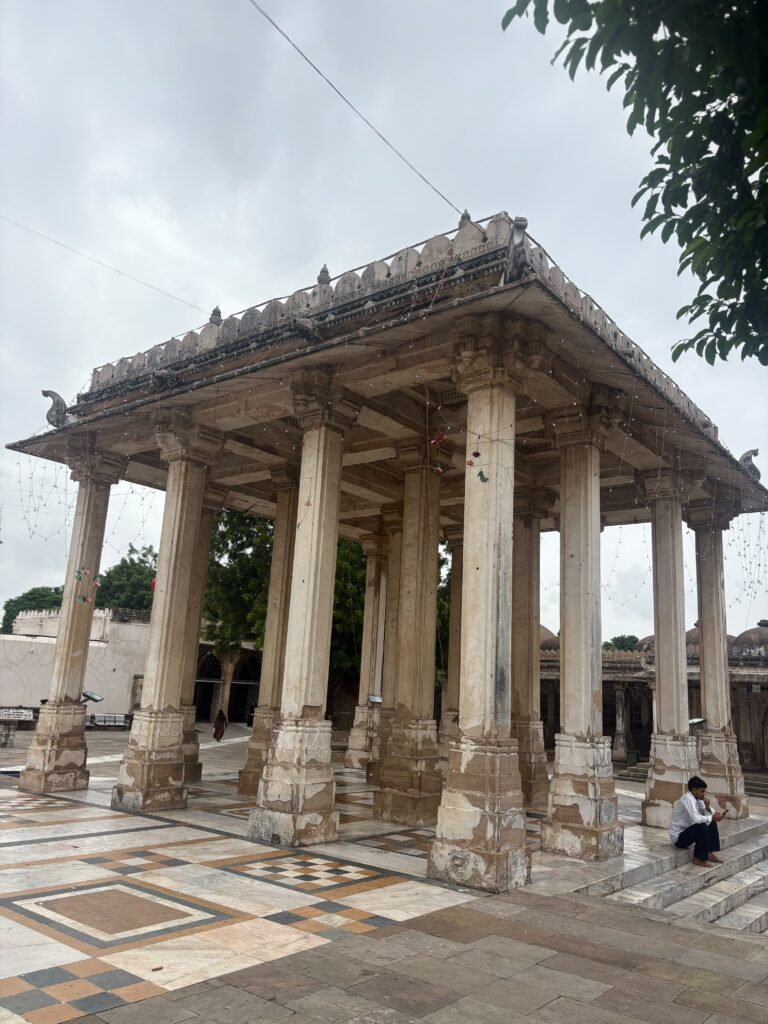
The Roza would no longer feel like a monument that we visit and leave behind.
It could become a living part of the city again.
And perhaps that is what heritage conservation should really be about.
Not simply keeping old stones standing.
But keeping alive the relationship between people, architecture, water, nature and the city.
Walking made me realise something else too.
You experience a place differently when you are on foot.
You feel the heat.
You hear the birds.
You smell the water.
You notice the small plants growing between the stones.
You see the cracks and scars on an old wall.
You notice people using the space.
You notice things that you would probably miss from the window of a car.
A car can take you to Sarkhej Roza.
But walking makes you experience Sarkhej.
As a Walkability Correspondent with PedestrianSpace, this is something I keep coming back to. I don’t think heritage walks should only make us admire beautiful buildings. They should make us question what is happening around them too.
Because heritage doesn’t stop at the boundary of a monument.
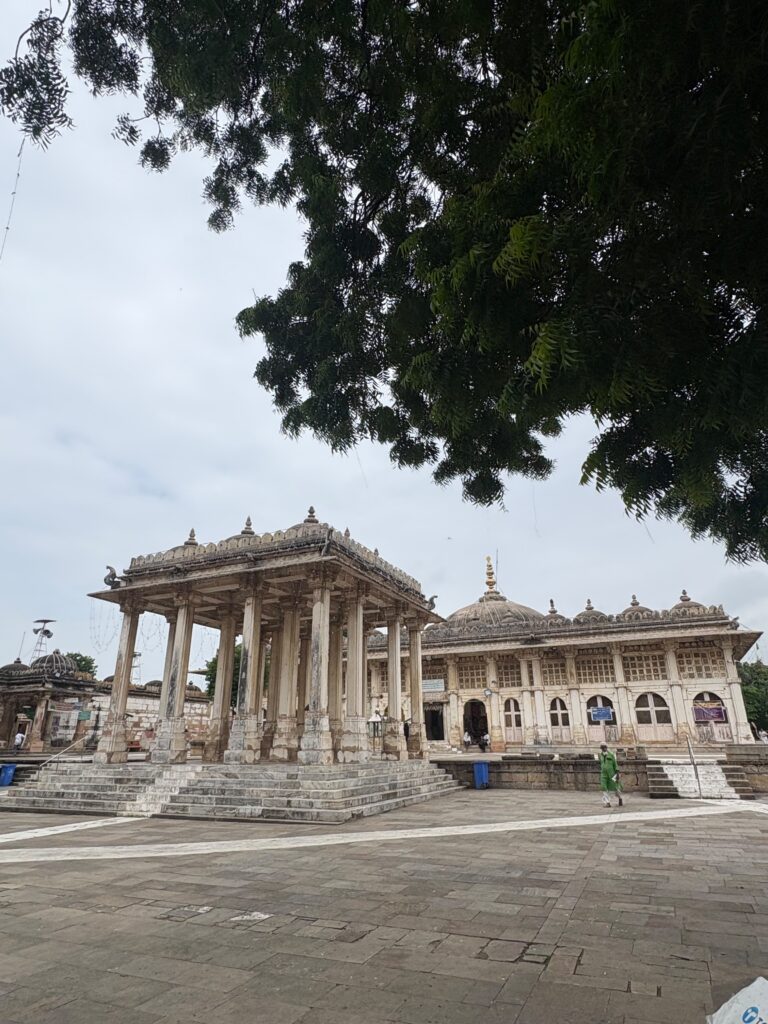
It extends into the lake.
Into the trees.
Into the streets.
Into the people who use the space.
Into the way we move through it.
So perhaps the question isn’t only:
How do we preserve Sarkhej Roza?
Maybe the bigger question is:
How do we restore the landscape that makes Sarkhej what it is?
The sewage inflows need to be addressed.
The lake needs to be restored.
The historic water system needs to be understood again.
The surrounding spaces need shade.
And the whole landscape needs to become more comfortable and welcoming for people walking through it.
We don’t necessarily need to create something completely new.
Maybe we need to bring back the relationship that was already there.
Because the monument is not only the stone.
The heritage is the landscape.
And if we want Sarkhej to truly live again,
the landscape needs its water back.

Arghyadip Hatua was born in Kolkata, the ‘City of Trams’ in India. He is a Public Transport and Urban Policy enthusiast and advocate. He aims to starts a revolution for tramways and walkability in Kolkata as well as broadly in India.
Read Kolkata Correspondent Arghyadip’s content here
This post is part of the Global URBAN HEAT Media Lab.
Read more on the international and interdisciplinary initiative below: