At Pedestrian Space, we are developing the 2027 pilot for the Sustainable Urbanism & Planetary Health program with a focus on the issue of Urban Heat. We are collaborating with individuals across the world for projects and insights that focus on place-based approaches to awareness-building, education, research, and knowledge exchange on issues of urban heat.
As part of this pilot development, we are recording our conversations with collaborators around the world as well as students interested in pursuing academic internships related to the URBAN HEAT 2027 pilot.
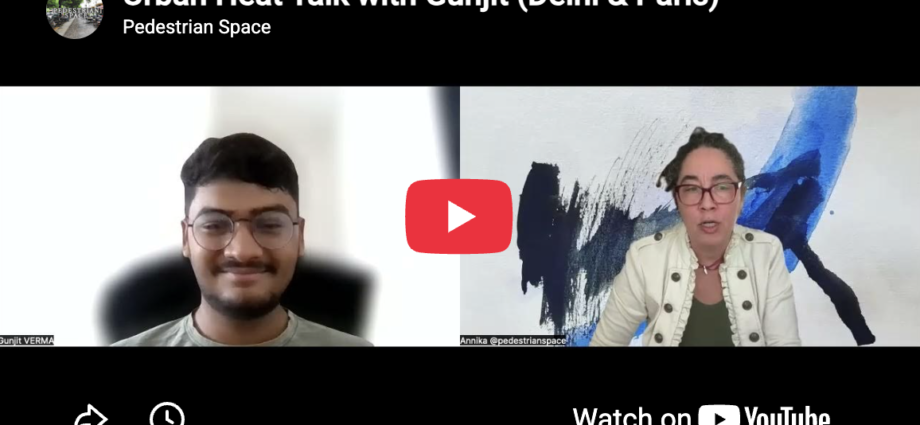
As part of that, we met with Gunjit Verma, a student at the Sciences Po Urban School in the Master in Governing the Large Metropolis program who wrote to us about doing his academic internship in conjunction with this pilot.
Gunjit reflects that: ‘As a future urban professional, I believe cities are the places where the fight against climate change will be won or lost. For me, this internship offers a fresh view on urban heat resilience, focusing not solely on infrastructural solutions but actually centering the community at its forefront with education, engagement and experiences.
For me, this means actually making aware communities about the correct way of thinking about such heatwaves as not being completely natural, and not a technical problem to be done away with, to utilise social cohesion networks to ensure people have the aid, information and cooperation needed to endure through them and that communities are in lockstep in the disaster management structure from bottom to the top, so that policies are implemented in letter.
Heat is, by its very nature, a deeply personal phenomenon, felt and coped with differently by each human being, intersected with divisions of class, gender, age, and disability. Any solutions offered to mitigate, adapt, and be resilient to urban heat must thus be centered on how each body reacts to heat.
This personal and individual framing of the urban heat problem can be further extended through a community lens, where a network in each neighbourhood can come together to discuss their own ways of coping with heat waves, building a sense of community and checking up on their most vulnerable members. However, community resilience should not become another “catch-all” solution, like we make AI to be.
Communities can indeed be empowered to counter heatwaves, but must first be adequately educated on disaster preparedness. Community leaders should be identified, trained, and equipped with adequate resources to lead their communities’ voices and transmit feedback to policymakers making city-wide heat plans. ‘
View more about the Pedestrian Space URBAN HEAT Pilot below