At Pedestrian Space, we are developing a ‘Sustainable Urbanism & Planetary Health’ curriculum. ‘Faith & Religion’ are represented in ‘Humanity’, one of the core pillars of the program, which is based on community-immersed project-based learning via the curriculum’s different modules.
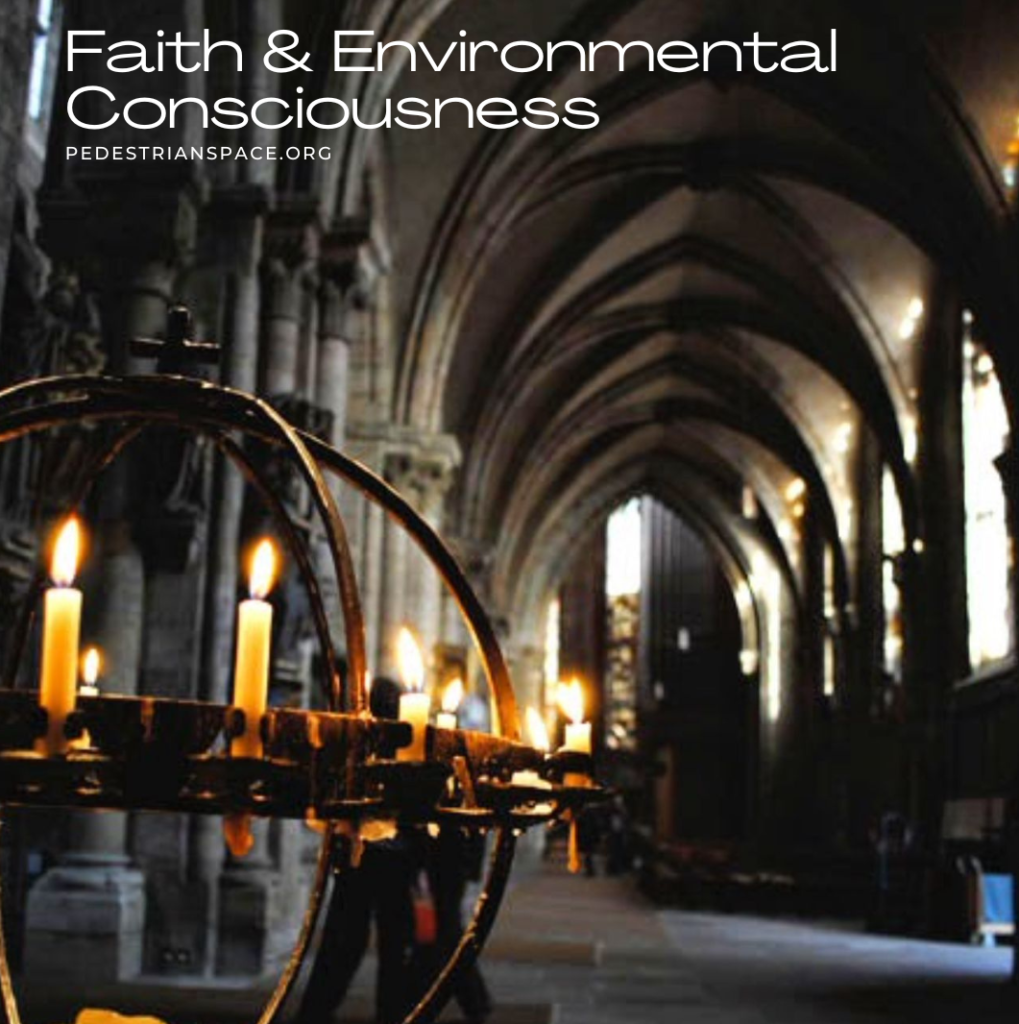
The representation of ‘Faith and Religion’ in the curriculum is rooted in the question of how faith, religion, and spirituality guide a sense of stewardship and relationship to Earth, community, and environment.
For students who are guided by faith or have religious activities that significantly structure and influence their relationship to community, this could be an interesting and practical route for participation in the curriculum.
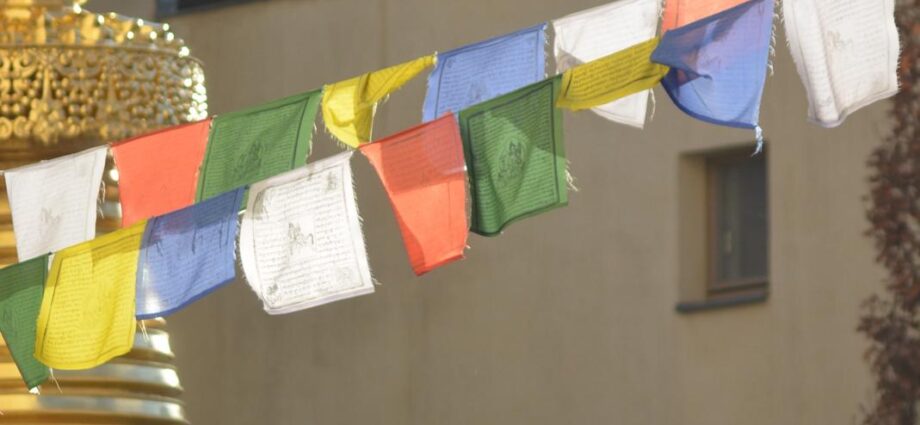
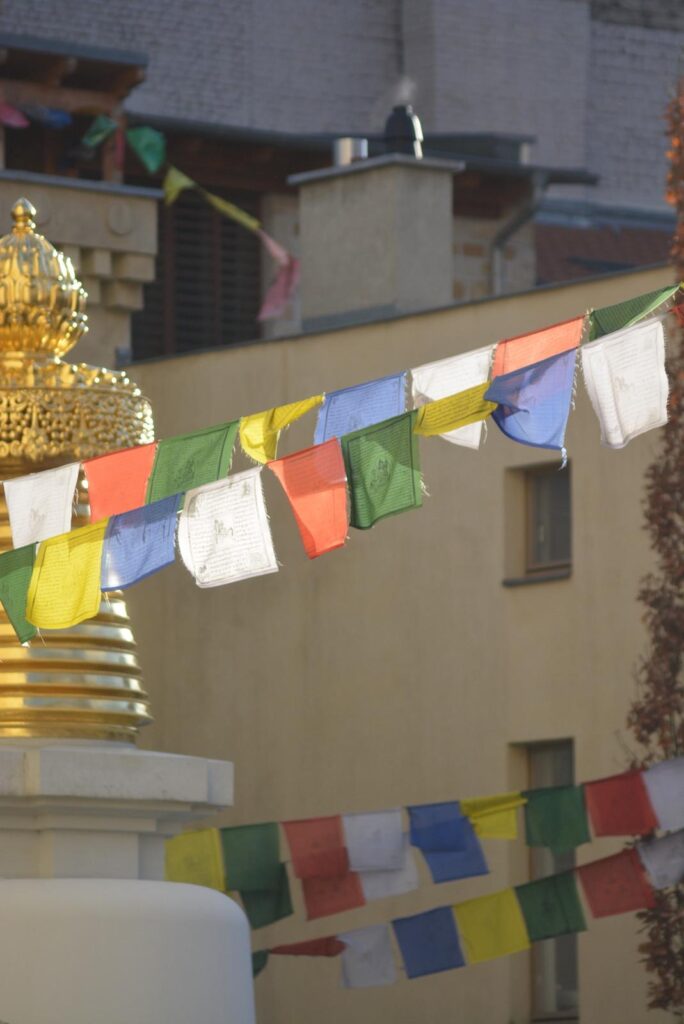
I photographed the scene below while visiting Bodhicharya Berlin – Buddhistisches Zentrum in November 2019. I toured the space of the Center with the architect who had designed it. Ialso had my two children with me (2 and 5 years old at the time). As I sat by the stupa in the chilly late November air and informally interviewed the resident architect, both of them napped bundled up by me in the stroller. Later, when we went into the spacious meditation room, my son gleefully took off his shoes and went quietly pouncing around the room with joy.
Later, I met with a coordinator for their hospice service and outpatient palliative care services (offered with no bureaucracy and free of charge).
I found this to be a really meaningful, practical, and thoughtful activity to benefit and serve the community, in line with Bodhicharya’s mission to, in addition to disseminating Buddhist teaching and education, also support education and healthcare projects around the world.
Via the ‘Faith & Religion’ module option of the ‘Sustainable Urbanism & Planetary Health’ curriculum development, students can elect to craft their projects around activities and learning that help manifest and show the intersection of religious practice, community involvement, and environmental stewardship.
-Annika, Founder at Pedestrian Space
Read more about the ‘Sustainable Urbanism and Planetary Health’ curriculum in development below: