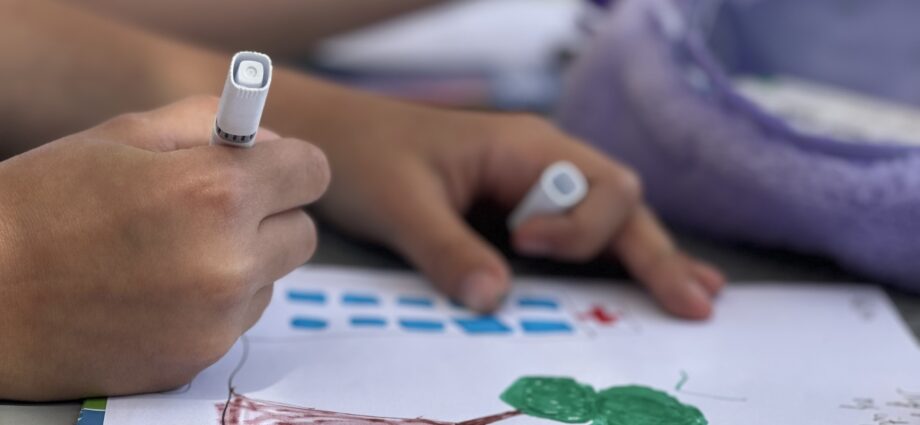
Last Autumn, in my role as a conversational English teacher for grades 1-3 at a Polish bilingual school, I piloted a ‘Where I Live’ learning module. We explored the concept of our ‘habitat’ from home to neighborhood to city level, in age-appropriate ways that also included a lot of art.
The art facilitated the sharing of that residential building diversity through artistic means that naturally resonated with the children.
For the ‘Sustainable Urbanism & Planetary Health’ Curriculum I am developing, arts and media activities will be a vital component as Pedestrian Space promotes and supports the discourse and awareness-shaping on diverse issues of urbanism through various artistic means.
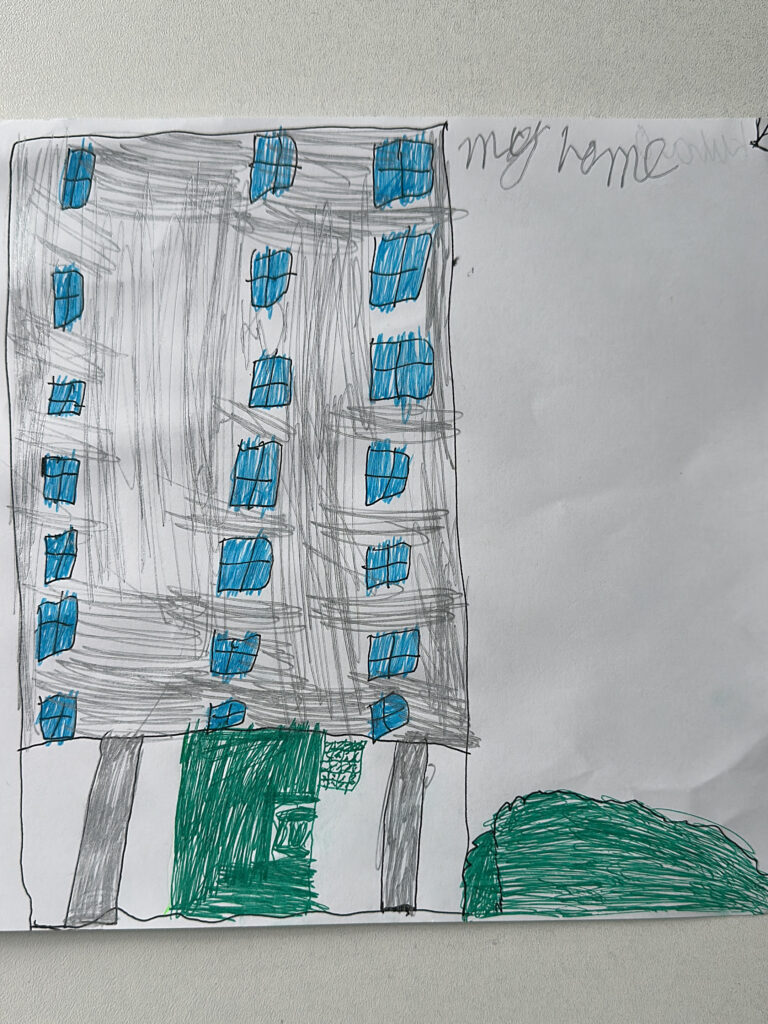
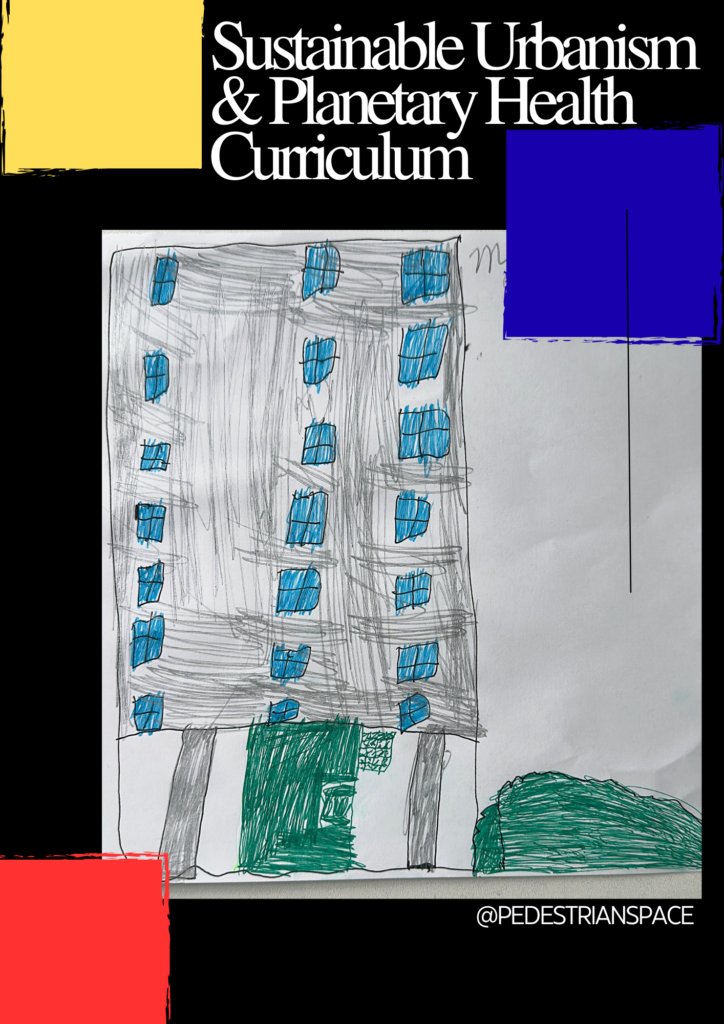
The drawing pictured above was from the ‘Where I Live‘ module with grade 2 students. The outputs were very diverse as the students live in a range of housing, including large apartment blocks, smaller apartment blocks, and single-family houses. The art facilitated the sharing of that residential building diversity through artistic means that naturally resonated with the children.
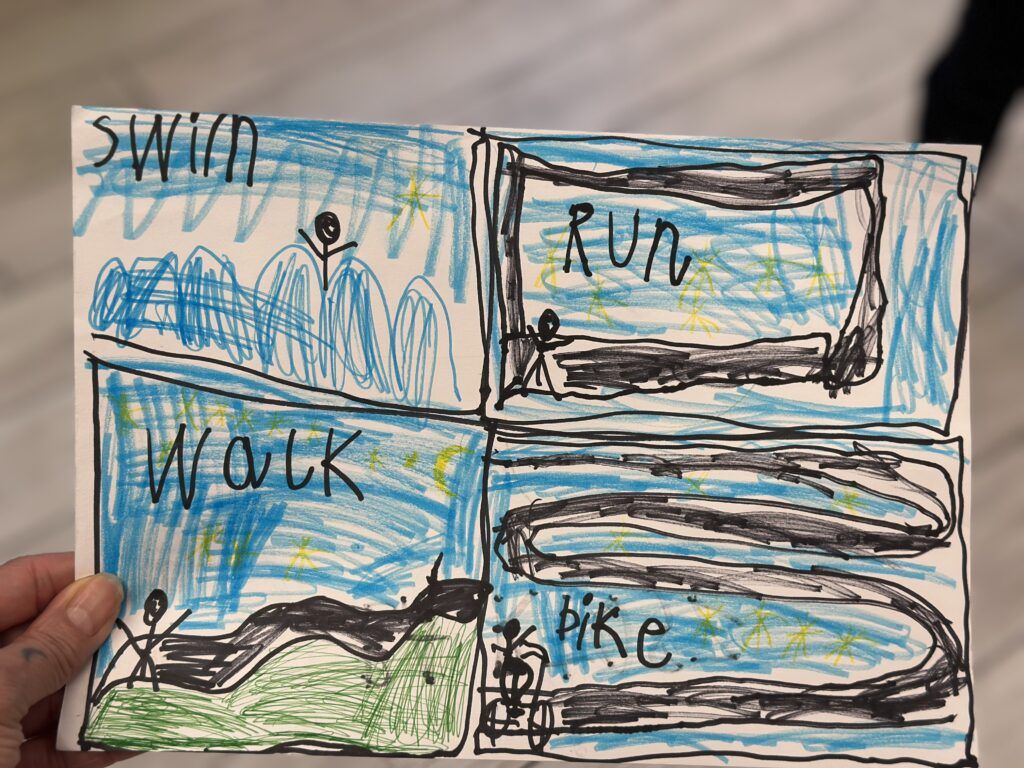
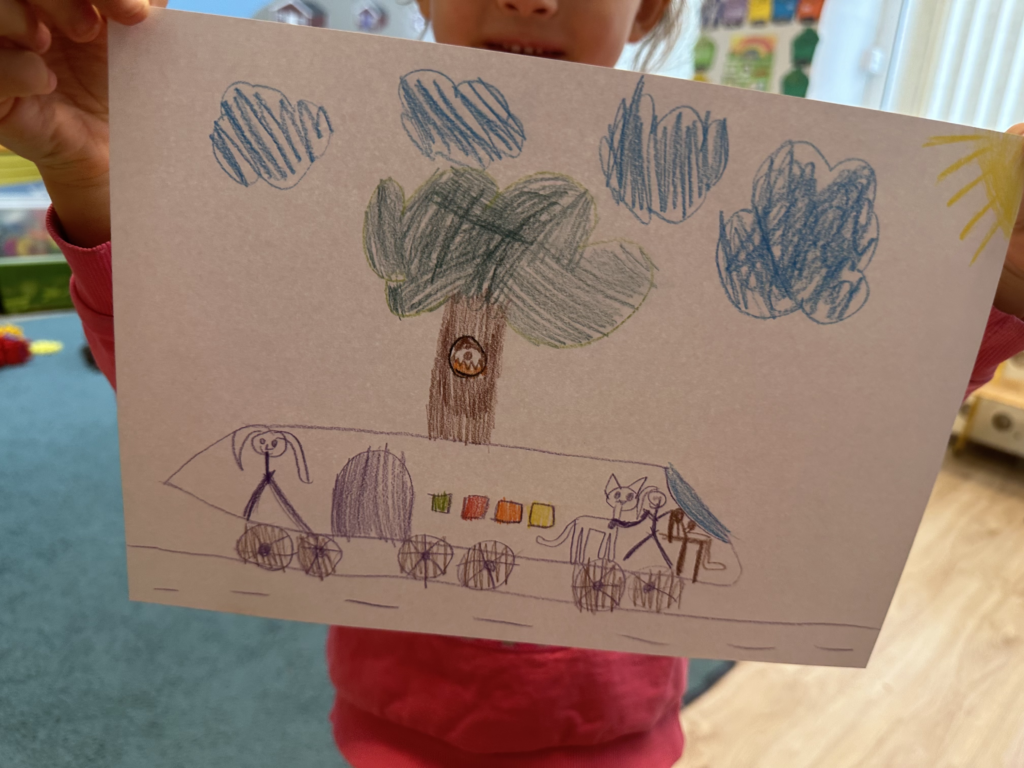
The drawings above and below are from a ‘Mobility’ module, in which we spent a couple of weeks exploring themes of sustainable mobility from public transportation to walking and biking.
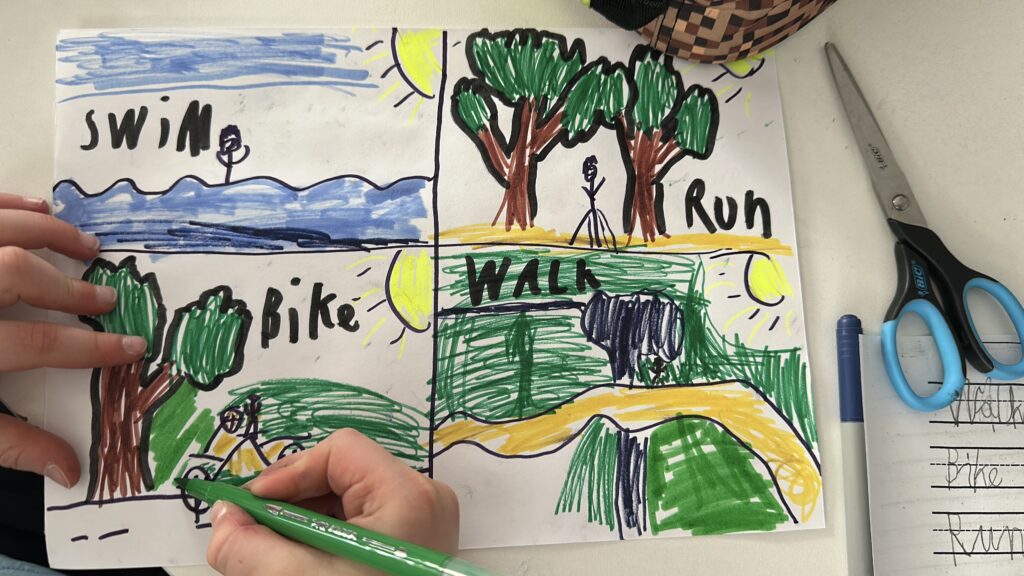
I’ve been grateful to gain experience in designing interactive language-based classes and also to have the autonomy in my classes that has allowed me to experience classroom management challenges and opportunities more fully.
Bringing arts and a project-based approach to my lessons has also allowed for the facilitation of a more creative atmosphere, within which I value being able to interact with the students in a more informal way that also gives them freedom to communicate in a more relaxed way, which I think is superb at any age, but especially this young age range when they can acquire language so rapidly.
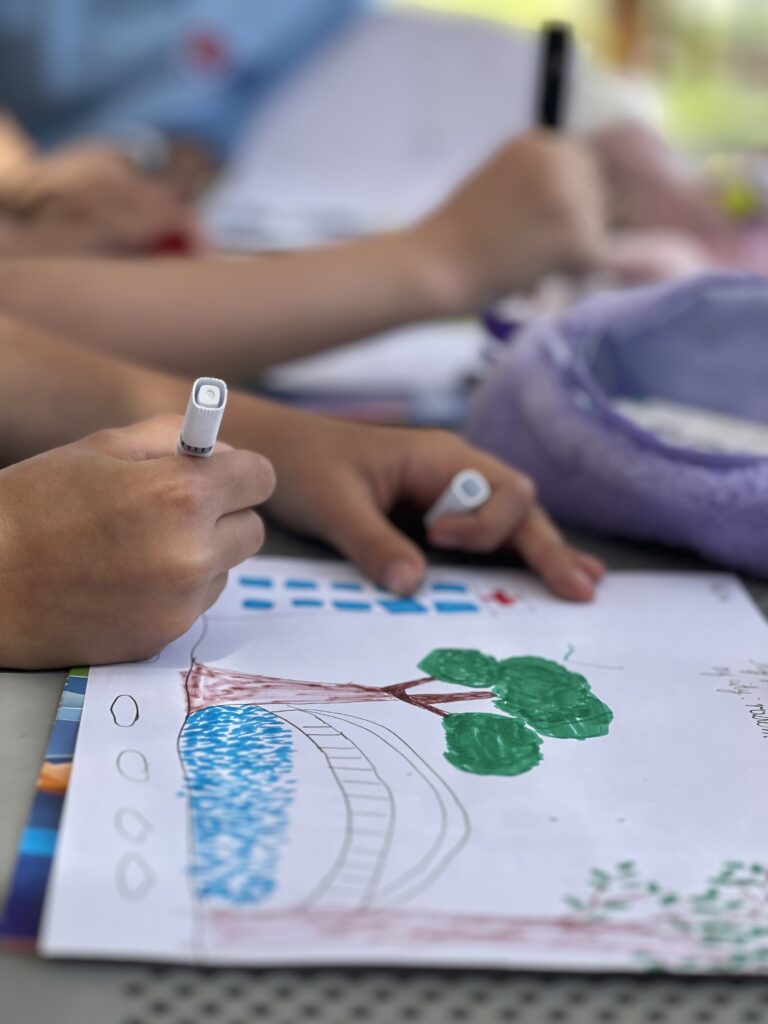
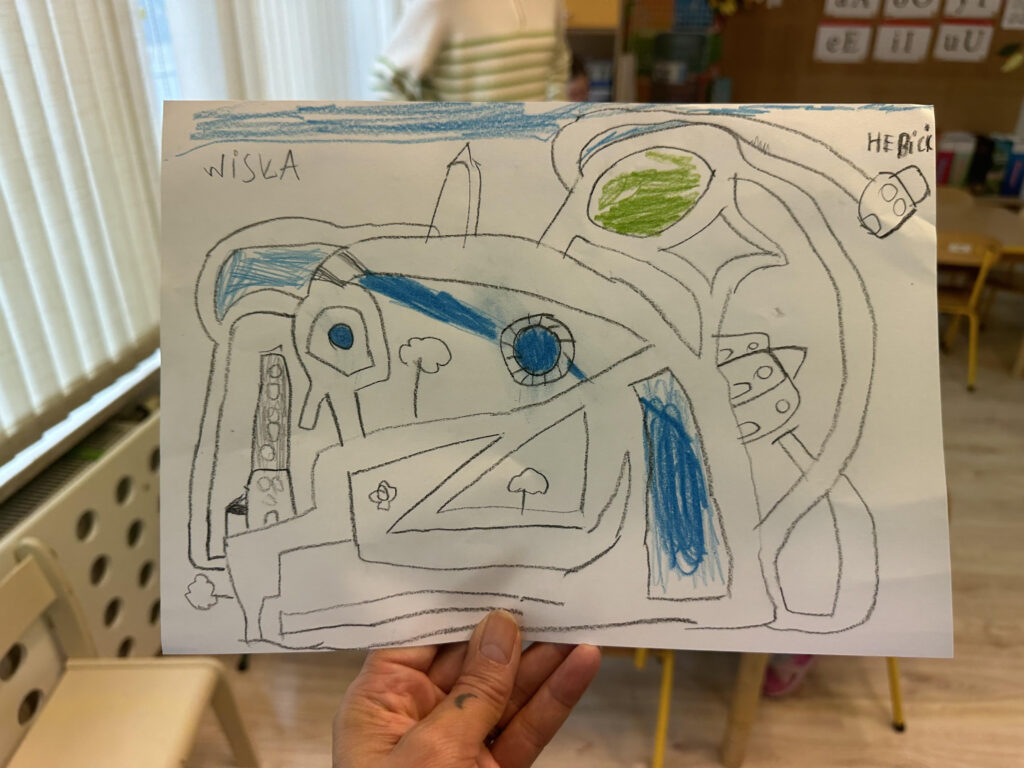
‘This is a hospital, this is the bridge, this is the lake, and this is the park,’ a student explained to me, pointing to various aspects of her drawing (pictured above) for a ‘My City‘ themed module. The ‘My City’ theme, module was really exciting to me as it also allowed me to draw on my experience as an urban geographical researcher, creating and facilitating place-based educational activities for language acquisition.
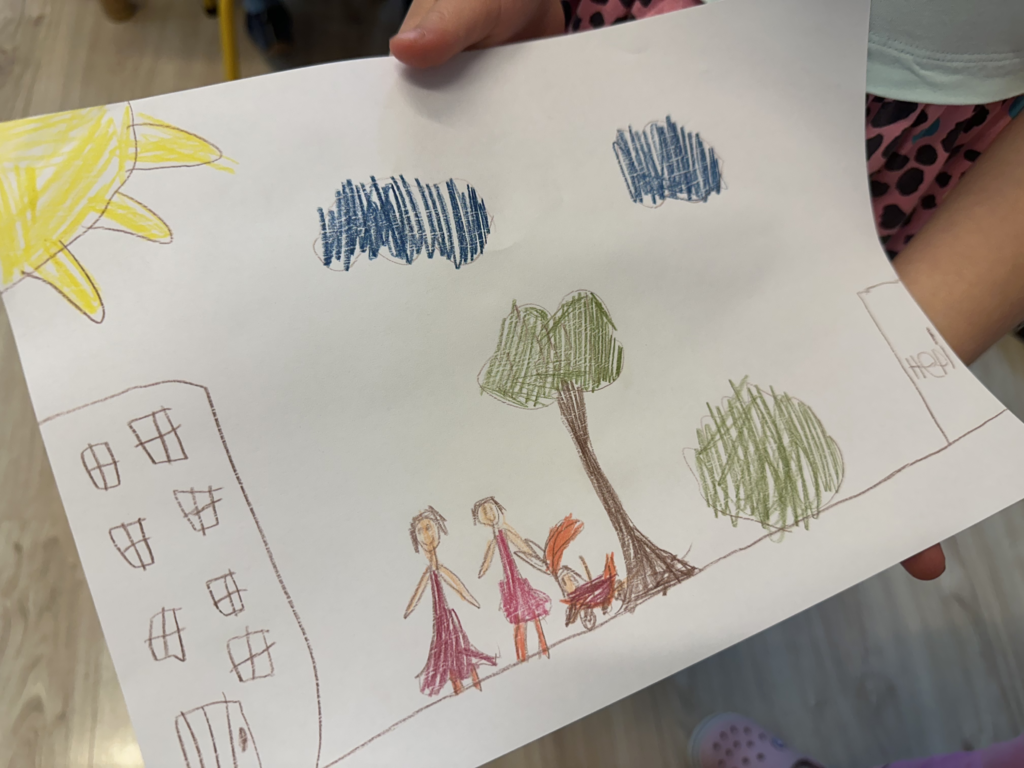
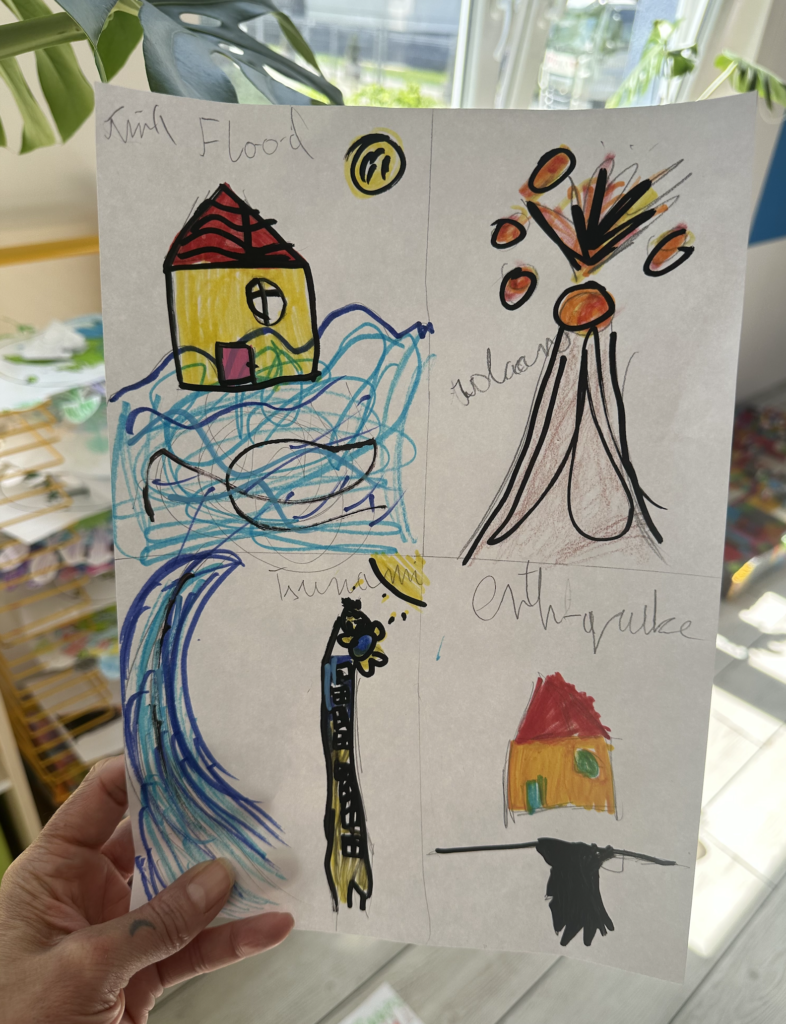
The drawings above and below are from a ‘Neighborhood and Mobility’ learning module I facilitated for a preschool class, during which we read public transportation, walking and cycling themed children’s books, and the children also drew scenes of their own neighborhoods and impressions of local mobility.
I dedicated a whole monthly theme to ‘My City’, having the students share about their favorite parks, shops, restaurants and other places in the city while also doing group art together.
Many of these activities I developed and facilitated are also a part of the ‘Sustainable Urbanism & Planetary Health’ curriculum that I’m developing and will pilot at two primary schools in Poland this year, and also remotely in collaboration with educators in other cities globally.