In ‘PHYTOPOLIS: The Living City’, (Other Press ), author Stefano Mancuso writes on how the ‘destiny of the city’ is not solely in the hands of municipal offices or architecture firms but also in the ‘activities of its citizens’, who also modify the spaces and structure of the city with their daily actions.
Over the past several years, the concept of ‘residential narrative’ has become the central focus of my research on walkability. For me, it’s clear that these ‘narratives’ can offer endless insights into diverse experiences and perceptions of the city, be valuable for truly inclusive and holistic urban planning, and also serve as a kind of ‘urban and built environment oral history’.
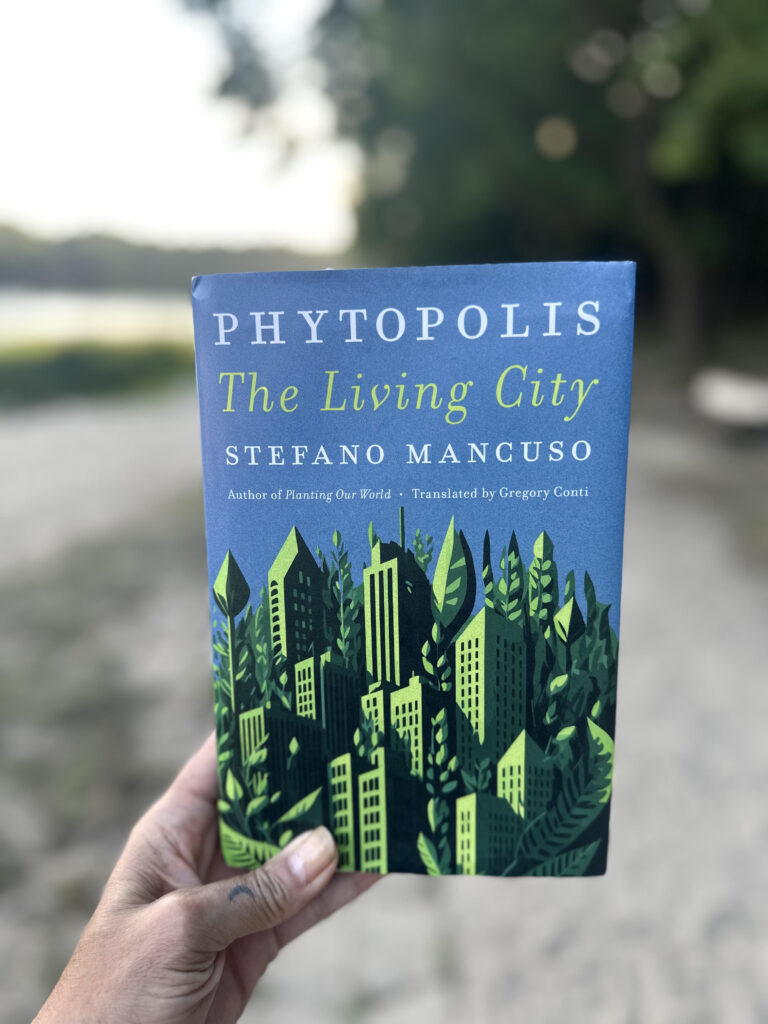
I photographed the cover of the book ‘PHYTOPOLIS’ two months ago (August 2026) at Lake Głębokie (a lake in name only) where you can see ‘impressive English oaks with circumferences of 280-305 cm, as well as many other magnificent specimens of greenery’ (Visit Szczecin website). I thought the rich, verdant setting, connected to city neighbourhoods by tram, is a really great example of a ‘living city’ environment where humans have access but the flora and fauna of nature is also strongly prioritized.
I have great respect for people, in general, who understand that without a profound reorienting to prioritization and respect for nature, including in cities, we’re cooked.
There is the obvious and complex, deep anthropocentric attitude of conceiving of nature primarily as a ‘resource’ and, in many urban settings, an afterthought (if not outright removed).
My interest in reading Phytopolis was in that it directly acknowledges urban development itself as a primary driver of environmental destruction and proposes a more plant- and nature-oriented approach that also can help to protect cities from the inevitable and already occurring crises of climate change.
I finished the book today, absolutely treasuring the final chapter ‘Treeways,’ in which the author notes that he feels the only ‘serious way’ to prepare for the unstable future and effects of global warming is to ‘make our cities greener, more permeable, and as diffuse as possible.’ The chapter addresses various practices cities are adopting to prioritize the health of nature and diverse species also inhabiting the city. He addresses issues of heat and heritage ~ a core theme developing at our Global URBAN HEAT MEDIA Lab.
‘We don’t know of anything that is as effective as trees in cooling an urban center,’ he writes.
While innovation is core to human society and spirit, sometimes the ego of wanting credit and to ‘innovate’ dangerously neglects the common sense solutions that we know work.
I highly recommend ‘Phytopolis’. Now that I’m done reading, it’s going into my ‘to be referenced’ pile. I also find it perfectly coincidental to have finished reading the book here, in Szczecin, a city known for its urban nature and green profile. I spend more moments here, than most cities I’ve lived in, walking through parks and urban forest and absolutely treasure it. The role these spaces also play in cooling and as climate infrastructure is critical.