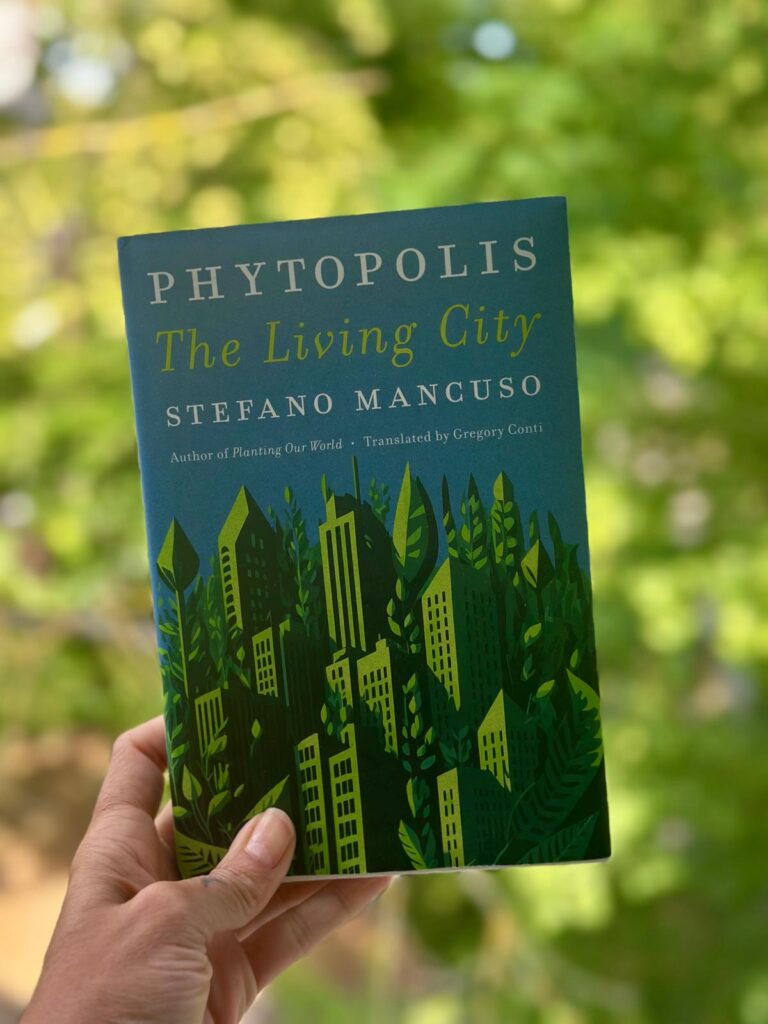
In the book ‘Phytopolis: The Living City’, author Stefano Mancuso reflects that ‘…despite our historical relationship with plants, we now seem intent on imagining ourselves as a species outside of and, obviously, above nature. We have erased plants from our horizon, becoming blind to the very world on which we depend.
As Other Press describes the book, Mancuso, a renowned plant expert, explains in his writing ‘how we can make urgent, positive changes to our cities that protect against and reduce global warming.’
The publishing house goes on to write about the book:
‘The city seems to have become the only place where we can expect to thrive and reproduce, because it is the only place where our specialization gives us the best chance of survival, and quality of life.
However, “species specialization” is effective only in a stable environment: in changing environmental conditions, it becomes dangerous. And if the resources the city needs to thrive are not unlimited, global warming can permanently change the environment of our cities—an event that would be fatal. But it is the city itself, as it is today, that is the main driver of environmental destruction. Humankind is confronted with a paradox: we must rethink our cities and make them a lasting ecological niche.’
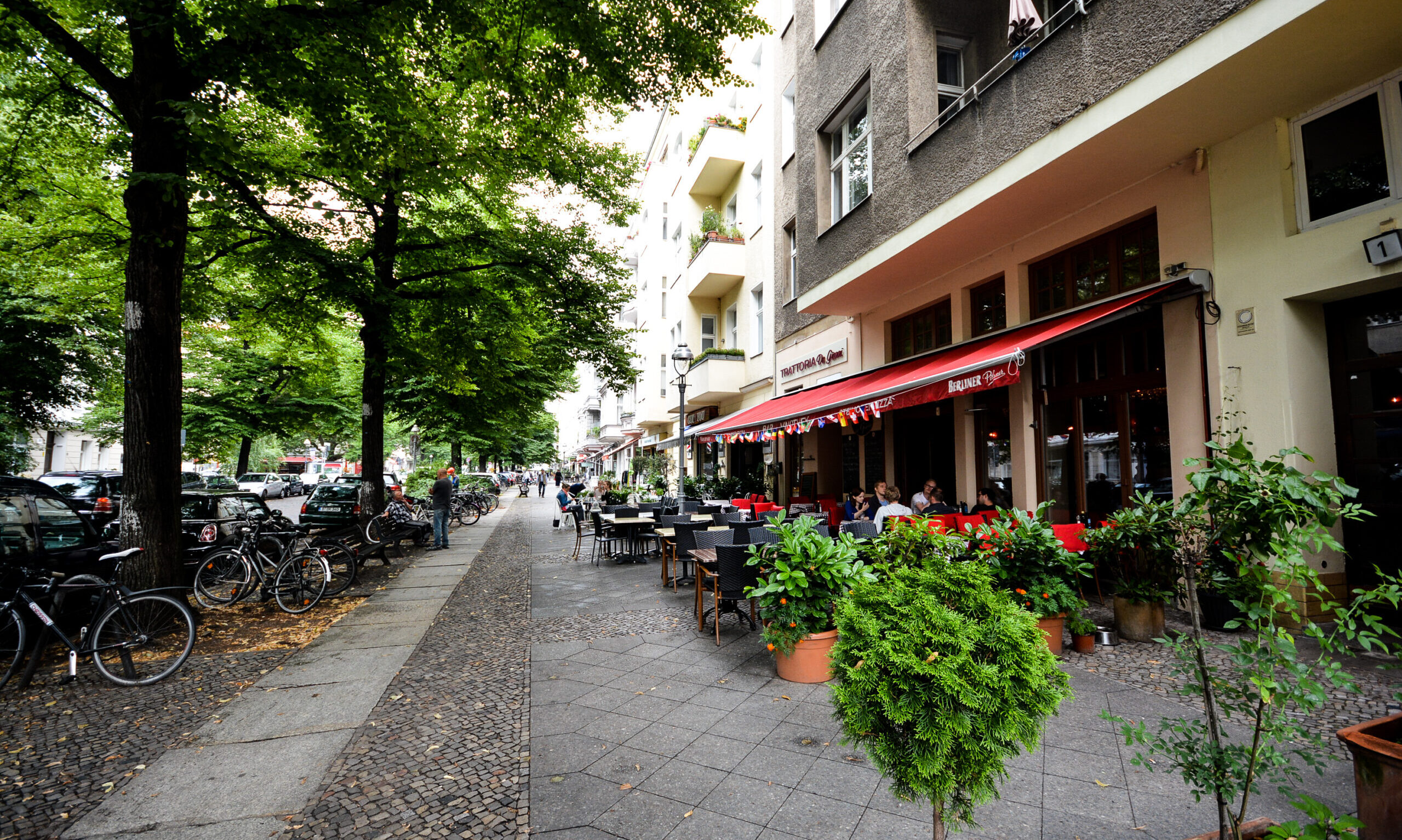
I’m particularly thrilled to be beginning this book as I settle into a city that is, in many ways, very green and park + nature rich. I snapped this photo this morning out the window of my partner’s and my home office.
-Annika