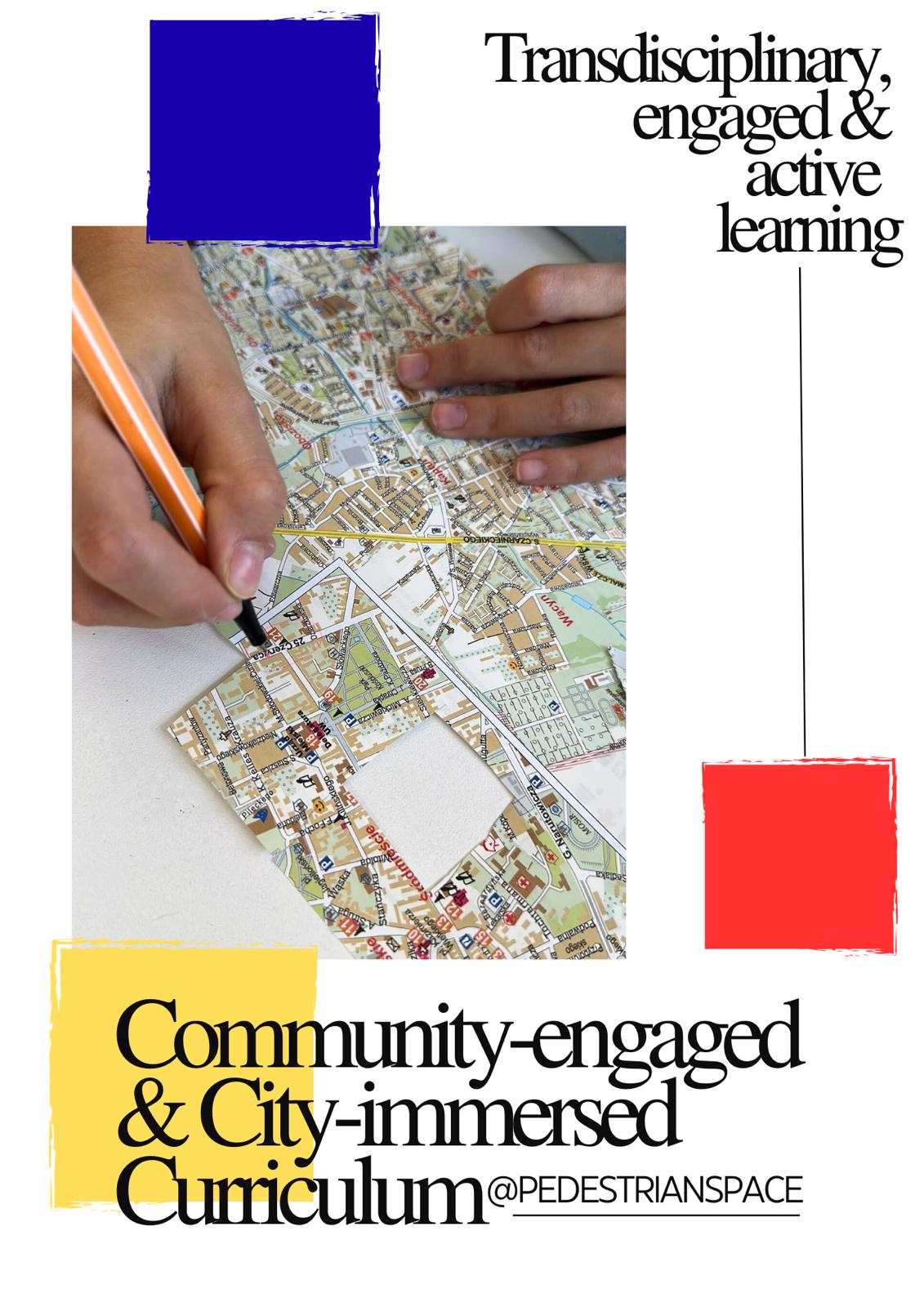
At Pedestrian Space, we are designing a city-immersed and community-engaged ‘Sustainable Urbanism and Planetary Health’ program with a transdisciplinary, engaged, and active curricular approach that focuses on issues of urbanism, sustainability, and planetary health.
The program is developed with the international mindset and curiosity that is at the heart of Pedestrian Space, yet with a focus on the power of the local for meaningful action, engagement, and learning.
The Sustainable Urbanism and Planetary Health program is intended to be activated via community partnerships and engagement, via diverse modular lenses for sustainable urbanism. We value different urban environments as key sites for studying, experimenting, and learning about community, urban, and ecological resilience.
Arts and media will be a vital part of the curriculum as well, as Pedestrian Space promotes and supports the discourse and awareness-shaping on diverse issues of urbanism through various artistic means.
We believe a truly holistic and multigenerational approach to shaping awareness about sustainable urbanism and planetary health also centers on engaging diverse generations in dynamic, practical and inclusive ways.
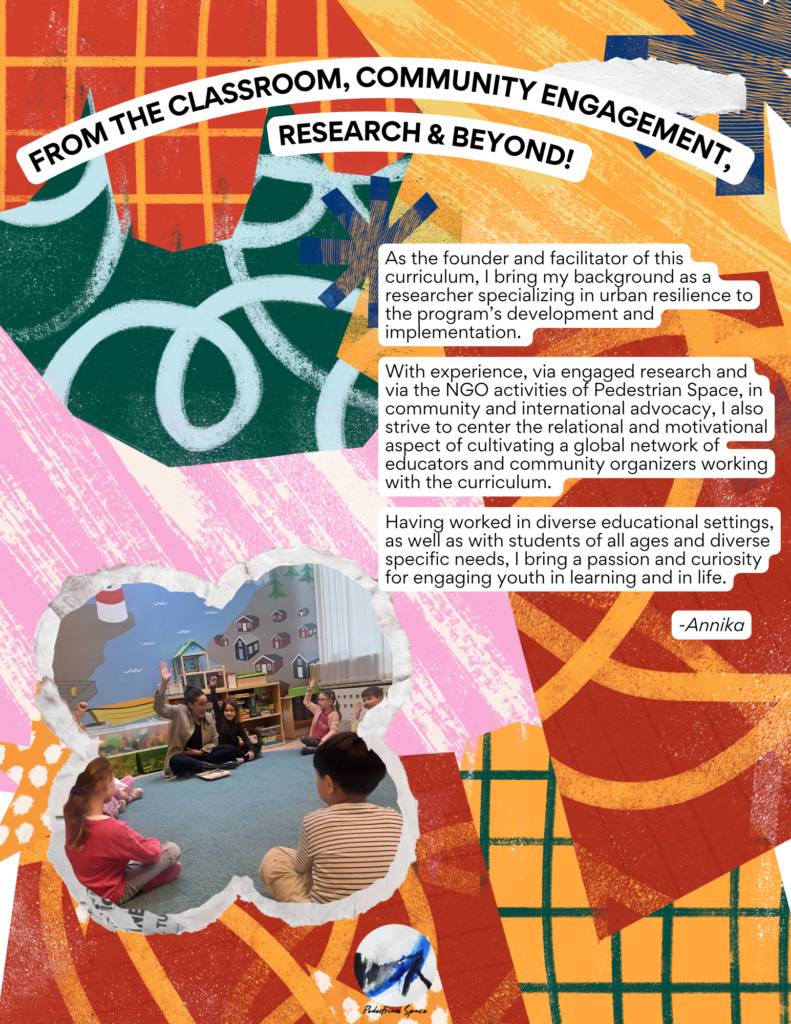
I’m excited to be bringing something that has been a dream and plan of mine for a while now to life. As an urban and resilience researcher, my goal is to shape a community-engaged program that can inspire and engage diverse generations to learn about and participate in these topics in their local context. I am also excited to develop something that can serve as a flexible, adaptable global and public resource for educators, community organizers, and leaders around the world.
The curriculum comes alive according to the local context & community partnerships.
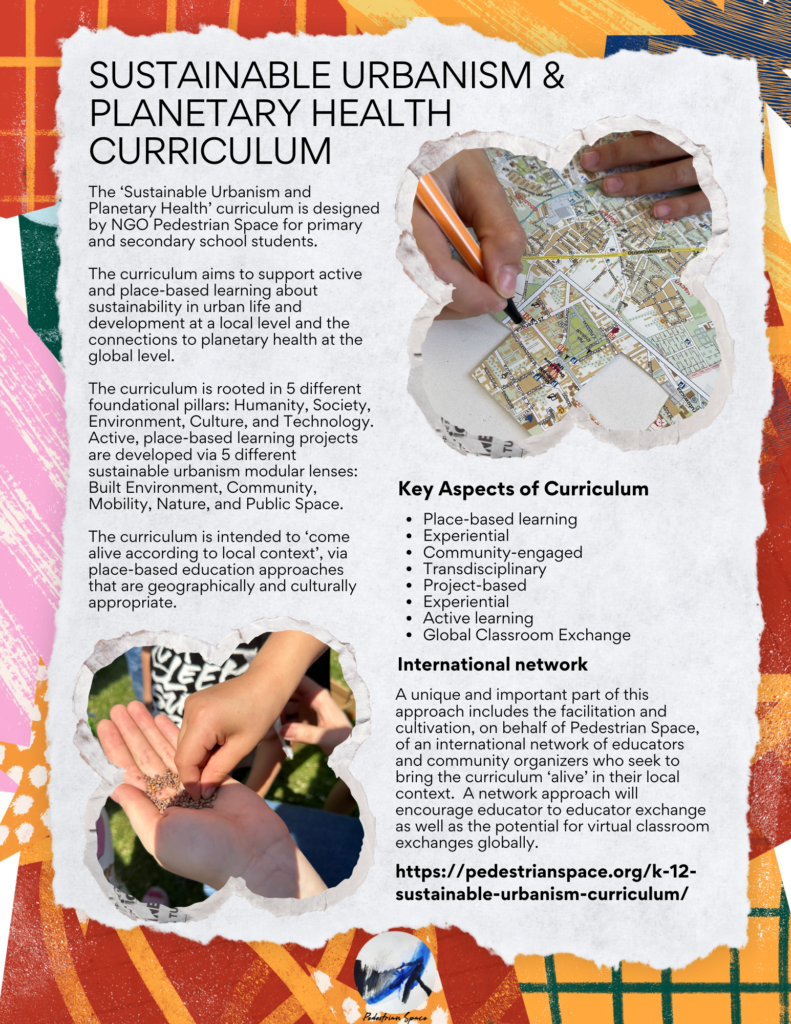
The curriculum and program are being designed with four primary participant groups in mind:
- Primary school students
- Secondary school students
- University students
- Community groups (multigenerational)
PRIMARY & SECONDARY SCHOOL
The curriculum tailored for primary and secondary school students is intended to supplement school learning with community partnerships and engagement, via diverse lenses of learning and actions for sustainable urbanism.
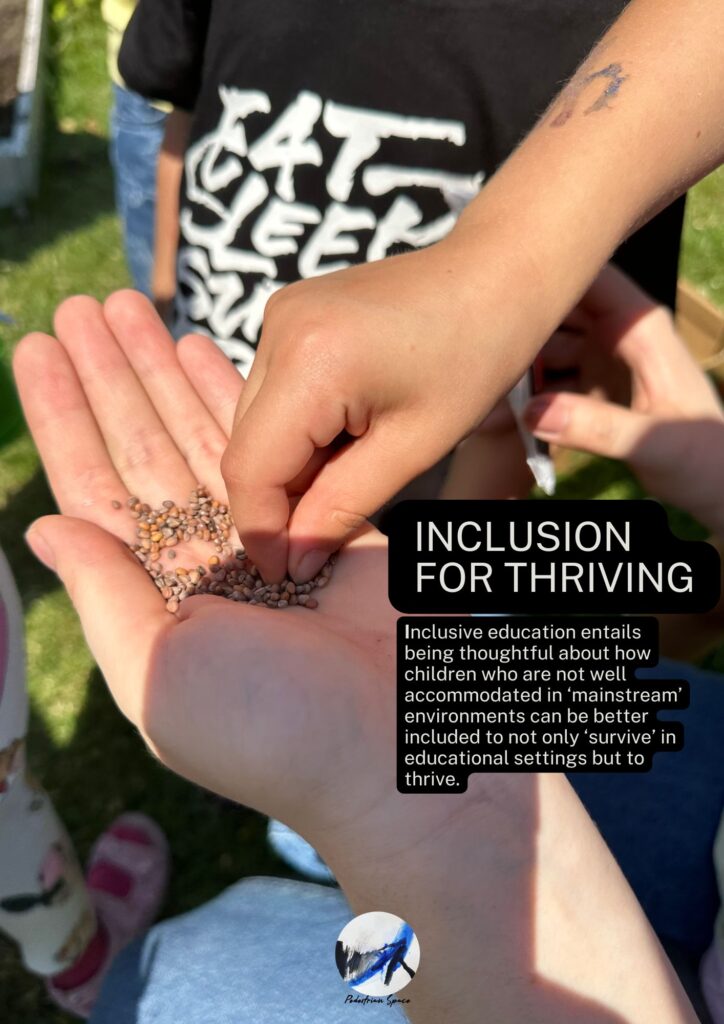
The curriculum ‘comes alive’ according to local contexts and unique community – student -educator partnerships. The thematic modules are developed in age-appropriate contexts and will also consider the engagement of children for whom ‘traditional’ school environments are very difficult to adjust to. Inclusive education entails being thoughtful about how children who are not well accommodated in ‘mainstream’ environments can be better included to not only ‘survive’ in educational settings but to thrive.
Inclusive education entails being thoughtful about how children who are not well accommodated in ‘mainstream’ environments can be better included to not only ‘survive’ in educational settings but to thrive.
UNIVERSITY STUDENTS
The program also offers a curriculum for university students, rooted in a project-based and workshop approach in which students can choose from 1 or a mix of Sustainable Urbanism thematic modules:
- Built Environment
- Community
- Mobility
- Nature
- Public Space
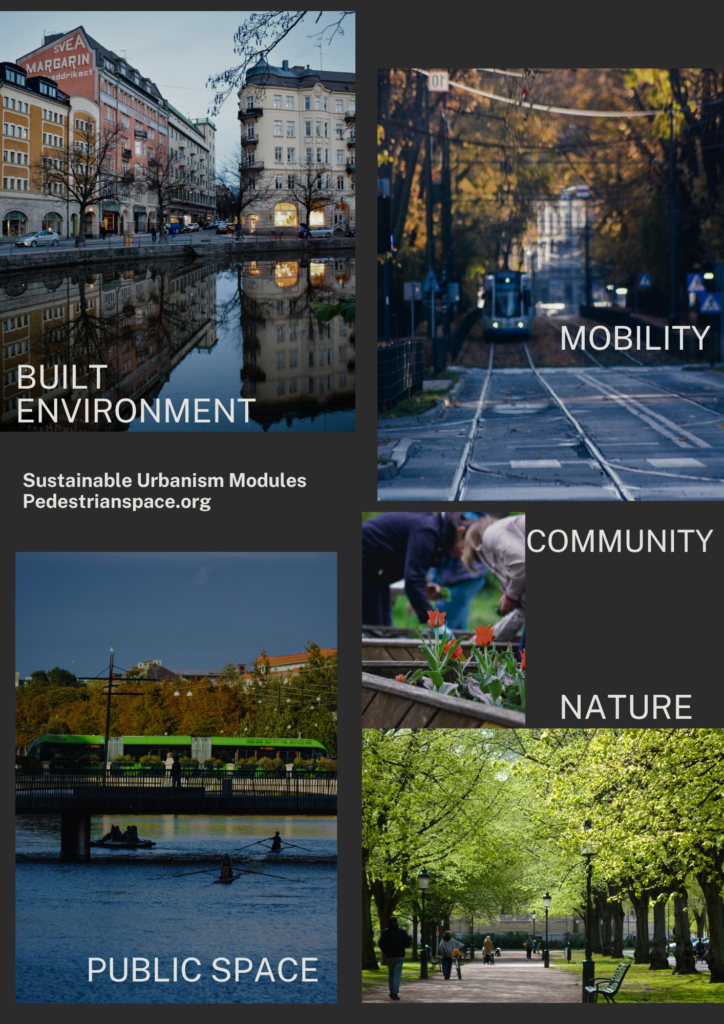
The university program approach is also rooted theoretically in 5 foundational pillars:
- Humanity
- Society
- Environment
- Culture
- Technology
Via a project-based and transdisciplinary approach, the students for the university curriculum explore an urban challenge connected to one or more of the thematic modules, also linking and grounding it to one or more of the 5 foundational pillars.
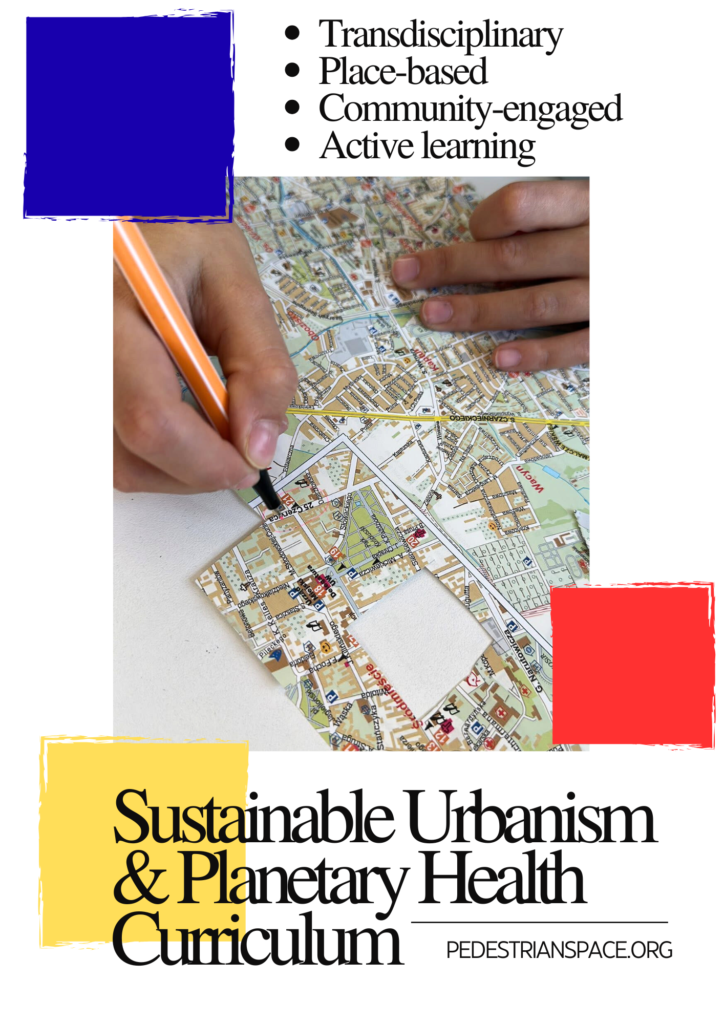
•Active
•Community-engaged
•Project-based
•Transdisciplinary
COMMUNITY GROUPS (Multigenerational)
We believe a truly holistic and multigenerational approach to shaping awareness about sustainable urbanism and planetary health also centers on engaging diverse generations in dynamic, practical, and inclusive ways. Collaborating at the community level for diverse and multigenerational outreach is crucial for our activities and public engagement. The program offers a curricular approach that can be adapted for use in local community groups and settings.
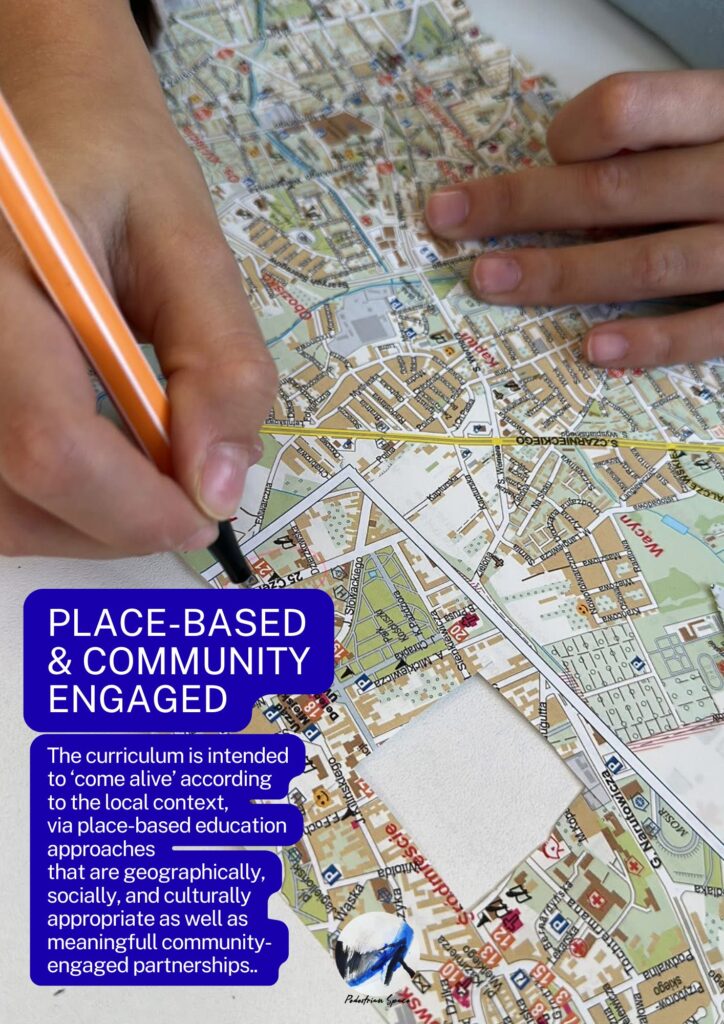
The curriculum is intended to ‘come alive according to local context’, via place-based education approaches that are geographically and culturally appropriate.
A crucial feature of the program is also the development and support of a global network of individuals and groups who work to adapt and integrate the curriculum into their programs and local settings.
This page is meant as an inspirational and informational overview of the program. If you are an educator, school or community program leader or facilitator, or a municipal official interested in more details and collaborating, please contact info@pedestrianspace.org
~Annika, Founder at Pedestrian Space
REFERENCES
Below are some of the books, papers, and other sources that have inspired and informed the program’s development (this list was established in March 2026 and will be regularly updated)
Derr, V., Chawla, L., & Mintzer, M. (2018). Placemaking with children and youth: Participatory practices to plan sustainable communities. New York, NY: New Village Press.
Engel, L., & Ben Simon, A. (2025). Place-based education – a systematic review of literature. Educational Review, 77(2), 640–660. https://doi.org/10.1080/00131911.2023.2177260
Fox, J., (2025). Learning environment : inspirational actions, approaches, and stories from the science classroom. Beacon Press.
Girardet, H., (1999). Creating sustainable cities (Schumacher Briefing). Green Books.
Jonas, A., McCann, E. & Thomas, M. (2015). Urban Geography: A Critical Introduction. Wiley Blackwell.
Nadel, I., & Oberlander, C. (1977). Trees in the City. Pergamon Press.Yemini, M.,