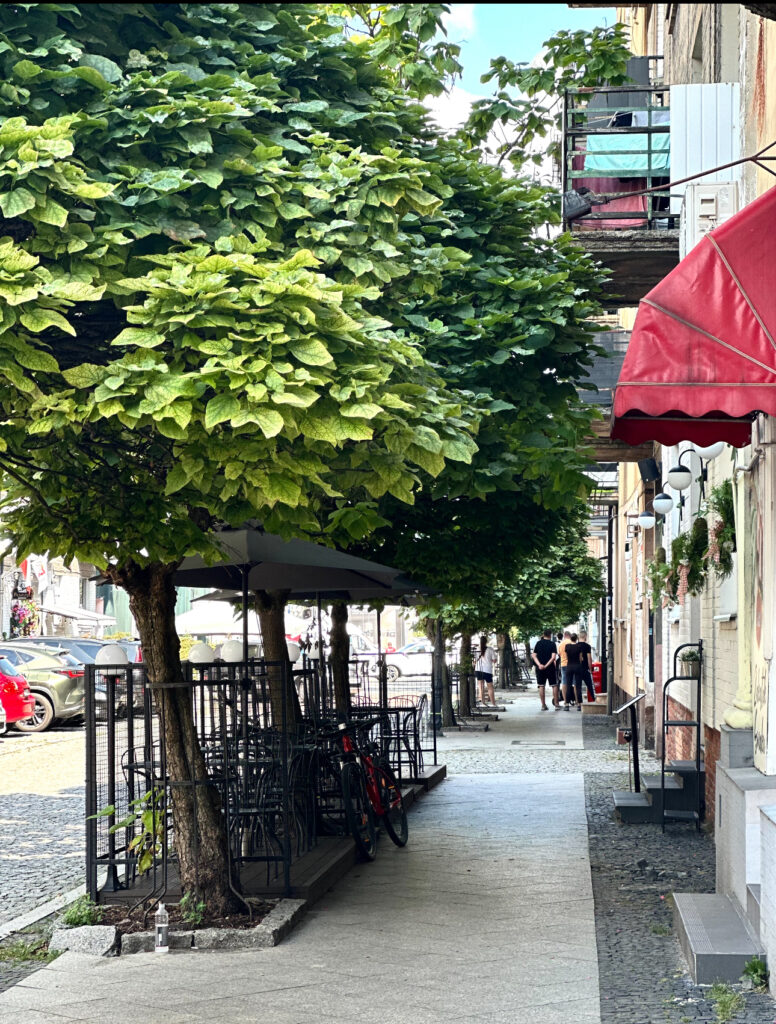
The city is not only its spaces, but also its spirit. Memories of the built environment and urban spaces and places, as well as visions for its future, are a part of that spirit.
It was with this sentiment that I began a ‘Historic Preservation & Revitalization’ study in Radom earlier this year.
Notes on the study:
Radom is definitely what you can call an underdog city. It is a stigmatized city as well. I find many parallels with stigmatized post-industrial cities in the USA, which haven’t seen much revitalization, and the memory and experience of ‘decline’ still weigh on people’s image as well as sometimes experience of the city.
But perhaps, because I am not from here, this stigma didn’t scare me away from the city. I am also a researcher specializing in urban resilience as well as a person interested in quality of life in cities, and I’m not only interested in the ‘superstar’ cities. In fact, I’m much more interested, increasingly in the shadow cities, the ordinary cities, the cities whose names are not referenced countless times in urban discourse.
In less than one month, my family and I will move to Szczecin. But not only am I now sentimental about this Polish city of Radom, but also intrigued by the material I’ve been collecting. A lot of really interesting research on Main Street decline and revitalization, in fact, comes out of the USA. I look forward to connecting some of this literature to what I’ve seen on the ground here and some material I’ve been gathering in interviewing locals.
Also, during my time here in Radom, I’ve been working at a primary school as a ‘Native English’ teacher. Much of my approach in the classroom to language learning has revolved around art and thematic projects. Next month (June), the theme will be ‘Radom’, as I guide students in projects about their own experience of the city as well as visions for a ‘future Radom’ that many of them will be living in, studying in, working in, and raising families in.