By Savannah Siekierski
For the last few months of 2025, Savannah did her Master’s level internship at Pedestrian Space. As part of her internship with us, she crafted ‘notes from the field’ from her research to share here. This is the fifth in a series of media field notes she produced related to her research.
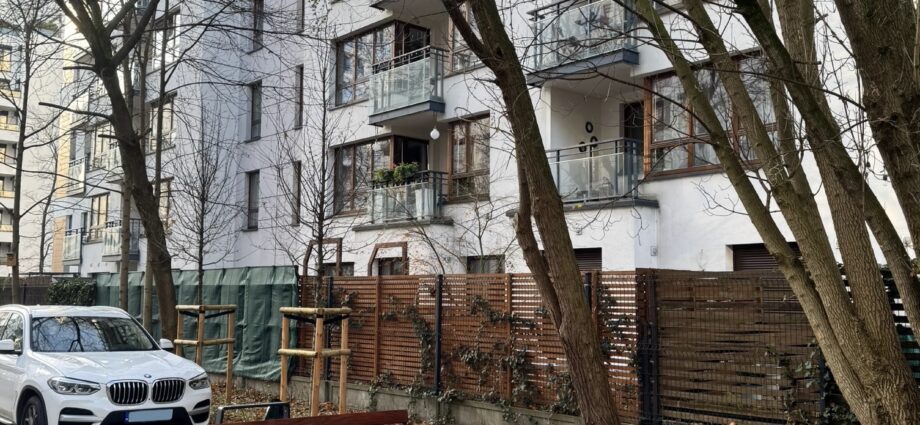
As my internship at Pedestrian Space is coming to an end, I am reflecting on the first field notes I had the opportunity to write back in September, over two months ago. Shortly after arriving in Warsaw, I headed to Brandysa street in the Żoliborz district to see how this new woonerf was integrating into the neighbourhood’s life. What I encountered was a calm and newly renovated space, with new benches, bike racks, and very rich and pleasant greenery. I observed many people using the space confidently, walking in the middle of the street, stopping, using the benches occasionally. By chatting with some local residents, I found out that the area was pleasant and functional.
However, during this visit, the street could not be assessed at its full potential, as it was not yet opened to car traffic, thus functioning more as a pedestrian promenade than a true woonerf, where cars and pedestrians safely coexist. Therefore, I visited the woonerf once again a couple of weeks after its opening on October 30th, to see how it had been functioning and if anything had changed. I wanted to observe whether people still felt just as comfortable as before to walk or stop in the middle of the street, whether cars were respecting the 20km/h limit and giving way to pedestrians, or whether the habits of a normal street had taken over.
Shortly after arriving in Warsaw, I headed to Brandysa street in the Żoliborz district to see how this new woonerf was integrating into the neighbourhood’s life. What I encountered was a calm and newly renovated space, with new benches, bike racks, and very rich and pleasant greenery.
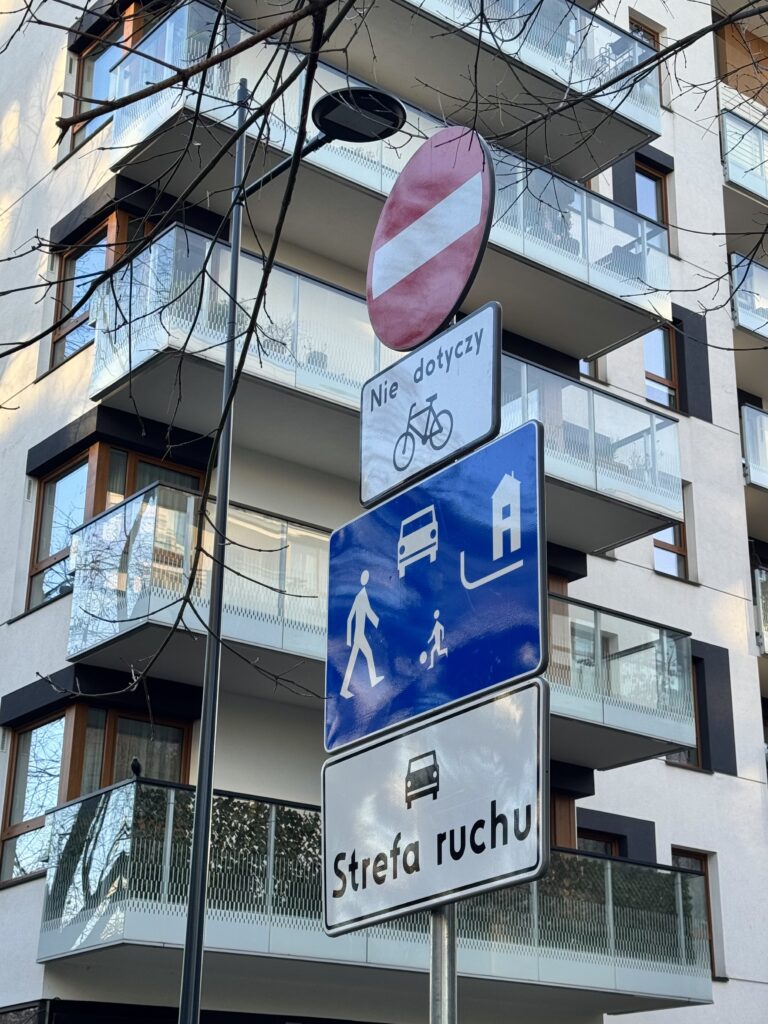
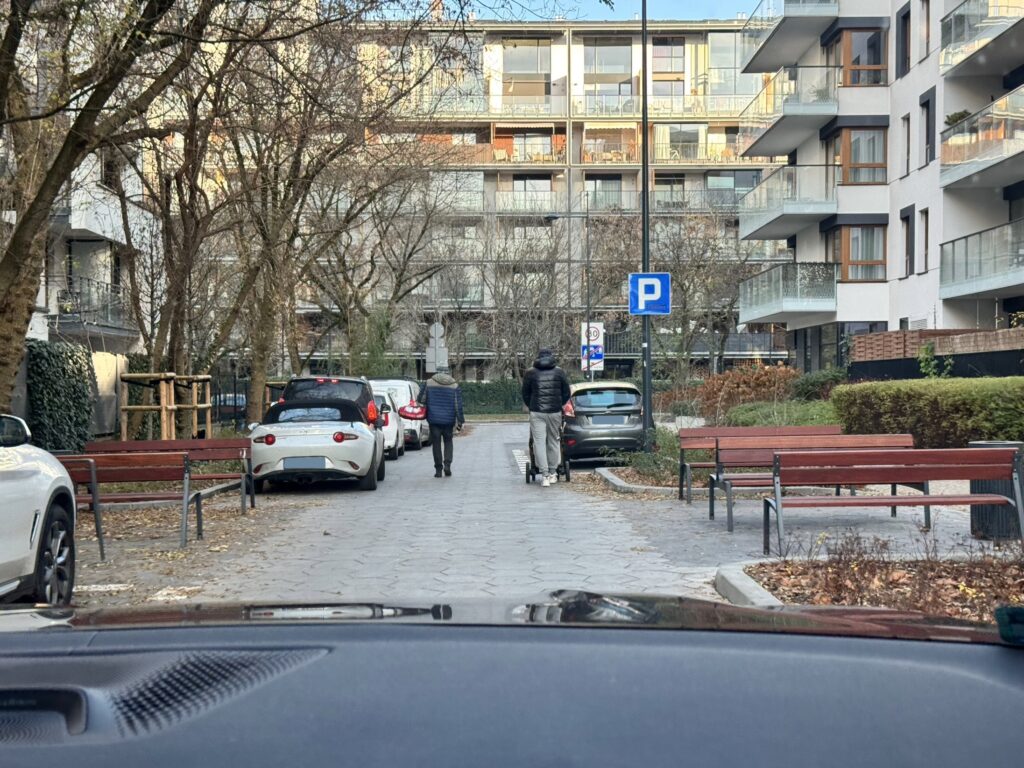
To experience the street from both perspectives, by driving and by walking, asked a family member to drive us through the street first. Arriving from Przasnyska street, we were confused — a no-entry sign and a residential area sign together? Yes, the street was always supposed to be a one-way street, but, as far as I know, these signs are incompatible. Confused, we drove around the area to enter from the other side, no signage issues there. Driving slowly down the street, letting two men walk ahead in the middle, we counted twelve cars parked on the sides, sometimes barely allowing our car to pass. The six legally designated parking spots, placed sporadically in pairs and leaving sufficient space for pedestrians, cyclists, and cars to pass, are clearly far from enough for the area.
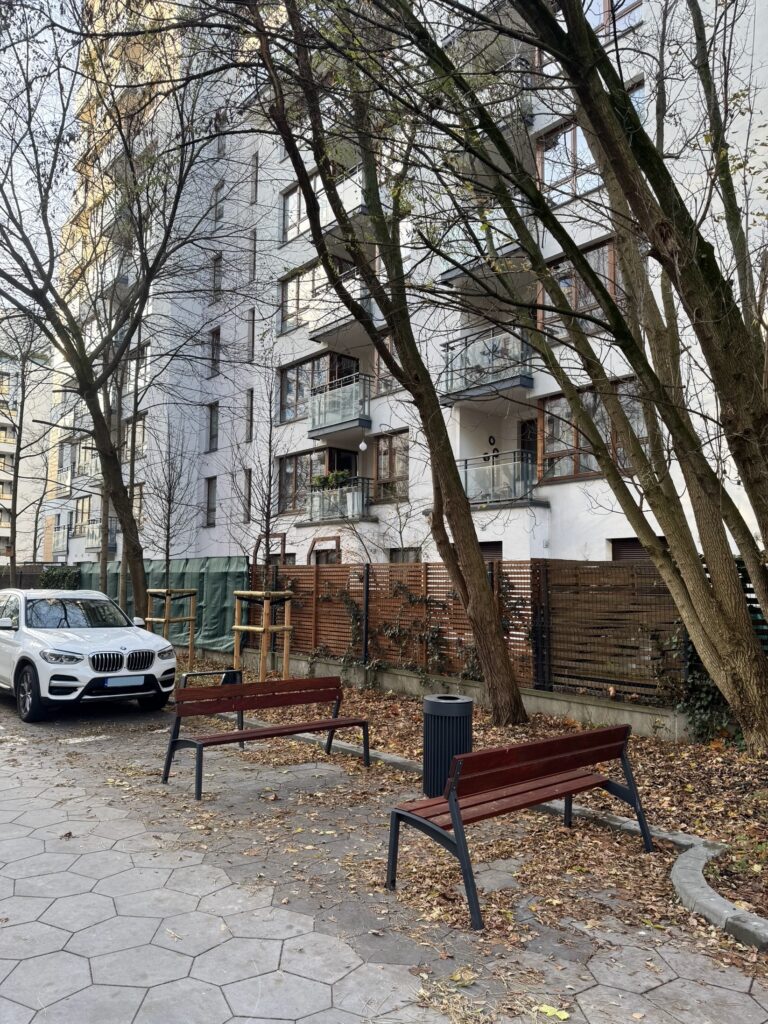
I exited the car at the end of the street (the one with the conflicting traffic signs) and immediately approached a couple that seemed to be discussing and pointing at the street. After chatting for a couple of minutes, I found out that the parking issue likely arises from insufficient parking near the shops and services in the area. As a result, what was initially planned and publicized as a woonerf becomes a street like any other, with tightly parked cars changing the intended pedestrian and recreational atmosphere. I remained on the street for 20 minutes, during which four cars entered from the “correct” direction, while six drove in against the traffic. We were clearly not the only ones confused by the traffic signs, and drivers using this vagueness for their own convenience is perhaps unsurprising. Similar to my first visit, I observed parents with children and people walking their dogs. However, the zero-degree temperature likely discouraged people from using the benches. Many people walked comfortably in the middle of the street, and I didn’t observe any clashes between cars and pedestrians.
The street surely has great potential and, in many ways, already looks like a woonerf. However, it will take appropriate signage and shared norms to actually function like one.
So what could be said about the new woonerf’s integration into the neighbourhood’s daily life? “A one- way street with a designated residential area. Pedestrians walking in the middle of the road have priority. Cars are parked in their proper places.” is how the council member, Łukasz Porębski, described the street in a Facebook post on the day it was opened. In another post, the District Office noted that “Calmed traffic and greenery make it not only a travel route, but a friendly space for everyday life in the district”. Is this what I observed? Partially yes, as the rich greenery and the urban furniture suggest a pleasant and people-focused zone hidden between the busier streets. However, the cars heavily lining the sides of the street, including in bays designated for pedestrians, as well as the serious traffic confusion caused by conflicting signs, create unsafe conditions for pedestrians and cyclists. One resident claimed on Facebook: “It’s said that the city isn’t building parking lots, but the “woonerf” that was opened two weeks ago, Brandysa Street, has already become a parking lot. Twice as many cars park there as there are designated spaces, and this is supposedly a “residential zone”.” In response to another comment pointing out the violations of the one-way street direction, the council member simply replied “They will learn.” Well, one month later — they didn’t.
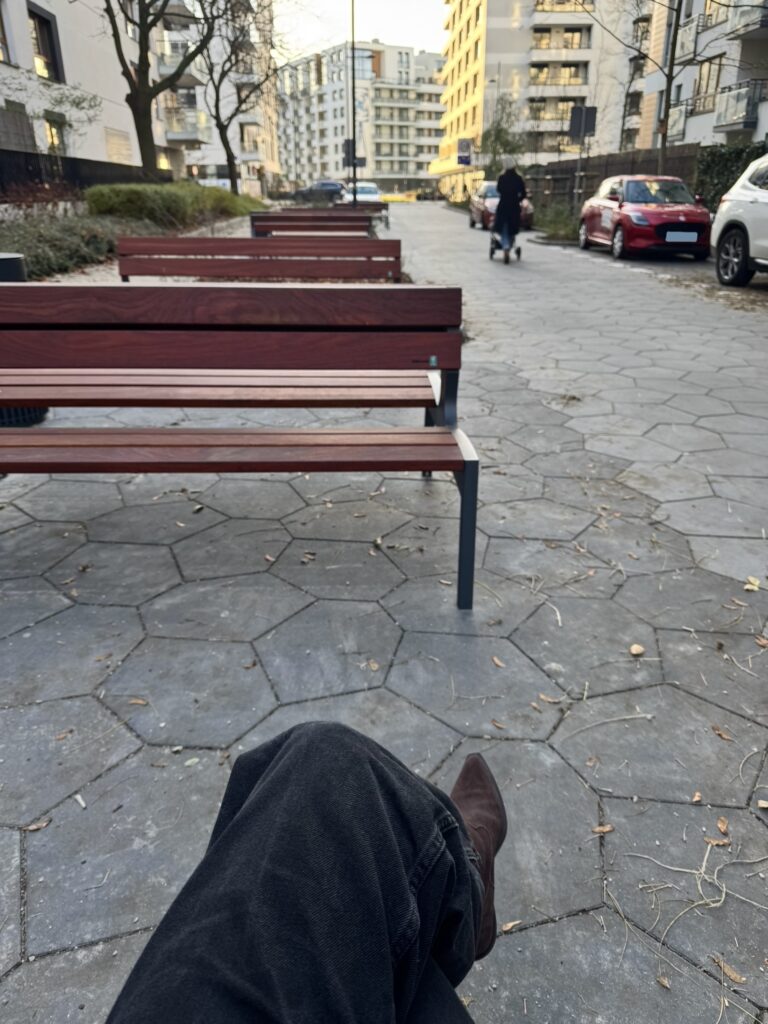
The street surely has great potential and, in many ways, already looks like a woonerf. However, it will take appropriate signage and shared norms to actually function like one. Brandysa Street currently sits in an ambiguous space between intention and practice, highlighting the fragility of such pedestrian-friendly interventions without governance support and appropriate enforcement. It’s not enough to call something a woonerf and then look away, if what we want is a street that truly stands out from the others nearby.
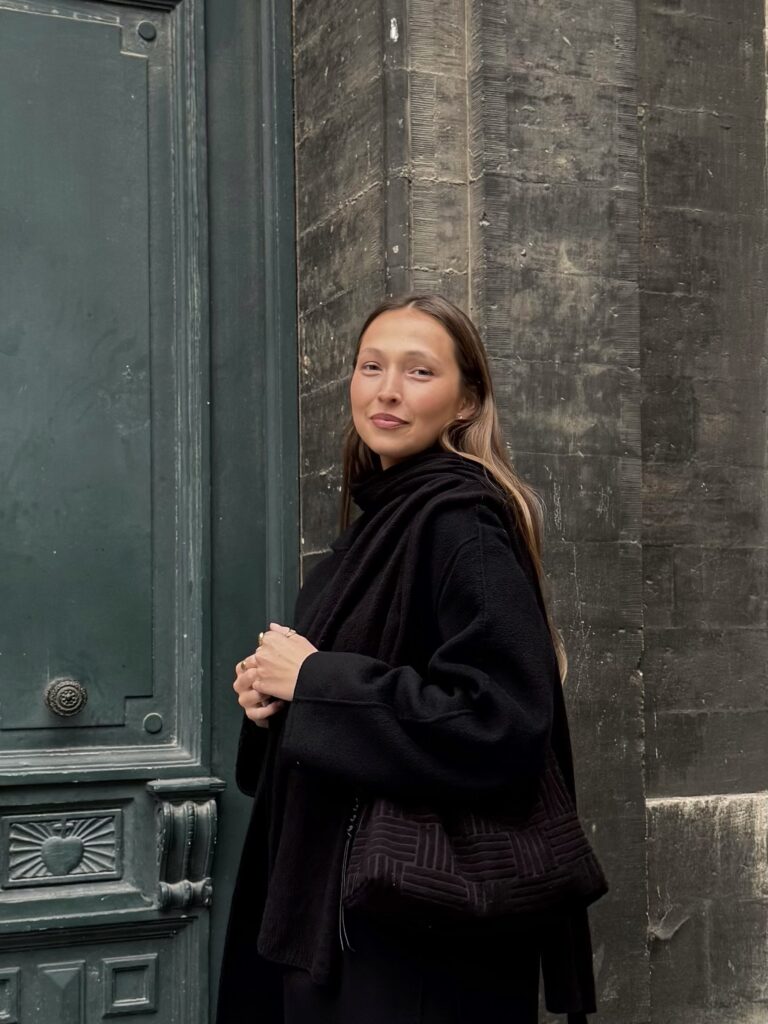
Savannah Siekierski is a Master’s student in Urban Studies at ULB/VUB in Brussels, while also holding previous bachelor’s and master’s degrees in Psychology and Cognitive Neuroscience. She is particularly interested in bridging these fields with urbanism to explore how people feel, perceive, and connect to their environments. Her research focuses on the subjective and sensory experience of urban space, with a special emphasis on walking as an embodied practice. Savannah joined Pedestrian Space as an intern to align her academic interests in the psychology of urban experience with the organization’s focus on participatory advocacy and resident-centered urban perspectives. During her internship, she is pursuing research in Warsaw through methods such as auto-ethnography and walking interviews. Alongside her fieldwork, she is also contributing a media diary reflecting on her process and offering insights into walkability and urban life.
Sources:
Durlik, M. (2025, October 30). Nowe ulice i woonerf na Żoliborzu. Gazeta Żoliborza. https://www.gazetazoliborza.pl/artykul/5574,nowe-ulice-i-woonerf-na-zoliborzu
Onet.pl. (2025, November 4). Nowe zielone ulice w Warszawie. Zostawiono nawet kłody dla owadów. Onet. https://www.onet.pl/informacje/tu-stolica/nowe-zielone-ulice-w-warszawie-zostawiono-nawet-klody-dla-owadow/kqn840n,30bc1058
TVP Warszawa. (2025, October 18). Zielono, zieleniej, Żoliborz. Na Brandysa powstał woonerf. Jak zmieniła się Hübnera? TVP Warszawa. https://warszawa.tvp.pl/89533964/warszawa-nowe-ulice-brandysa-i-hbnera-wiecej-zieleni-bezpieczniej-i-przyjazniej-dla-mieszkancow
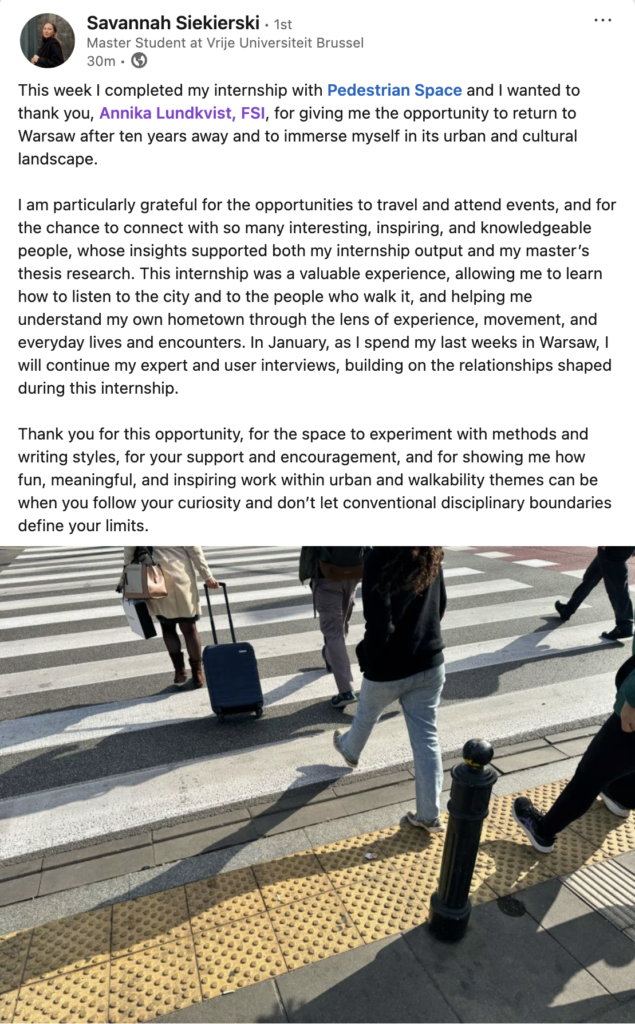
Savannah Siekierski, what an honor it has been to host you for your internship at Pedestrian Space! I really value what you have done during your internship and it’s also been fascinating to hear about your ‘return to Warsaw’ in a personal sense within the more formal context of doing your research there as well. Congratulations on work beautifully and very thoughtfully done! -Annika