In my paper ‘Researcher reflections from an urban lab: best practices and barriers of walkable urbanism via a 15-minute neighbourhood lens in Warsaw’ published in Cities & Health journal earlier this year, I devote a section to ‘Positionality and Urban Research’.

Please write to info@pedestrianspace.org if you have issues with access
In it, I write that “My entry into research was due to observations and awareness developed from lived experience, and my approach and urban geographical scholarship thus combined personal, scholarly, and advocacy. I am also an urban communicator. I deeply value and enjoy the interactions that weave through my daily life, as I intentionally and sometimes unintentionally come across interesting features related to my work in the field. I inhabit my research fields. My field is the city in which I live. I regularly use (in fact, rely upon) the modes of mobility that I am investigating and asking other residents to report. The urban flow and fabric I study are also part of my daily lives.”
I was referring to Warsaw, Poland’s capital, when I wrote this- a city I lived in for three years and which was also the site of my dissertation fieldwork.
However, I also aspire to study cities I don’t live in, as I have an interest in diverse urban situations and contexts, and cannot inhabit all of them.
I also muse that the distance afforded, as an ‘outsider’, could be a benefit as well as a barrier. I look forward to immersing in urban anthropology literature and other readings on positionality and reflexivity to explore more about what others have written on this.
The so-called ordinary aspects of the city and their fundamental role in the fabric of residential life are captivating to me. For me, the image and psychological perception of a city are part of that fabric.
In my current city of residence, Radom, the research interests begin to bubble forth as I become aware of the local opportunities and challenges of heritage, preservation, and the urban fabric, and how this connects to revitalization potential.
I’ve also been acutely aware of the very unique issue of stigma with this particular city since before I even moved here.
Last week, I activated my interest in all these issues by beginning to ask local residents about their perception of the city. I met my goal of asking 50 locals this question within 48 hours and continue to survey local residents on this, as well as residents of other Polish cities (on their perception of Radom), for a comparative approach.
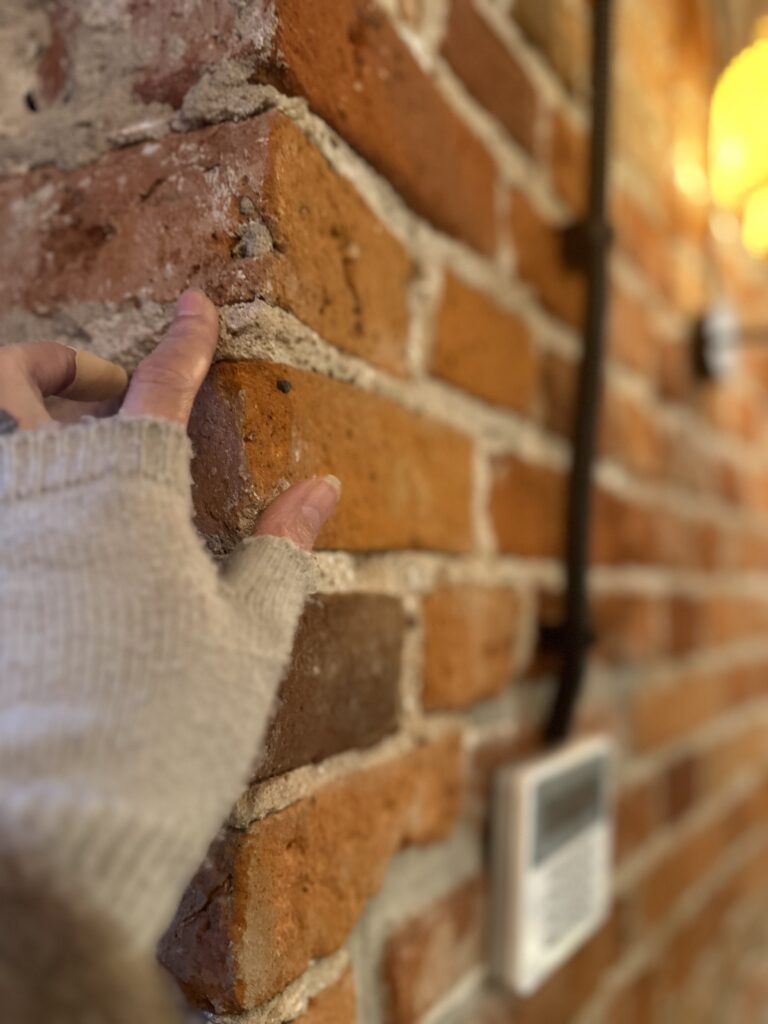
As I write in the paper linked above, ‘The so-called ordinary aspects of the city and their fundamental role in the fabric of residential life are
captivating to me’. For me, the image and psychological perception of a city are part of that fabric.
-Annika