As I develop the Pedestrian Space ‘Sustainable Urbanism & Planetary Health’ Curriculum, my library and reading list are filling up with books and materials on environmental and sustainability education. These are materials and concepts to work with for a lifetime, as of course, sustainability is a process and a path.
A Place-based education approach and thoughtfulness are at the heart of the ‘Sustainable Urbanism & Planetary Health’ curriculum I’m developing, along with a transdisciplinary, active, and community-engaged mindset, and the book ‘Place-Based Education: Connecting Classrooms and Communities’ by David Sobel (Orion Magazine, 2017) is a key reference
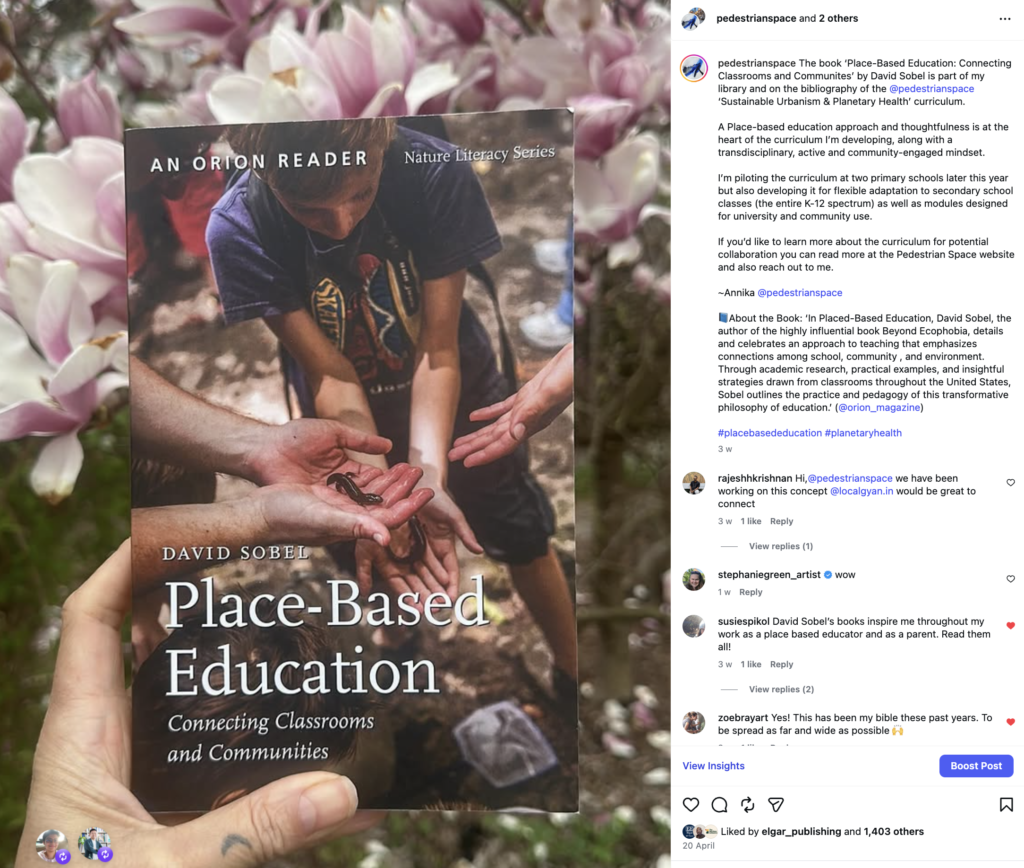
About the Book: ‘In Placed-Based Education, David Sobel, the author of the highly influential book Beyond Ecophobia, details and celebrates an approach to teaching that emphasizes connections among school, community, and environment. Through academic research, practical examples, and insightful strategies drawn from classrooms throughout the United States, Sobel outlines the practice and pedagogy of this transformative philosophy of education.’
On ‘Ecological Literacy: Education and the Transition to a Postmodern World‘, by David Orr, SUNY Press (1992) writes: ‘The most important discoveries of the 20th century exist not in the realm of science, medicine, or technology, but rather in the dawning awareness of the earth’s limits and how those limits will affect human evolution. Humanity has reached a crossroad where various ecological catastrophes meet what some call sustainable development. While a great deal of attention has been given to what governments, corporations, utilities, international agencies, and private citizens can do to help in the transition to sustainability, little thought has been given to what schools, colleges, and universities can do. Ecological Literacy asks how the discovery of finiteness affects the content and substance of education. Given the limits of the earth, what should people know and how should they learn it?’
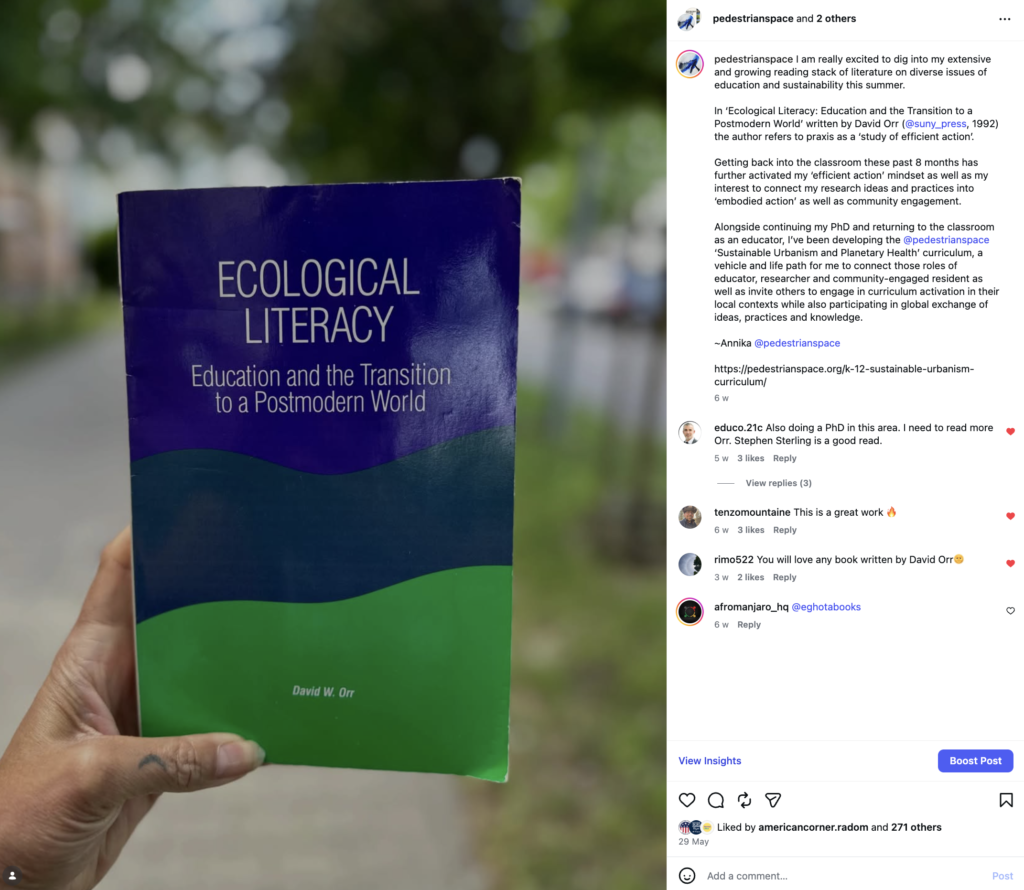
In Ecological Literacy: Education and the Transition to a Postmodern World‘, David Orr refers to praxis as a ‘study of efficient action’.
Getting back into the classroom this past school year further activated my ‘efficient action’ mindset, as well as my interest in connecting my research ideas and practices to ‘embodied action’ and community engagement. Developing the ‘Sustainable Urbanism and Planetary Health’ curriculum as a vehicle and life path to connect those roles of educator, researcher, and community-engaged resident, as well as invite others to engage in curriculum activation in their local contexts while also participating in global exchange of ideas, practices, and knowledge.
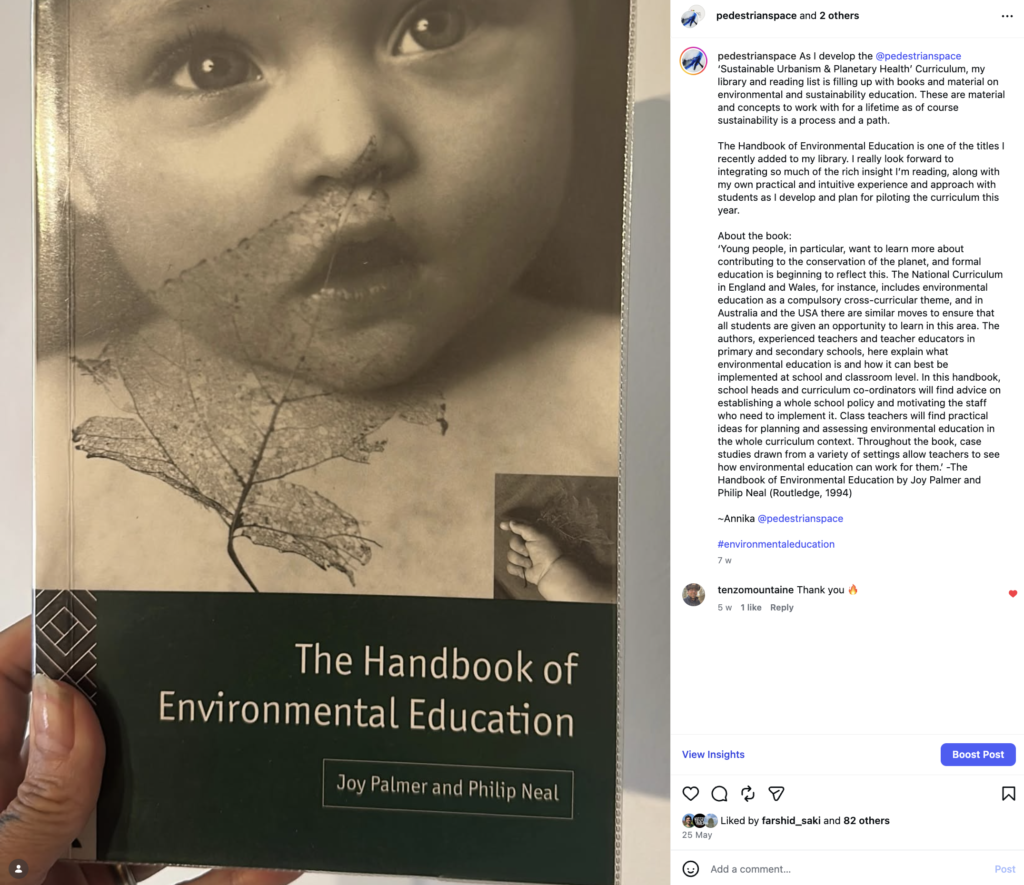
‘The Handbook of Environmental Education’ (Routledge, 1994) by Joy Palmer and Philip Neal, is also a key reference in our curriculum library.
About the book:
‘Young people, in particular, want to learn more about contributing to the conservation of the planet, and formal education is beginning to reflect this. The National Curriculum in England and Wales, for instance, includes environmental education as a compulsory cross-curricular theme, and in Australia and the USA, there are similar moves to ensure that all students are given an opportunity to learn in this area. The authors, experienced teachers and teacher educators in primary and secondary schools, here explain what environmental education is and how it can best be implemented at school and classroom level. In this handbook, school heads and curriculum co-ordinators will find advice on establishing a whole school policy and motivating the staff who need to implement it. Class teachers will find practical ideas for planning and assessing environmental education in the whole curriculum context. Throughout the book, case studies drawn from a variety of settings allow teachers to see how environmental education can work for them.’ -The Handbook of Environmental Education by Joy Palmer and Philip Neal
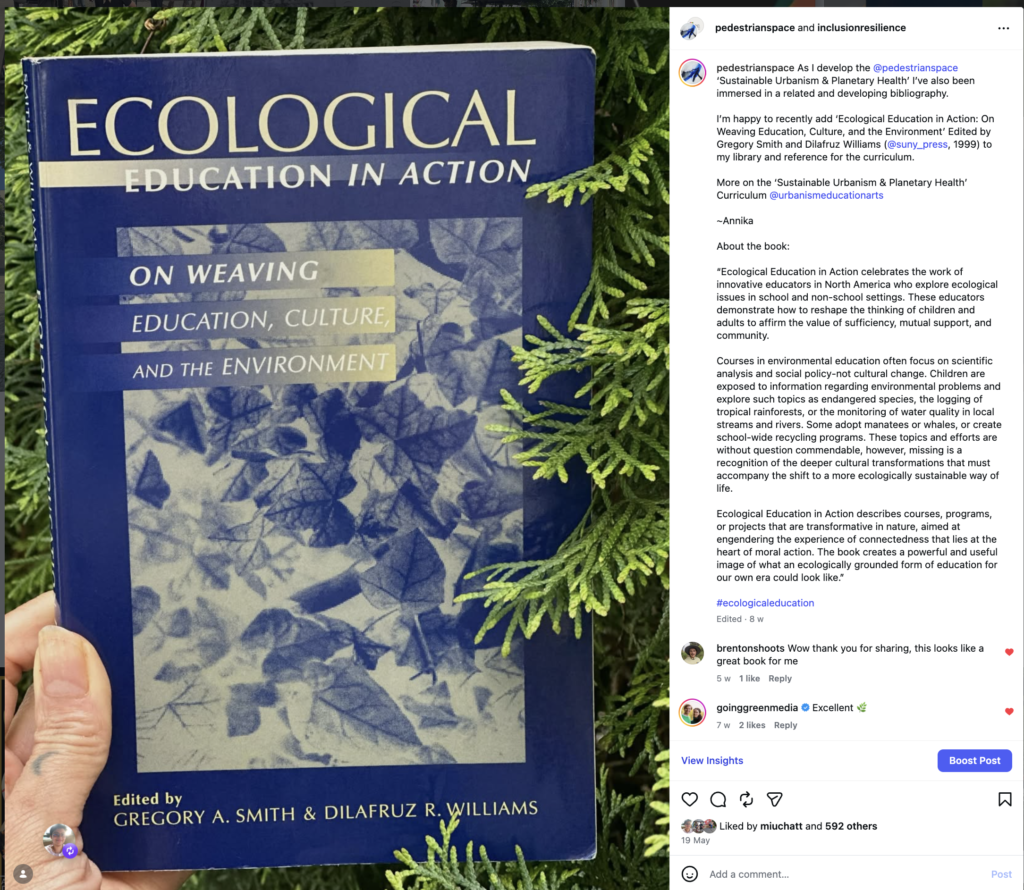
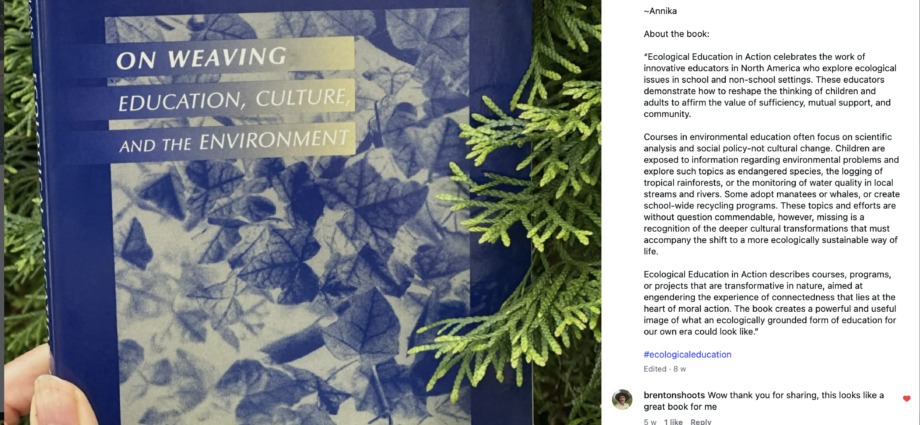
‘Ecological Education in Action: On Weaving Education, Culture, and the Environment’ is edited by Gregory Smith and Dilafruz Williams (SUNY Press, 1999) and is another key reference in our readings.
About the book: ‘Ecological Education in Action celebrates the work of innovative educators in North America who explore ecological issues in school and non-school settings. These educators demonstrate how to reshape the thinking of children and adults to affirm the value of sufficiency, mutual support, and community.
Courses in environmental education often focus on scientific analysis and social policy, not cultural change. Children are exposed to information regarding environmental problems and explore such topics as endangered species, the logging of tropical rainforests, or the monitoring of water quality in local streams and rivers. Some adopt manatees or whales, or create school-wide recycling programs. These topics and efforts are without question commendable; however, missing is a recognition of the deeper cultural transformations that must accompany the shift to a more ecologically sustainable way of life.
Ecological Education in Action describes courses, programs, or projects that are transformative in nature, aimed at engendering the experience of connectedness that lies at the heart of moral action. The book creates a powerful and useful image of what an ecologically grounded form of education for our own era could look like.’
If you’d like to learn more about the curriculum for potential collaboration, or have a good reading suggestion, please email info@pedestrianspace.org
-Annika