By Savannah Siekierski
For the last few months of 2025, Savannah did her Master’s level internship at Pedestrian Space. As part of her internship with us, she crafted ‘notes from the field’ from her research to share here. This is the fourth in a series of media field notes she produced related to her research.
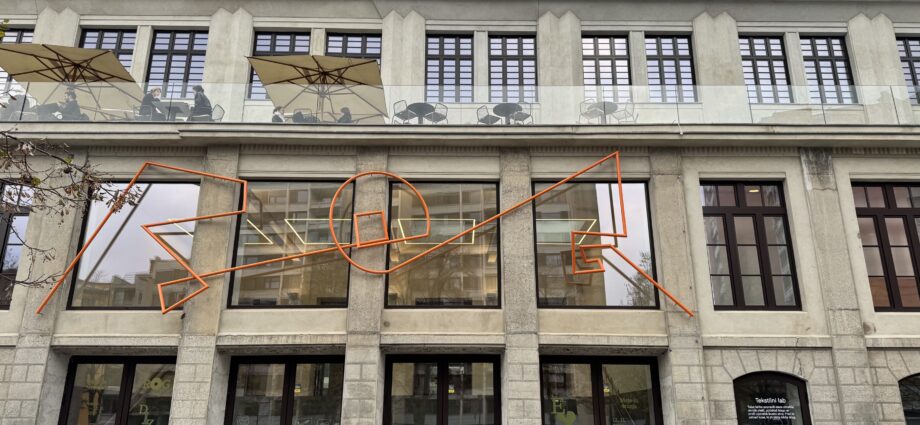
Preparing for my visit to Ljubljana this November and looking into the city’s former military and industrial sites, I stumbled upon a video interview with Marko Studen, a Slovenian architect, about the makeover of Ljubljana’s Cukrarna, a former sugar refinery, into a contemporary art gallery. He described it as “a phoenix, sparking a new life into the run-down city area and extending the city centre along the river”, and I believe that, in these words, he has captured a characteristic image of post-industrial renewal that has been taking place across European cities over the past decades. Former factories and barracks are transformed into cultural and commercial hubs, with heritage promotion playing a big role in cities gaining new attractive districts and tourist hotspots.
But walking through Ljubljana and visiting several such sites, I began wondering what the process of transformation and renewal had actually looked like here. What tensions and negotiations lay behind it? What were their unique stories, and what did they reveal about the complex relationship between industrial heritage, grassroots culture, and municipal redevelopment?
To understand the contemporary stories of Ljubljana’s former military and industrial complexes, we must first look back to the political and cultural landscape in which they originally emerged. Under socialist Yugoslavia, Slovenia enjoyed a relatively open cultural and artistic environment, with strong alternative and experimental scenes already present in the 1980s. As the most Western republic, outside influences contributed to Slovenia’s avant-garde currents and radical thought and aesthetics, creating the conditions under which authority, nationalism, and ideology could be questioned.
After gaining independence in 1991, Slovenia entered a period of economic and institutional transition, during which many military and industrial sites were left vacant. Large complexes of military barracks were abandoned as the Yugoslav People’s Army withdrew from the city, while industrial facilities often faced decline, restructuring, or closures, leaving former factory buildings unused and under uncertain
ownership. Across Ljubljana specifically, this resulted in a patchwork of vacant warehouses and barracks that soon opened up new spatial possibilities. Due to a shortage of affordable and institutionalised
housing and spaces for art and culture, artists and activists began to inhabit these sites in improvised and self-organised ways. Squatting and occupation practices have been around in European cities for centuries, with marginalised or unregulated groups making use of vacant or loosely controlled land and structures as urban conditions changed over time. While the social and political contexts have shifted across centuries, the underlying logic persists, with informal use of space typically emerging when official systems fail to meet societal needs. Ljubljana was no exception, with the newly capitalist city unable to meet residents’ needs for housing, creative spaces, and community infrastructure. As the economic transition continued, many young people, facing precarious conditions, found in the vacant buildings a solution to some of their problems. These early occupations set the stage for a range of different
outcomes across Ljubljana’s vacant sites. Among them, Metelkova and Rog would become two very significant examples, each shaped by different sets of tensions, legitimacy concerns, and evolving understandings of what these sites could become.
Metelkova: negotiating autonomy
(Photo: Savannah Siekierski)
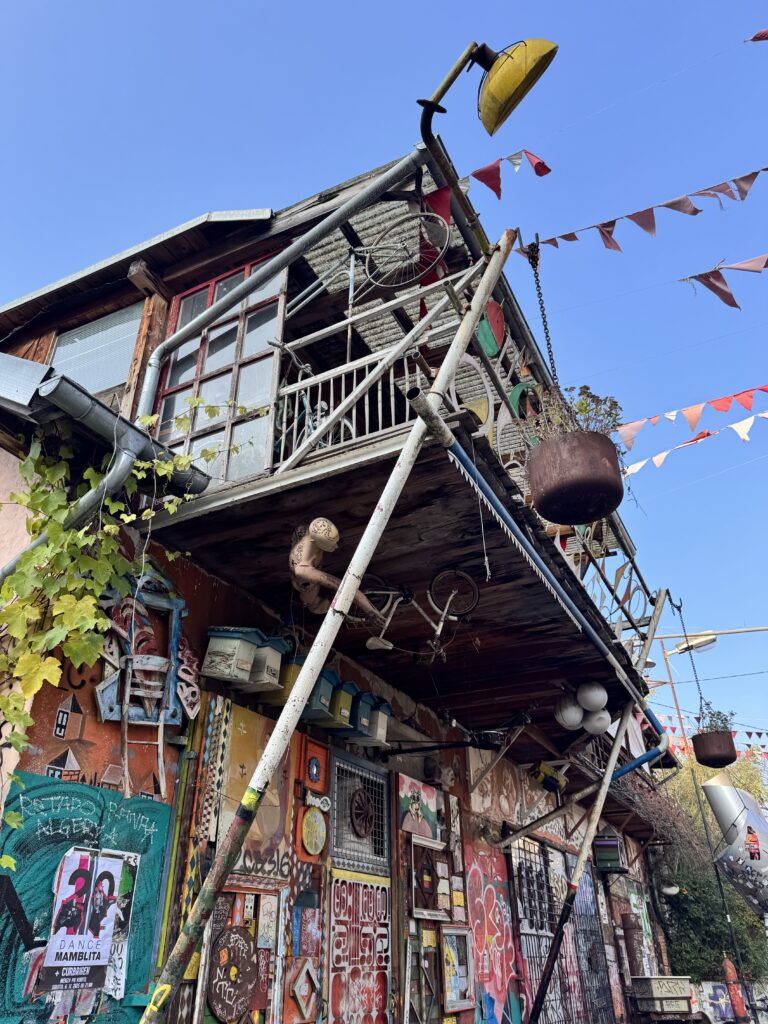
During my stay, I first visited Metelkova just northeast of the historical city centre on a Thursday afternoon, walking through the autonomous zone and visiting two museums in the southern buildings: the Slovene
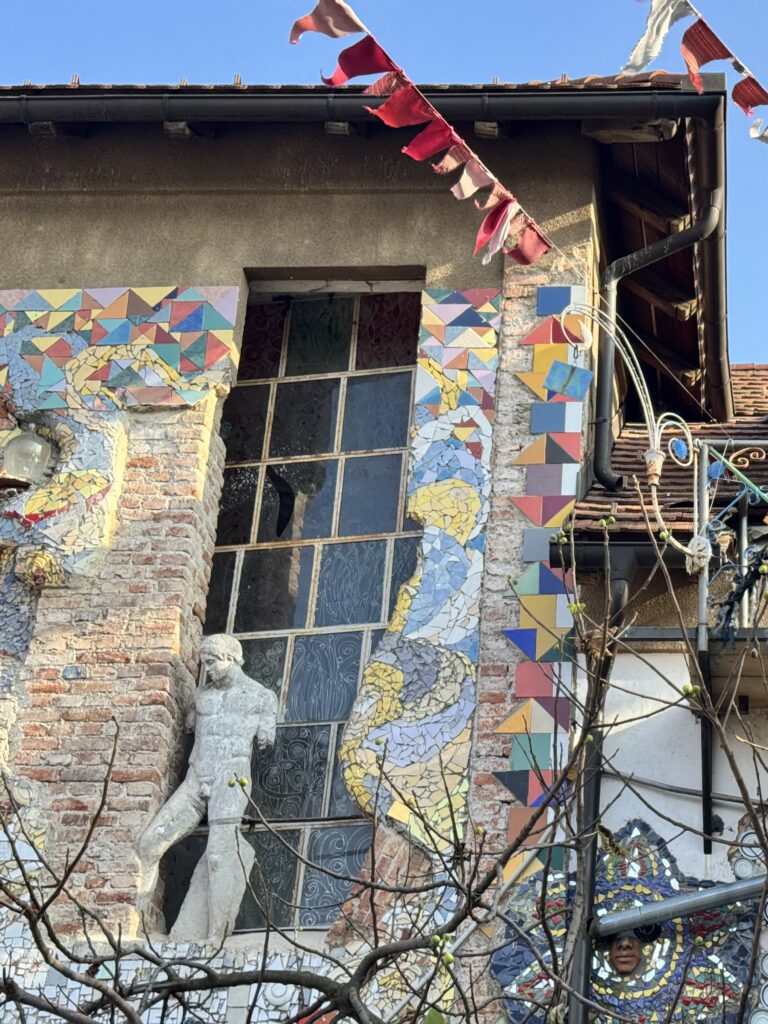
Ethnographic Museum and the Museum of Contemporary Art Metelkova. On a Saturday evening, I came back to see an Italian post-punk band at the Jalla Jalla bar. But how did the site come to be what it is today, with its colourful alleys filled with art and a steady stream of curious tourists? Formerly the quarter of the Austro-Hungarian army, Metelkova’s contemporary story begins with the withdrawal of the Yugoslav
People’s Army from Ljubljana in 1991, which left the former military barracks and prison without a clear function. This sudden vacancy arising in the middle of a rapidly changing city allowed those excluded
from formal spaces to enter and transform the site according to their needs. Artists, activists, and students moved into the empty buildings, cleaning and repairing them along the way, creating DIY spaces for
living, artistic expression, workshops, and community. Metelkova City Autonomous Cultural Centre (Avtonomni kulturni center Metelkova mesto), as it came to be known, quickly became a home to a wide
range of activities and subcultures, including queer spaces, music venues, and various societies and social support structures.
(Photo: Savannah Siekierski)
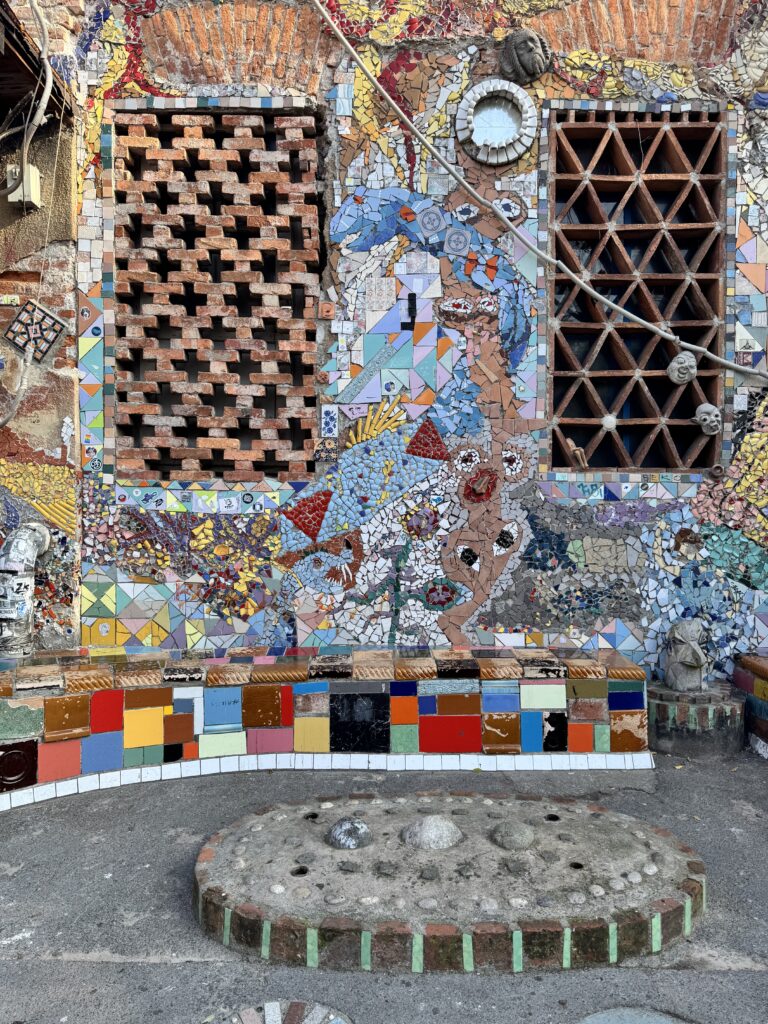
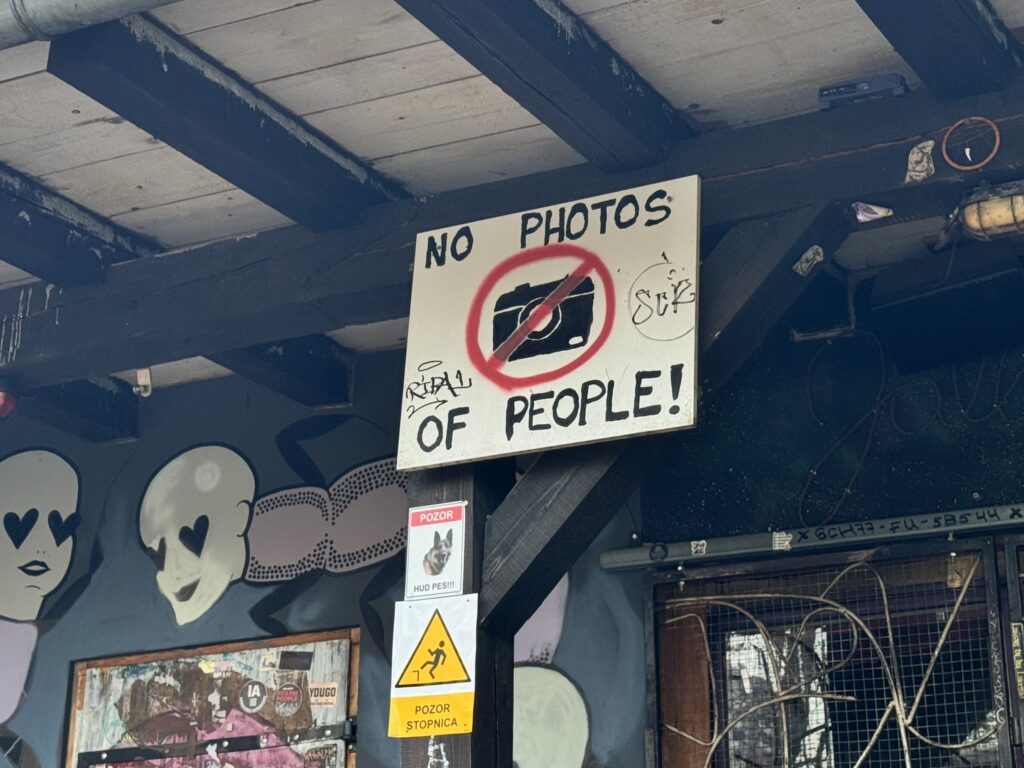
From the beginning, however, Metelkova faced significant challenges, with the collective and free culture of the space falling outside the municipality’s vision for formal cultural and spatial use. As a result, in 1993, the municipality decided to tear down some of the buildings and expel the occupying community. These attempts, however, were blocked by around 200 Metelkova residents who began a roughly three-year-long struggle to remain in place. Trying to avoid a physical conflict, the city cut off water and electricity to the site, causing the living conditions to worsen significantly during that period. Simultaneously, the stigma around Metelkova, related to drug use in particular, grew as well, and the city did little to counter it. Even under these pressures and with its unauthorised status, Metelkova continued to develop through collective efforts of the community. Over time, its cultural visibility grew, gaining national and international recognition, contributing to the relationship with the municipality becoming increasingly complex and subject to negotiation. Beginning to recognise the site’s growing cultural relevance, international visibility, and its potential for boosting the tourist economy, the city adopted a more pragmatic stance of acknowledging Metelkova’s cultural and economic value while maintaining distance from its autonomous and informal modes of organisation. This recognition did not translate into complete integration, however.
(Photo: Savannah Siekierski)
Instead, over time, Metelkova settled into a position “in between”: neither fully institutionalised nor actively repressed, tolerated despite its deviance. This ambivalent status continues to define the site today, but, the lingering stigma and the growing tensions between local and immigrant communities notwithstanding, Metelkova remains one of Ljubljana’s most distinctive autonomous cultural zones, and a curious story of pragmatic coexistence with the municipality, where the right to occupation costs only as much as exposure in tourist brochures and sightseeing tours. Who would not want to visit Ljubljana’s most vibrant alternative and creative hub?
Rog: culture reimagined
The story of Metelkova is certainly a special case of resistance efforts resulting in a mutual agreement between the community occupying the site and the municipality seeking to incorporate it into a desirable image of the city. Not all occupations reach this stage, however. Let’s take a look at Rog, a former bicycle and typewriter factory located east of the historical city centre, directly along the Ljubljanica River.
While political and military transitions shaped the trajectory of Metelkova, the story of Rog depended on shifting economic conditions. As it ceased production in 1990s, it entered a period of neglect, structural degradation, and uncertain ownership. Lack of a clear municipal plan left it standing vacant for several years, before, just like in the case of Metelkova, it began to attract various social groups and subcultures, including artists, activists, skaters, circus athletes, and tattooers, most of whom struggled to find affordable and welcoming spaces elsewhere in the city. Thus, from 2006, the newcomers began the process of reviving the abandoned buildings, completing DIY repairs and reconfiguring the space to serve community needs. The former factory gained a variety of spaces and functions, including workshops, studios, a large indoor skatepark, a bicycle repair unit, and spaces offering support to immigrants.
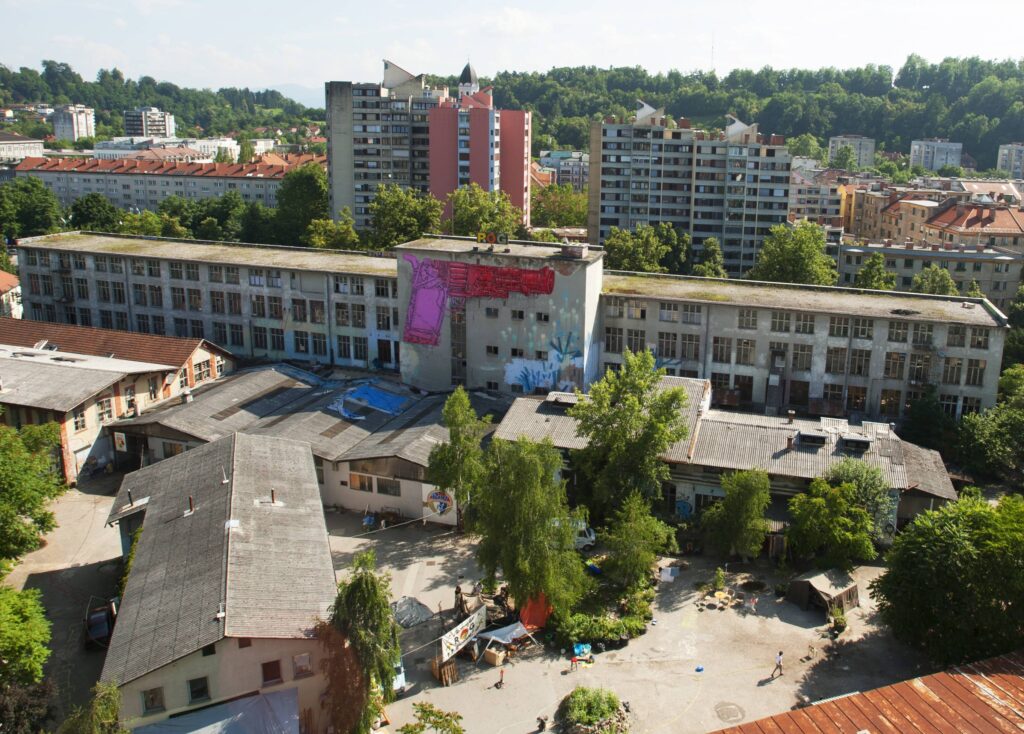
However, what came to be known as the Autonomous Rog Factory (Avtonomna tovarna Rog), never achieved the kind of tolerated “in-between” status that Metelkova eventually secured. The municipality perceived the complex as unsafe and derelict, making it highly incompatible with the vision of a neat and investment-ready city. While the community continued to use and maintain the site, the tensions, stigma, and threat of eviction remained. Occasional clashes with the authorities, like the failed expulsion in 2016, periodically interrupted the space’s everyday rhythms. Ultimately, in January 2021, with the help of police and a privately-hired security firm, the municipality cleared the complex in a large operation, destroying many of the DIY spaces and violently removing the people who relied on them.
One resident of Ljubljana, who was not involved with Rog at the time but who heard direct accounts of the event, told me that the squatters were woken up in the middle of the night and ordered to leave immediately, not being allowed to take their belongings or secure their pets. This violent displacement left a deep sense of resentment among the former users, he said, many of whom felt unable or unwilling to engage with the new Rog envisioned by the city, cleared of the grassroots occupation and reoriented toward the city’s branding. In the next two years, the space was transformed into a flagship cultural hub promoting design, craft, and innovation, and engaging in various ways with creators and creative industries.
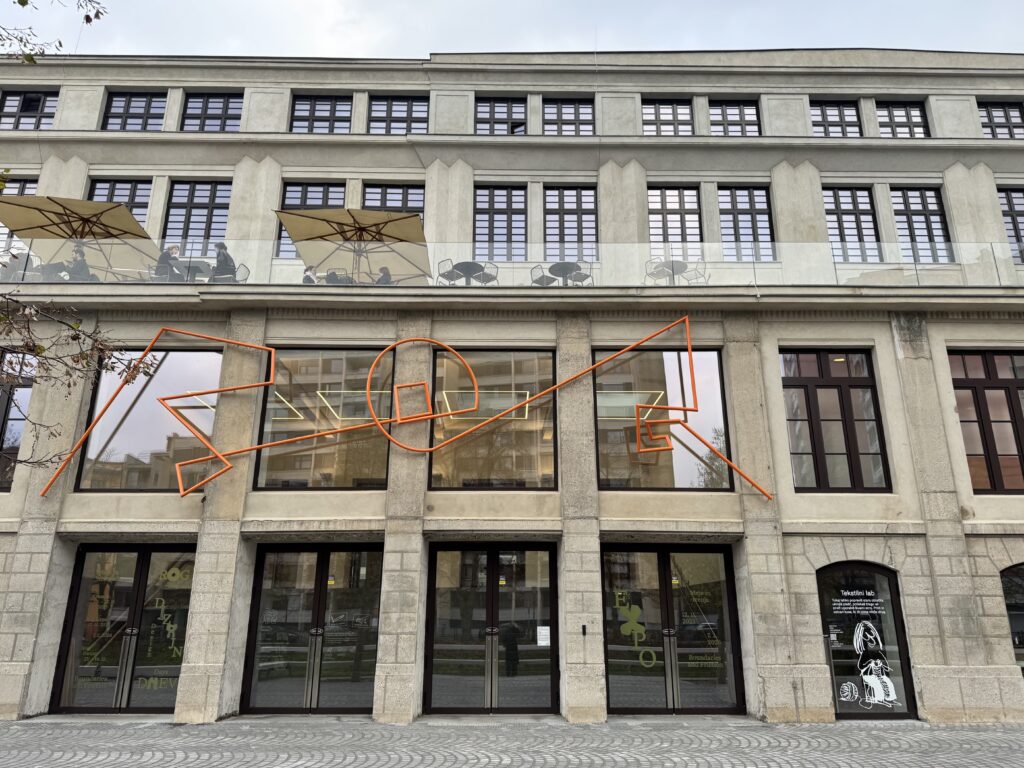
During my stay in Ljubljana, I had the chance to visit the new Center Rog, and what struck me immediately upon entering the building was just how alive the space felt. The halls of the former factory, crowded and activated on a Friday morning, were lined with glass-fronted workshops, exhibition rooms, and maker spaces. During my visit, I saw a free exhibition on contemporary design and craftsmanship, listened in on a panel during a design conference (I am unsure whether formal registration was required — nobody checked), wandered through a pop-up makers’ market, had tea on a terrace of the cafe overlooking the river, and visited a small photography gallery and bookshop. As I walked through the place, I noticed many students settled into armchairs in the hallways and working on their laptops, an older man reading a newspaper, and a group of children taking part in an art workshop in the library. This scene made it apparent to me how the character of the space has shifted in line with the city’s broader vision for culture and creativity. Indeed, the Center Rog currently operates through structured programmes, formal membership and artist residencies, and a range of curated activities. Its accessibility, reflected in the free exhibitions, public events and communal areas, as well as the breadth of programming, make it an important cultural resource for Ljubljana. However, this form of activation also differs significantly from the autonomous, self- organised environment that previously occupied the site and provided so many people with shelter, sense of community, and creative dynamism. These shifts mark a profound transformation in how the site functions and for whom. Contemporary Rog, as I was able to observe myself, reflects a very different mode of cultural production, one that is public and lively, but also deeply institutionalised and fundamentally distinct from the bottom-up practices that once defined its life. Its trajectory shows how post- industrial renewal can generate both opportunities and losses, producing spaces that are vibrant and accessible, while simultaneously breaking with the autonomous cultures that animated them in their early year.
Zooming out: post-industrial tensions across Europe
Looking at Metelkova and Rog within a broader European context makes it clear that their stories are neither isolated nor accidental. Across Central and Eastern Europe, the 1990s often marked a profound shift: decline of certain industries, rise of competitive urban economies and markets, and shrinking cultural budgets. In this context, the urban and societal meaning of post-industrial sites became highly contested, being, at once, symbols of economic decline and valuable urban real estate, as well as spaces of possibility for those pushed out of formal housing, economic, social, and cultural infrastructures.
Former industrial sites often inspire at least two competing visions of urban life. On the one hand, we have informal cultural uses that arise bottom-up in moments of vacancy. On the other hand, we have formal redevelopment strategies that treat these spaces as assets for economic growth, tourism, and city branding. Similar tensions have appeared and continue to appear elsewhere in Slovenia, but also across Europe. Leipzig’s Baumwollspinnerei, a former cotton mill, was gradually taken over by artists in the 1990s and later evolved into a major European contemporary art complex, balancing its bottom-up origins with increasing institutionalisation. In Warsaw, the Norblin factory and Elektrownia Powiśle, formerly a metalworks complex and a power plant, respectively, were both redeveloped into polished mixed-use districts with a curated blend of restaurants, shops, and offices. In Brussels, the Tour & Taxis complex, once a vast 19th-century freight and customs hub, has been transformed into a large institutional cultural and commercial district, and the former military barracks of See U, operating temporarily as a vibrant ecosystem of grassroots cultural, social, and community initiatives, were recently integrated into a multifunctional district. This last one, for example, hosts the Brussels Centre for Urban Studies, where I study currently. Perhaps not surprisingly, these investments are often coupled with a rise in high-end housing and growing rents of the existing properties in the surrounding areas. Ultimately, these and similar examples show that tensions visible in Ljubljana are part of a much wider urban pattern, yet the pairing of Metelkova and Rog, located only a 10-minute walk apart, is particularly illustrative. Emerging in similar context and among similar pressures, their trajectories still diverged dramatically, demonstrating the power of municipal strategies and political and legitimacy framing in dictating what becomes possible at post-industrial sites, and for whom.
Right to the city, urban experiments and plural urban cultures
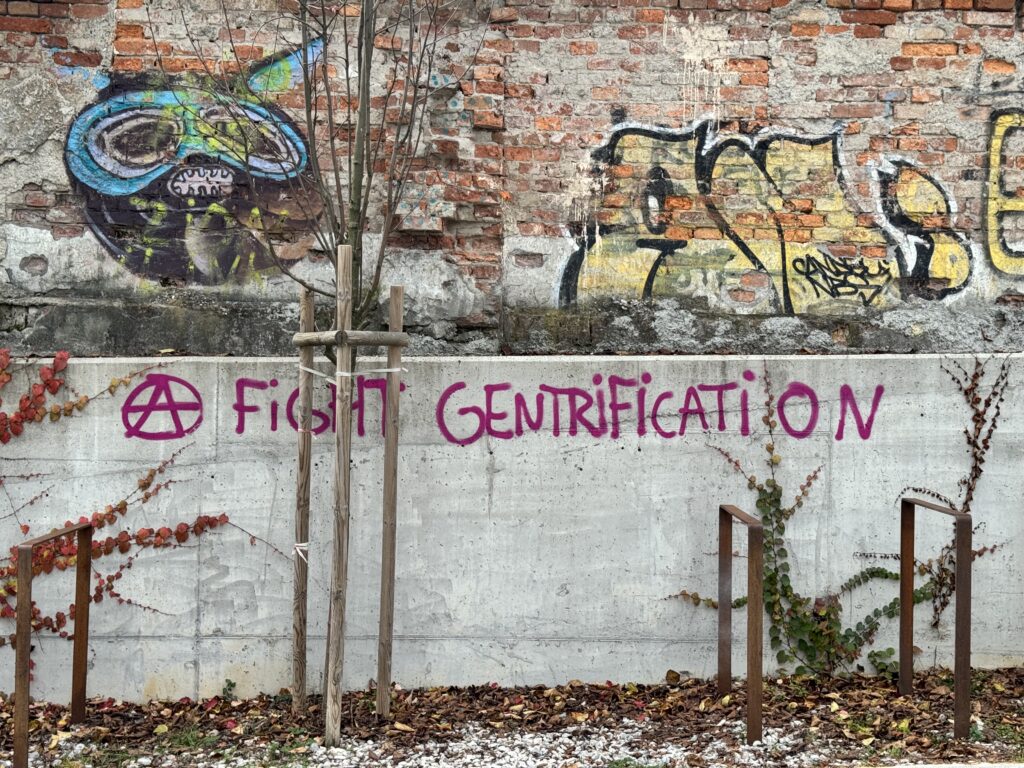
These stories also trigger one broader question, particularly important for the reflection on contemporary urbanism: who has the right to imagine the city and to inhabit it on their own terms? At their core, autonomous cultural zones articulate an alternative understanding of urban life, grounded in collective use of space, mutual aid, non-hierarchical organisation, and resistance to the logic of profit. They form curious enclaves, environments where alternative ways of living, creating, and producing of space and community become entangled. Here I find the quote from Gatouillat and Nikšič (2023) particularly fitting, who say that these spaces ”embody experiments in new urban lives and, in this sense, contribute to the exploration and experimentation of what public space can be, the role of a citizen within the city and its planning, and what urban life can be.” Yet what the above stories reveal is how fragile such experiments can be when confronted with dominant urban agendas. The moment of post-independence freedom and openness that enabled these occupations was brief, before the pressures of marketisation and urban competitiveness began to redefine what kinds of cultural life cities were willing to support. In such a climate, autonomous zones become both vital and vulnerable, as they defend forms of collective, critical, and free culture that sit uneasily within the neoliberal vision of the city as a space of investment, tourist visibility, and commercial attractiveness. Studen’s phoenix metaphor quoted at the beginning, then, becomes less a symbol of spontaneous regeneration and more a marker of a political and deliberate strategy of city-making. What appears as rebirth is in fact a process of selective transformation, where certain social, cultural, and aesthetic forms are selected over others, which are suppressed or displaced in the process.
On the surface, urban renewal may appear as physical transformation of space, however, exploring Ljubljana’s post-industrial landscape reveals that it is much more than that: a negotiation over meaning, legitimacy, and belonging within the contemporary neoliberal city. It can be framed as many things, as heritage, risk, opportunity, or nuisance, all of which point to contested politics of who has the right to the city and who gets to shape its future. This carries broader implications for how we understand cultural life in post-industrial cities and which questions we should be trying to answer as new cultural and commercial hubs pop up in our cities. Who are the producers and consumers of culture? What kinds of culture are promoted and what kind of spaces do they inhabit? Ultimately, the trajectories described above demonstrate that no single model of cultural infrastructure can meet all urban needs. Formal institutions, such as contemporary Center Rog, offer a degree of stability, legitimacy, and access to resources; autonomous zones, like Metelkova, provide space for experimentation, non-hierarchical organisation, and social infrastructure for groups who fall through institutional gaps. I believe that the true value lies, then, in recognising that a culturally plural city requires recognising and allowing the existence of both of these models. And, importantly, not as competing models locked in a struggle for legitimacy and resources, but as complementary ecosystems that can sustain different practices, communities, and urban imaginaries.
Savannah Siekierski is a Master’s student in Urban Studies at ULB/VUB in Brussels, while also holding previous bachelor’s and master’s degrees in Psychology and Cognitive Neuroscience. She is particularly interested in bridging these fields with urbanism to explore how people feel, perceive, and connect to their environments. Her research focuses on the subjective and sensory experience of urban space, with a special emphasis on walking as an embodied practice. Savannah joined Pedestrian Space as an intern to align her academic interests in the psychology of urban experience with the organization’s focus on participatory advocacy and resident-centered urban perspectives. During her internship, she is pursuing research in Warsaw through methods such as auto-ethnography and walking interviews. Alongside her fieldwork, she is also contributing a media diary reflecting on her process and offering insights into walkability and urban life.
Sources:
Bejšovec, J. (2015). The battle for Metelkova. Galerija Alkatraz. https://galerijalkatraz.org/wp-content/uploads/2015/11/TheBattleForMetelkova.pdf
Beyond Learning. (2025, September 2). When artists claim their own space! [Podcast episode]. https://podcasts.apple.com/us/podcast/beyond-learning/id1709304077
Gatouillat, M., & Nikšič, M. (2023). The culture of urban space occupation in Ljubljana or how do the citizens appropriate the city through bottom-up approaches. IGRA USTVARJALNOSTI (IU)/CREATIVITY GAME (CG)–Theory and Practice of Spatial Planning, 11, 56-65.
Gržinić, M., Pristovšek, J. (n.d.). Oh yes, Metelkova City in Ljubljana: Occupied barracks complex for independent art and initiative structures. Agosto Foundation. https://agosto-foundation.org/oh-yes-metelkova-city-in-ljubljana-occupied-barracks-complex-for-independent-art-and-initiative-structures?
Mestna občina Ljubljana. (2022, February 17). CUKRARNA GALLERY – new building, new identity, new life [Video]. Youtube. https://www.youtube.com/watch?v=A5L0FQMwr60
Rog Tovarna. (2016, August 5). From bicycle factory to freedom square | Rog Tovarna [Video]. YouTube. http://youtube.com/watch?v=8ItG2nKP6aw&t
Strip Core TV (2023, October 7). AKC Metelkova Mesto 2023. [Video]. https://www.youtube.com/watch?v=GAgMyW9L1es
Tosics, I. (2016, November 29). Squatting for cultural use toward commons: The case of Rog Factory in Ljubljana. Urbact. https://urbact.eu/articles/squatting-cultural-use-toward-commons-case-rog-factory-ljubljana
Tovarna Rog. (n.d.). Tovarna Rog. https://tovarna.org/
Zabukovec, M. (2016, June 29). Skvot, prostor za vse tiste, ki si upajo misliti drugače. Delo. https://old.delo.si/novice/ljubljana/slovenski-skvoti-od-zacetka-do-danes.html
Zurimendi, J. (2025, July 1). Center Rog: Ljubljana’s creative hub. Eurocities. https://eurocities.eu/stories/center-rog-ljubljanas-creative-hub/