I’ve got less than two months remaining living here in Radom before moving on, but the bond with the city has been forged.
Earlier this year, I started a ‘Perceptions of Radom’ study in which we explore emotions about the city as well as urban memory.
I also have a related and concurrent study on historic preservation, adaptive reuse, and revitalization in the city, for which I am interviewing diverse local business owners who have adaptively reused a historic property, and discussing the challenges and opportunities of such adaptive reuse, as well as interviewing experts on diverse challenges and opportunities of preservation and revitalization in the city of Radom.
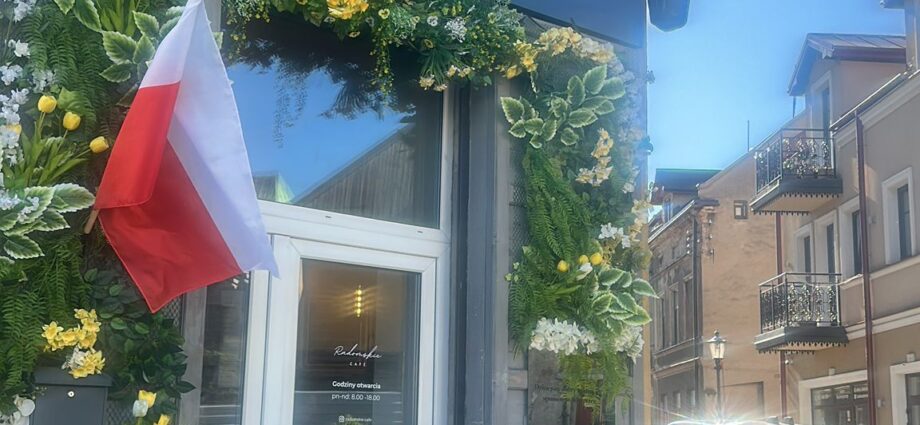
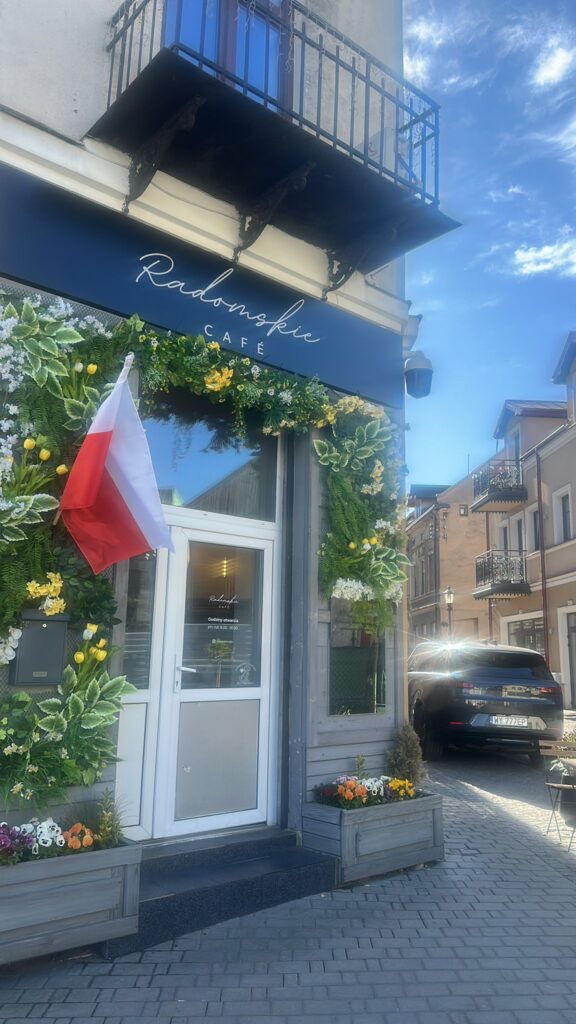
I took the photo below of Radomskie Cafe last week. It is easily one of our favorite places to grab our morning coffee. I’ve been communicating with the owners of this historic property, which used to be a cigarette tube factory, to prepare for an interview for this study, and about their own commitment to local heritage. Inside the beautiful and spacious yet cozy cafe, there are elements of the city’s industrial heritage everywhere- multiple models of old phones, sewing machines, guns under framed glass- all testaments of the city’s important manufacturing history.
In communicating with the owners about their commitment to preserving and showcasing this heritage, they wrote me: “Rather, it’s because Radom is such an underrated city. Young people don’t realize how powerful this city was, and the goods produced here were exported throughout Europe. Radom workers rebelled against the authorities in June 1974 (…)We want people to remember our heritage and not look at Radom only through the prism of airport jokes.”
I agree.
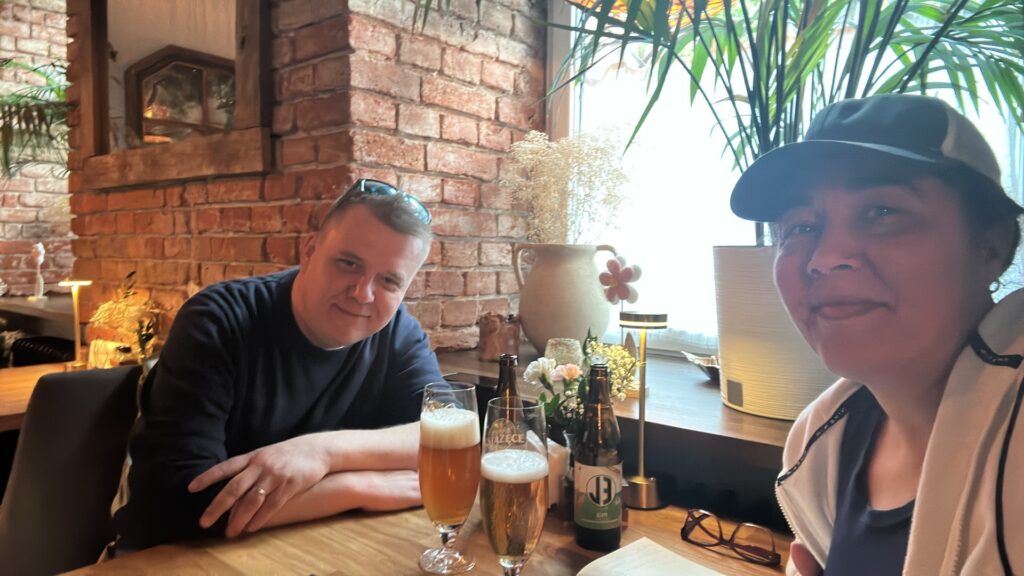
Late last month, I began interviews for this study, starting off with a meeting with local architect Tomasz Gęsiak. It was a fascinating first meet initiated due to our common interest in issues of preservation and revitalization, as well as shared interest to discuss the specific challenges and opportunities Radom – not only in the transformation to the built environment, but also in the minds of people, as well as stakeholder dynamics.
We talked about Radom as a ‘slow city’ (and the special quality in that as well) – but that this doesn’t define it.
Radom is also a ‘natural 15-minute city’ he reflected, but that’s not all it is.
It is also a city ‘in the shadow’, but again, not only defined by that.
Our meeting spanned 3 locations. The first- Food Hall Focha 15, an atmospheric, adaptively reused and renovated horse stable by the recently revitalized Park Jagielloński, which on this cool and sunny Saturday evening was a picture-perfect scene of the benefits of great public space for all generations. As we chatted inside on the upper story of the Food Hall, commenting on the historic exposed brick, wood, and other textures and materials, Tomasz shared his perceptions of why people are drawn to Old Towns and buildings, and ideas for transforming ‘Main Street’ (Żeromskiego) in Radom.
For me, the topic of Main Street revitalisation here is what lit my mental lightbulb, as this is a story common to many towns and cities back in my own home country. It’s a historic preservation study as well as one of economics and psychology.
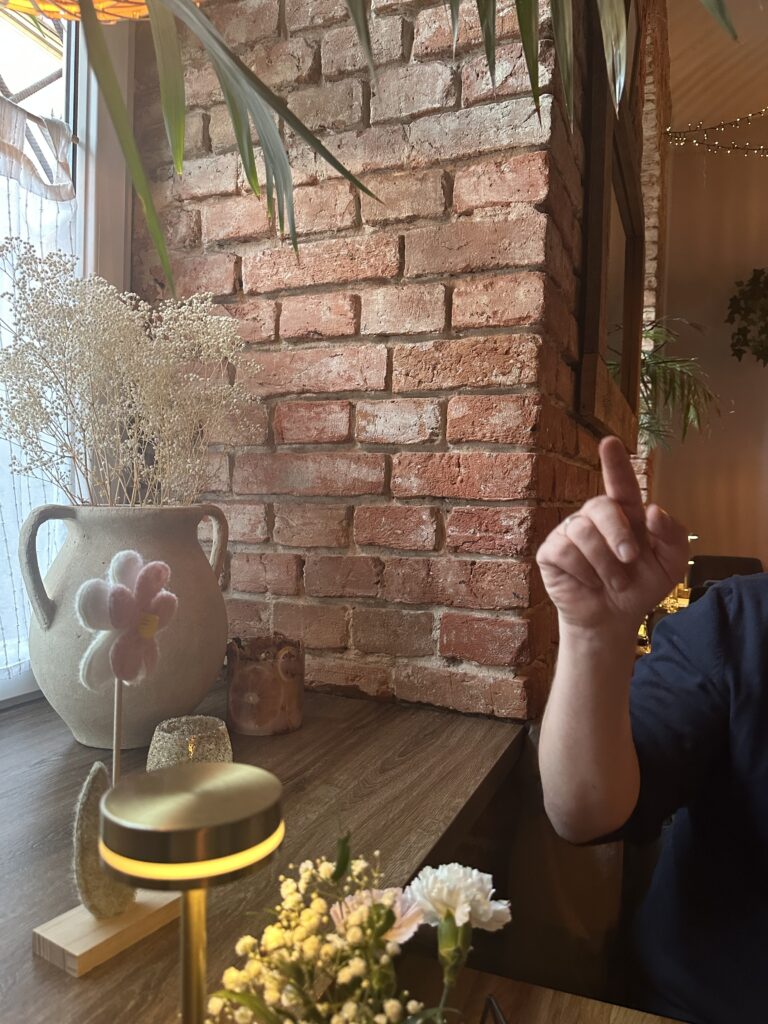
We later changed locations, walking a few blocks to another restaurant. Passing Żeromskiego as we did so, we paused, looking at the local pedestrian activity and patrons filling tables at local restaurants. We talked about how later this evening, this area would be pulsing with activity- particularly local youth.
At the next location, again a historic interior with gorgeous old red brick, we talked about urban transformation and about how much of this transformation is psychological as well.
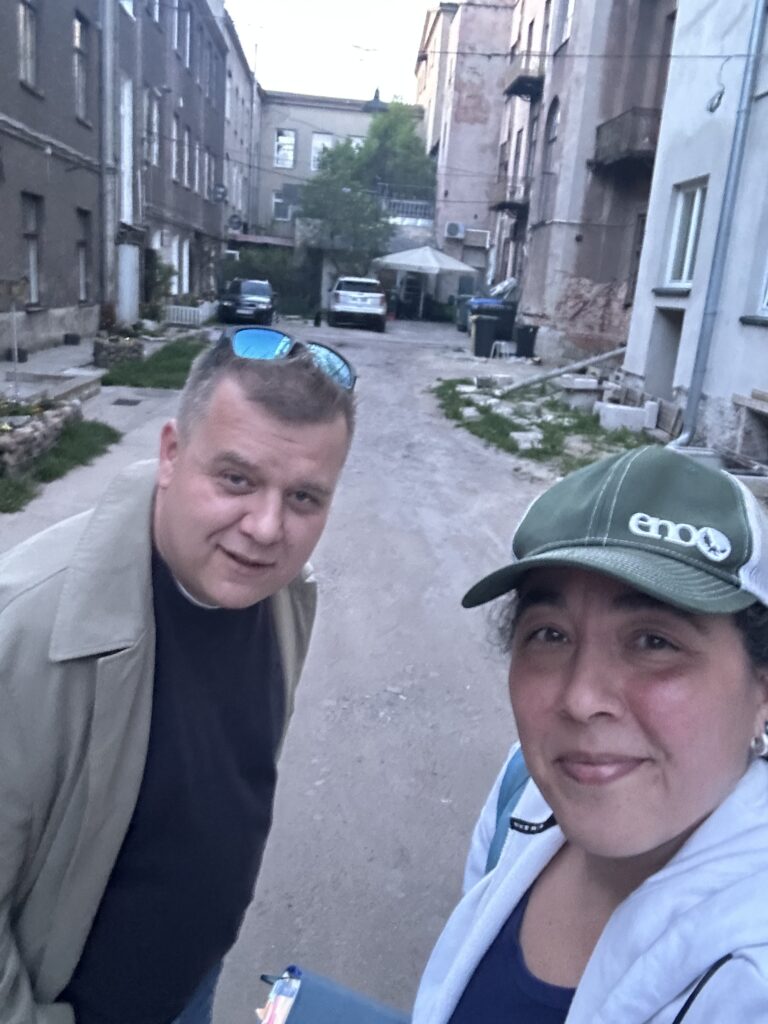
He then showed me a courtyard nearby- like ‘from another time’ – where the textures & building forms of different eras could be seen and the potential for transformed quality urban space is so abundantly clear.
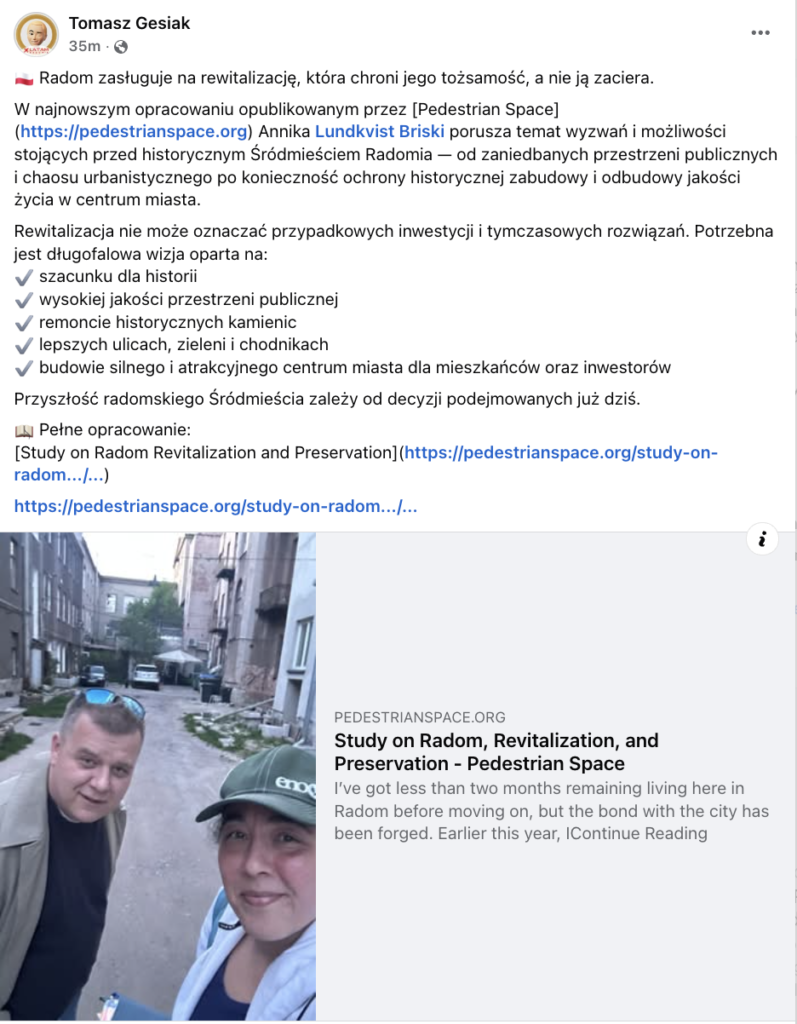
Original Text:  Radom zasługuje na rewitalizację, która chroni jego tożsamość, a nie ją zaciera.W najnowszym opracowaniu opublikowanym przez [Pedestrian Space](https://pedestrianspace.org) Annika Lundkvist porusza temat wyzwań i możliwości stojących przed historycznym Śródmieściem Radomia — od zaniedbanych przestrzeni publicznych i chaosu urbanistycznego po konieczność ochrony historycznej zabudowy i odbudowy jakości życia w centrum miasta.Rewitalizacja nie może oznaczać przypadkowych inwestycji i tymczasowych rozwiązań. Potrzebna jest długofalowa wizja oparta na:
  szacunku dla historii wysokiej jakości przestrzeni publicznej remoncie historycznych kamienic lepszych ulicach, zieleni i chodnikach budowie silnego i atrakcyjnego centrum miasta dla mieszkańców oraz inwestorów. Przyszłość radomskiego Śródmieścia zależy od decyzji podejmowanych już dziś.
  Pełne opracowanie:[Study on Radom Revitalization and Preservation](https://pedestrianspace.org/study-on-radom…/…)
???????? Radom deserves revitalization that protects its identity, not erases it. In the latest study published by [Pedestrian Space](https://pedestrianspace.org), Annika Lundkvist discusses the challenges and opportunities facing Radom’s historic city center—from neglected public spaces and urban chaos to the need to protect historic buildings and rebuild the quality of life in the city center. Revitalization cannot mean haphazard investments and temporary solutions. A long-term vision is needed based on: ✔️ respect for history ✔️ high-quality public space ✔️ renovation of historic tenement houses ✔️ improved streets, green spaces, and sidewalks ✔️ building a strong and attractive city center for residents and investors. The future of Radom’s city center depends on decisions made today. ???? Full study: [Study on Radom Revitalization and Preservation](https://pedestrianspace.org/study-on-radom…/…)
*Check out media by Radom NaszeMiasto.pl on this very topic (May 15, 2026) on FB here and their website here
The interviews continued with a meeting with Karina, co-founder and co-owner of local restaurant MOKU ramen.
Many months ago, when I walked into the ramen restaurant that Karina founded and co-owns with her boyfriend, we ended up chatting at length. I not only enjoyed the atmosphere and food but also loved the way Karina spoke about her home city of Radom.
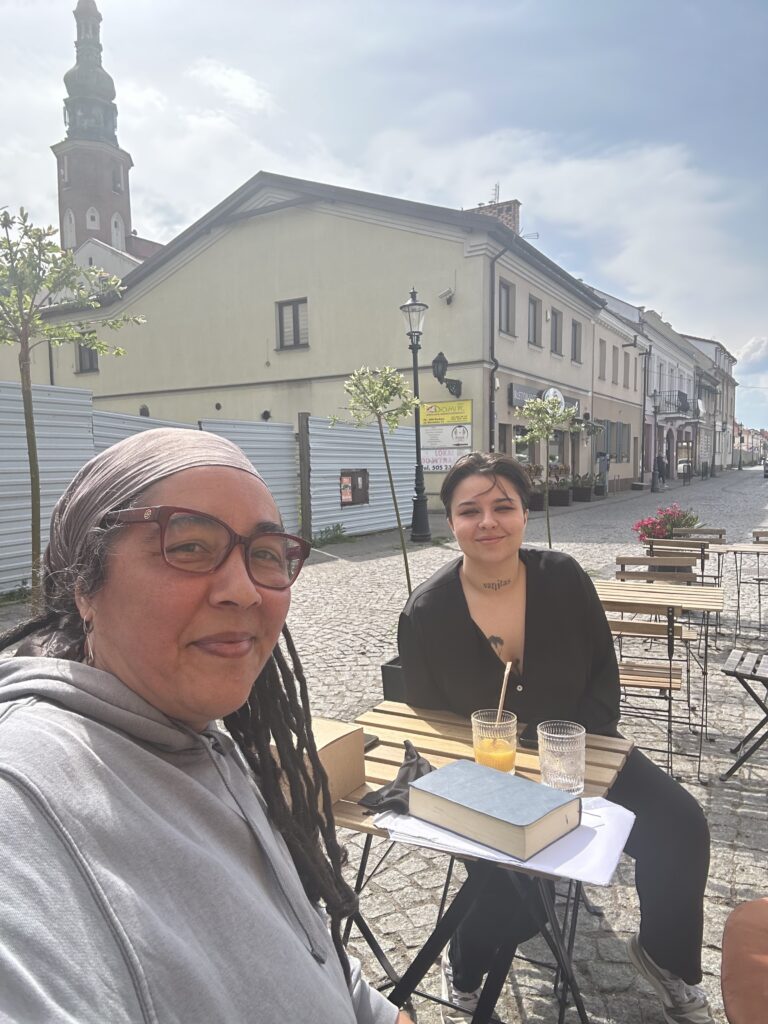
Yesterday we sat down outside of Radomskie Cafe to talk about the history of Moku and more specifically its built heritage and aspects of revitalization and preservation in this historic neighborhood.
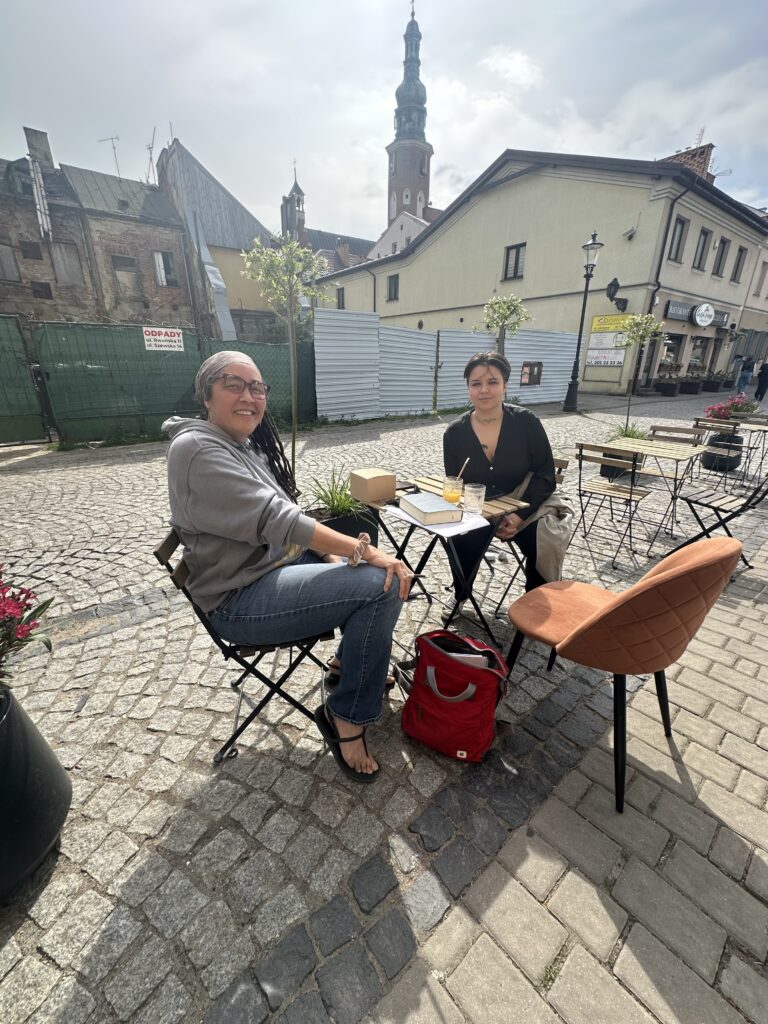
As I prepare to move to northwest Poland next month, these opportunities for in-person interviews are so crucial.
As I reflected on having some sadness about leaving, Karina noted that “You can leave the city, but the city will never leave you.” Thank you to Karina and Tomasz both for your time and insight.
These interviews were fascinating and a very welcoming start to the journey of this study. I look forward to more.
View more of my notes and thoughts on Radom, revitalization, historic preservation, and more here.