By Yuliia Polozova
What if a roundabout could be more than just a roundabout?
When discussing infrastructure, the conversation is often focused on the road and its efficiency. More often than not, the spaces between the carriageways are simply traffic islands marked by horizontal signs or small patches of lawn. Such unused spaces are usually left empty, but in some cases, they also contribute to illegal parking or even speeding issues. A widespread reason for the existence of such traffic islands is that vehicles move quickly, and these spaces should maximise visibility, predictability, and traffic flow to reduce the risk of collisions.
But what if we viewed urban infrastructure not only as transport corridors, but also as public spaces where movement is just one of many possible activities? A few street junctions in Szczecin, a city in Poland, challenge traditional urban design beliefs and demonstrate multiple different uses of street space.
Concord Square
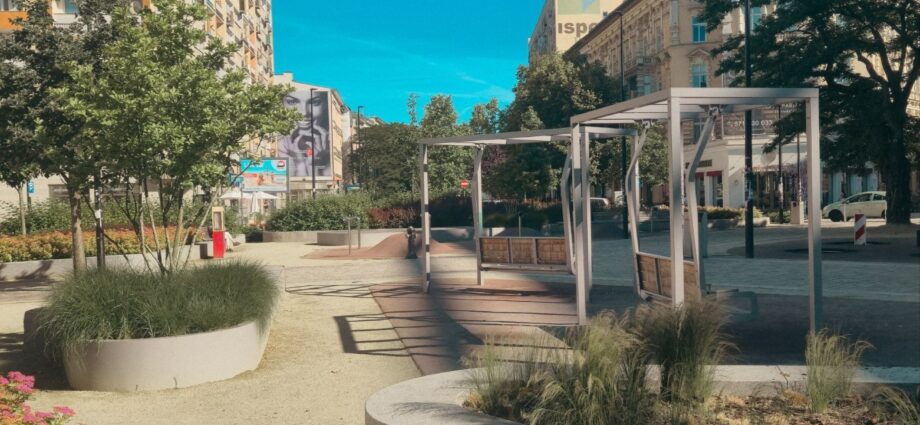
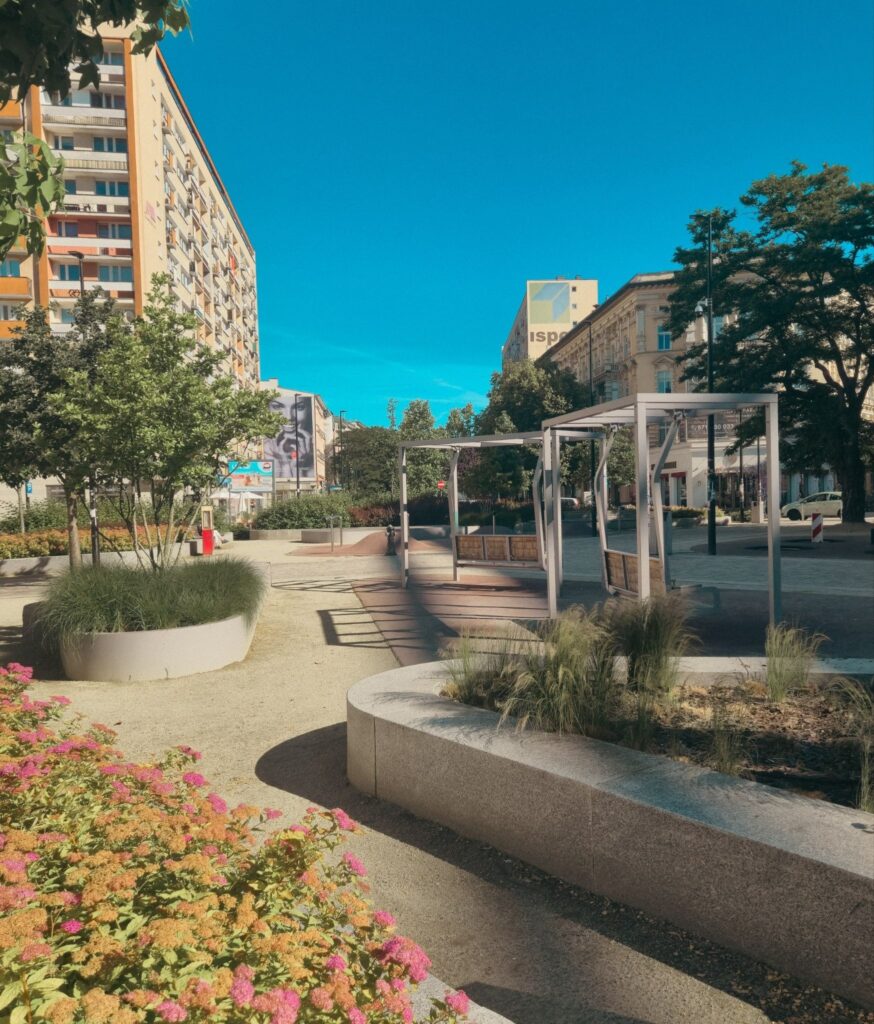
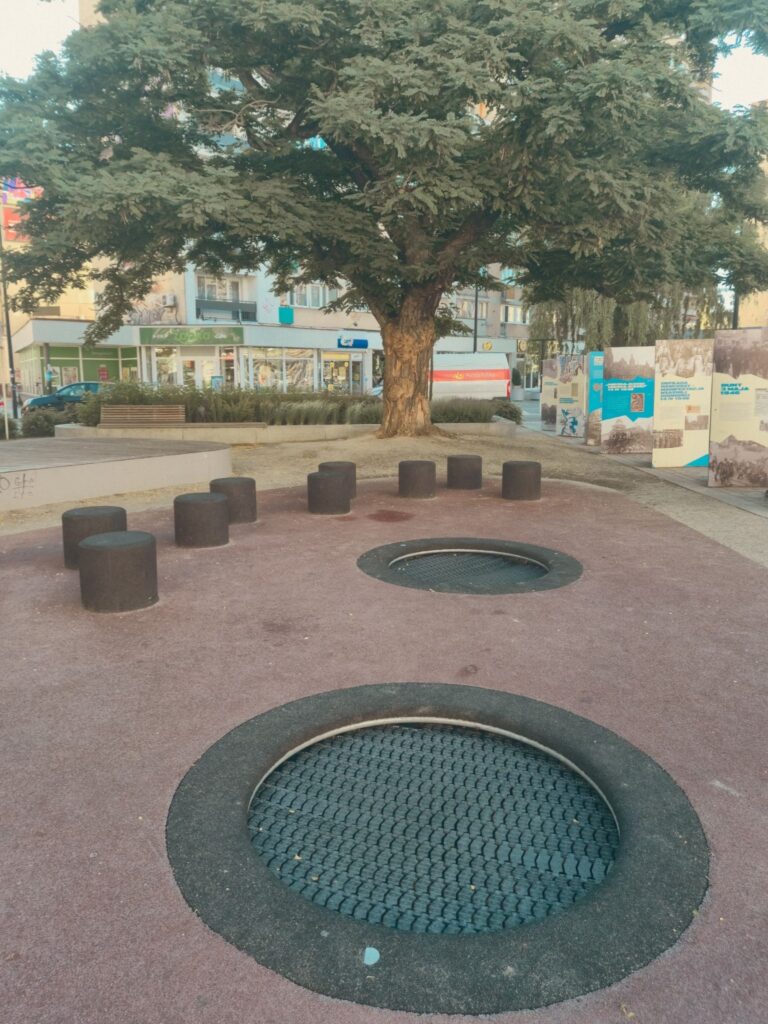
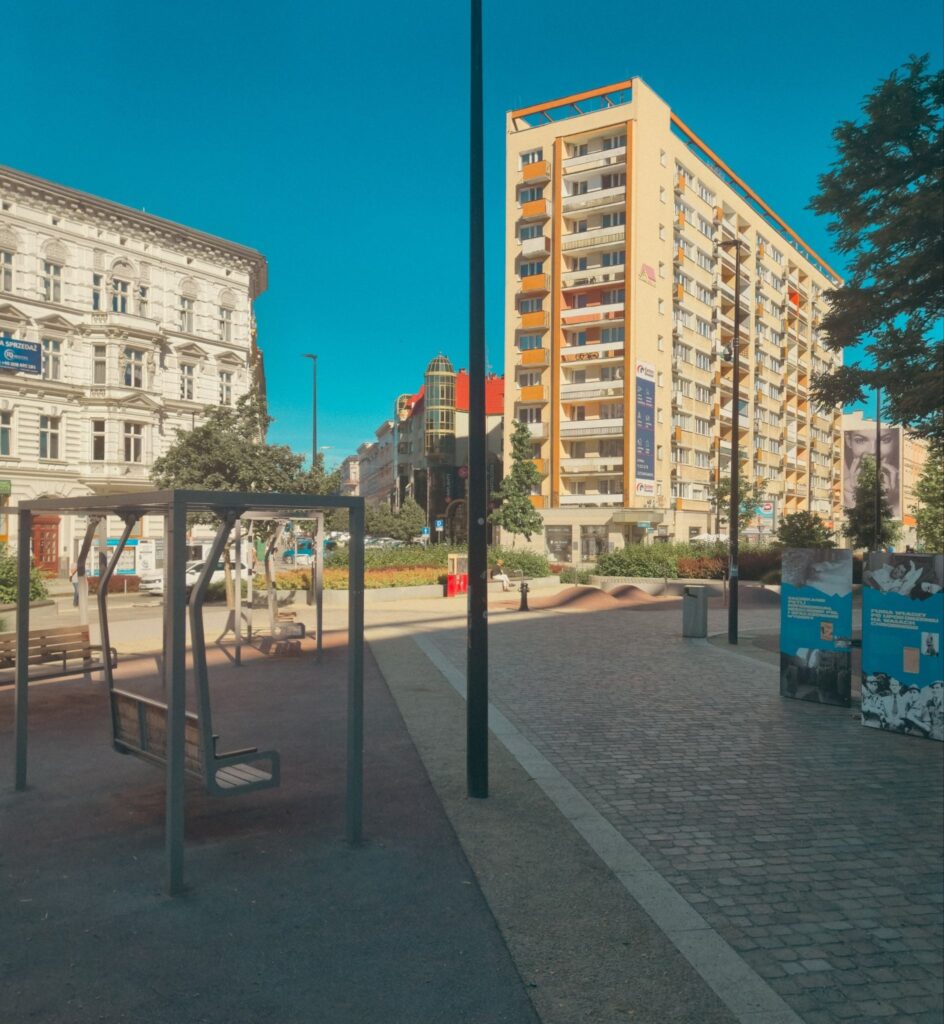
Concord Square, or Plac Zgody, was once a complex street junction with traffic passing through its centre and two inaccessible semi-circular patches of greenery. Today, the same space gives equal importance to people and movement. The two semi-circles have been connected and transformed into a public square with seating, shade, trampolines, and other playful installations. All while the complex intersection was reduced to a conventional roundabout.
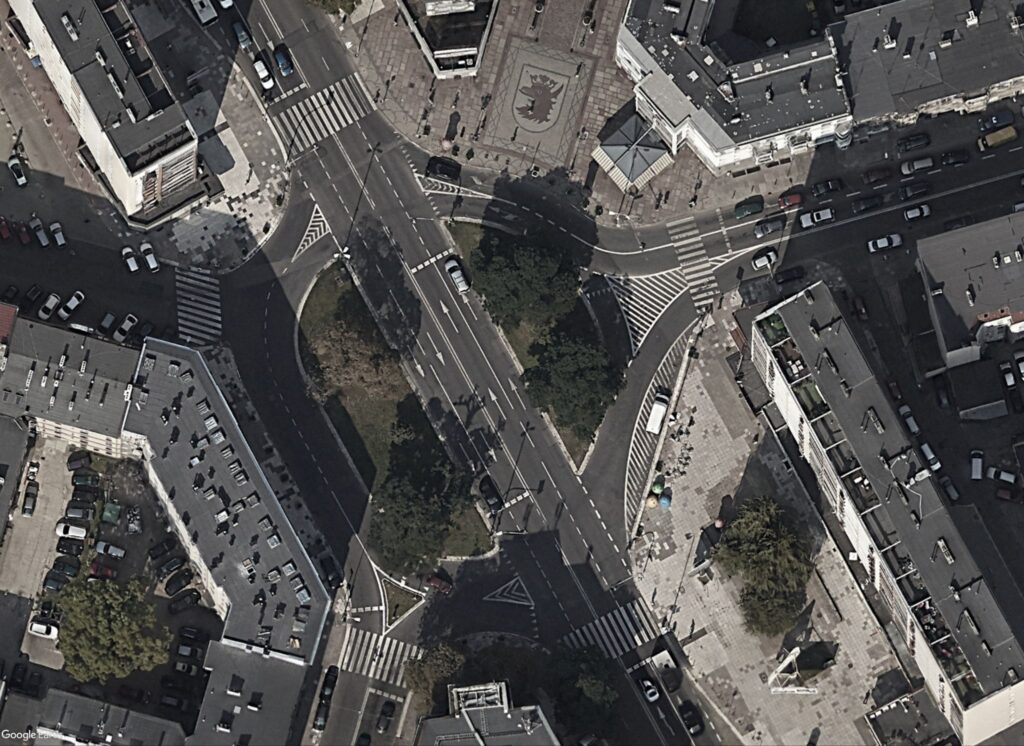
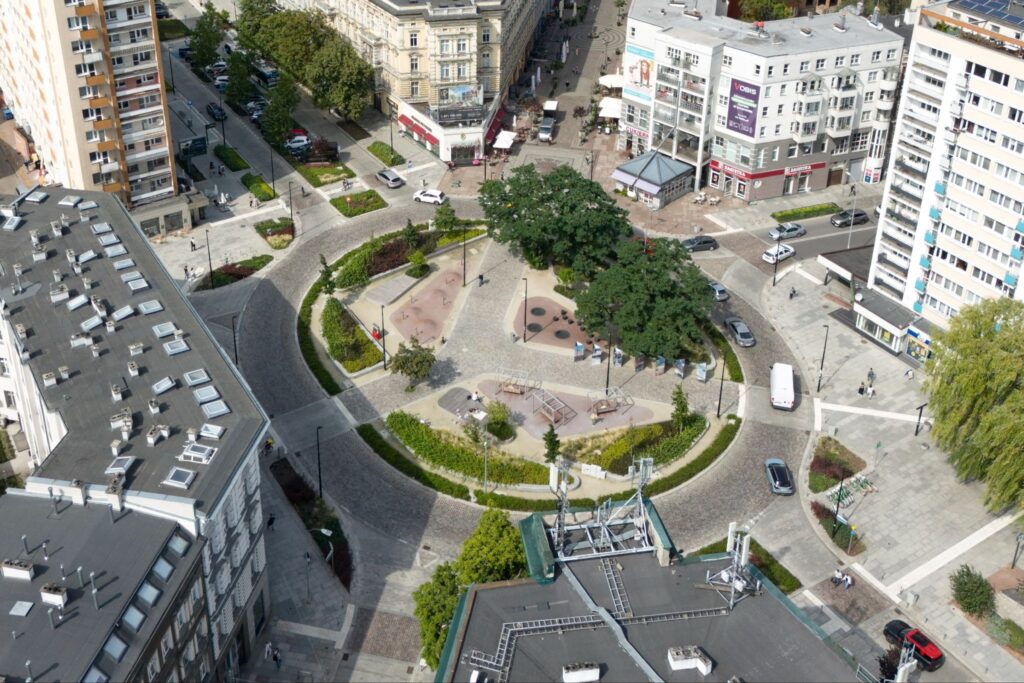
What makes this transformation particularly compelling is the shift in priorities it represents. Playgrounds and recreational spaces are often fenced off and separated from streets. Concord Square turns this urban tradition on its head. Rather than removing people from traffic, it brings them into the heart of the streetscape. In doing so, it aims to change the relationship between drivers and their surroundings, encouraging greater awareness of human activity while signaling to pedestrians that lingering, socialising, and play are welcome, and they, too, are a natural part of streets.
Zamenhof Square
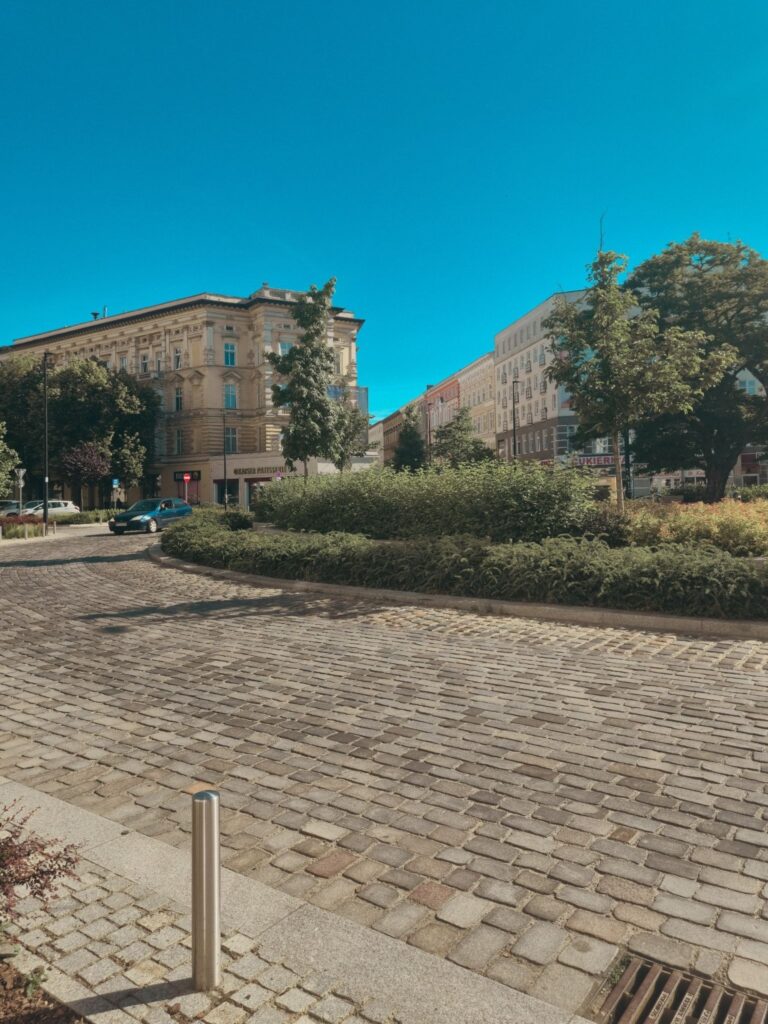
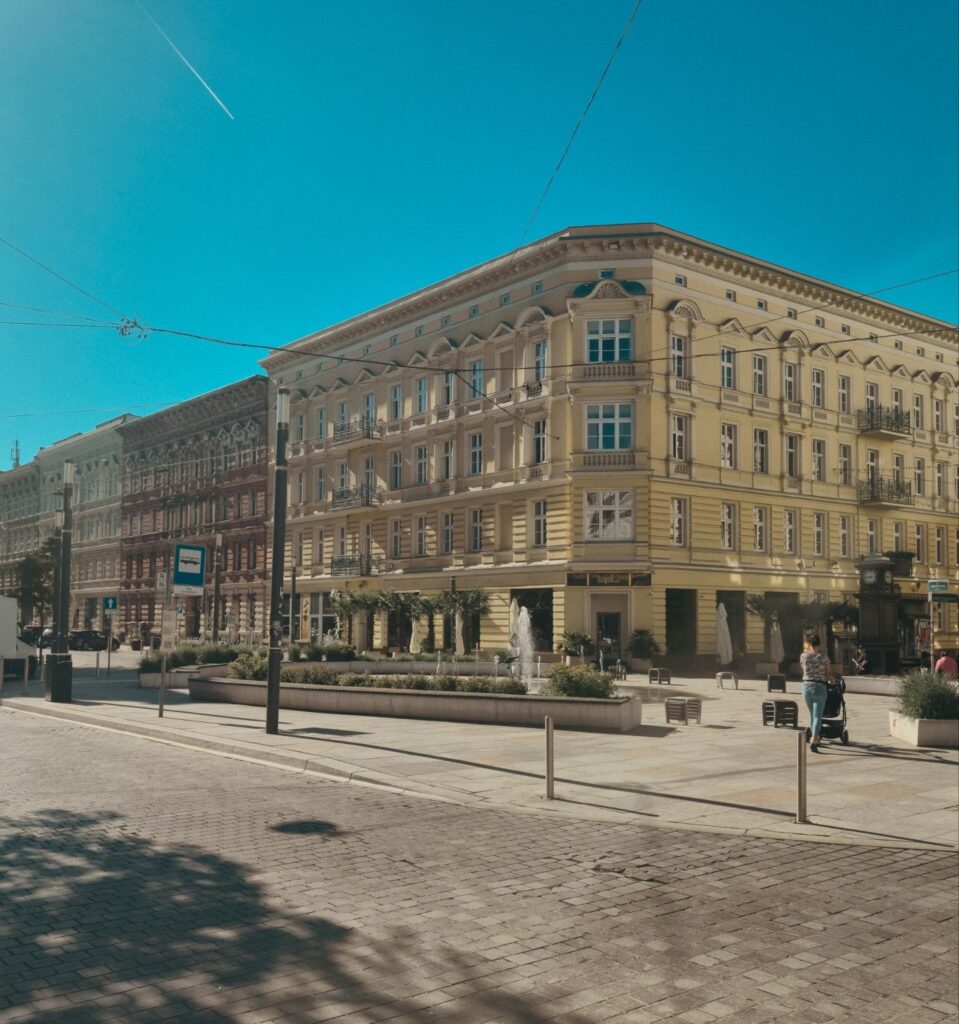
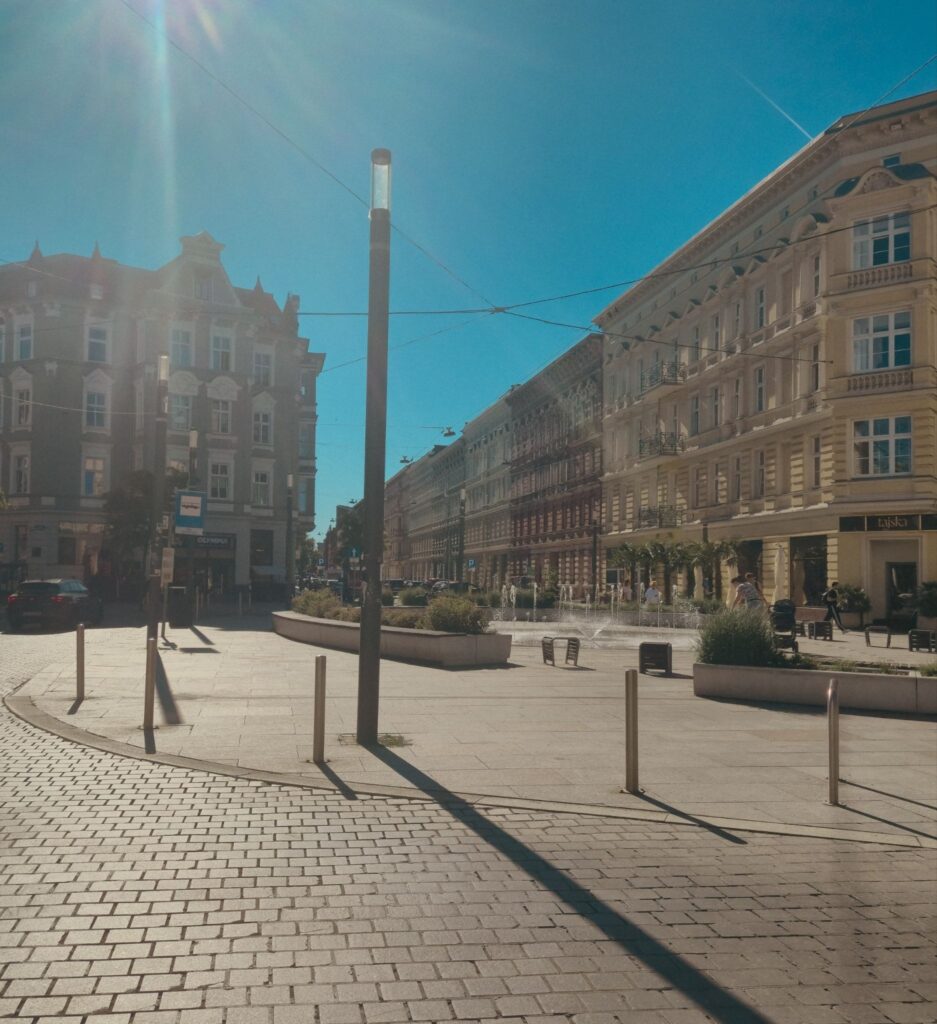
Zamenhof Square further demonstrates how infrastructure can evolve beyond its purely functional purpose. Once a complicated roundabout dedicated solely to organising vehicle movement, it has been reimagined as a public space that seamlessly connects the city centre streets. Today, the roundabout has given way to a curved intersection with reduced traffic dominance. Much of the former carriageway is now occupied by a fountain, seating, and greenery, turning what was once a transit junction into a destination on its own right.
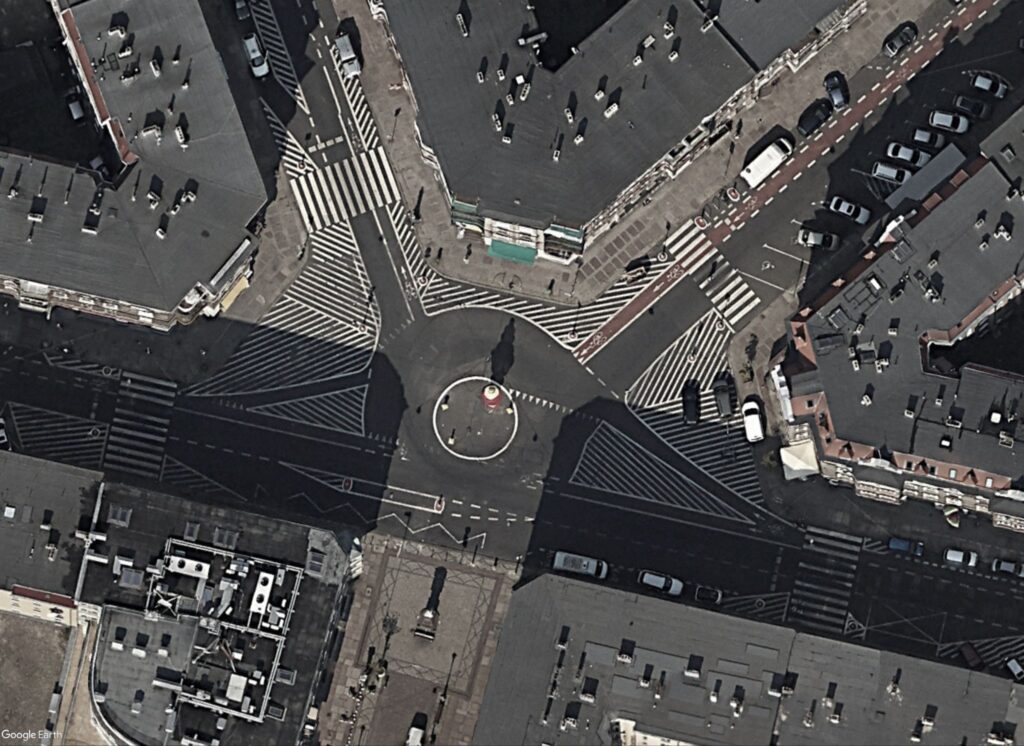
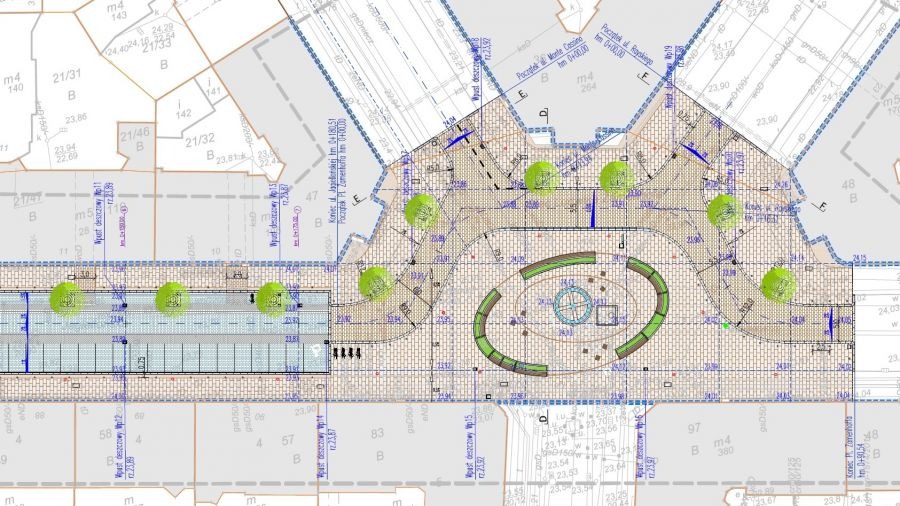
Like Concord Square, the redesign encourages people to engage with every part of the street, giving greater priority to pedestrian movement and presence. Every design choice reinforces the idea that this is a place designed for people, where vehicles pass through respectfully rather than define the space. A prominent example of that on Zamenhof Square is the disappearance of well-defined zebra crossings while narrowing the carriageway and stylistically matching the surface to the sidewalks. That way, the space reads as primarily pedestrian and invites people to move more freely.
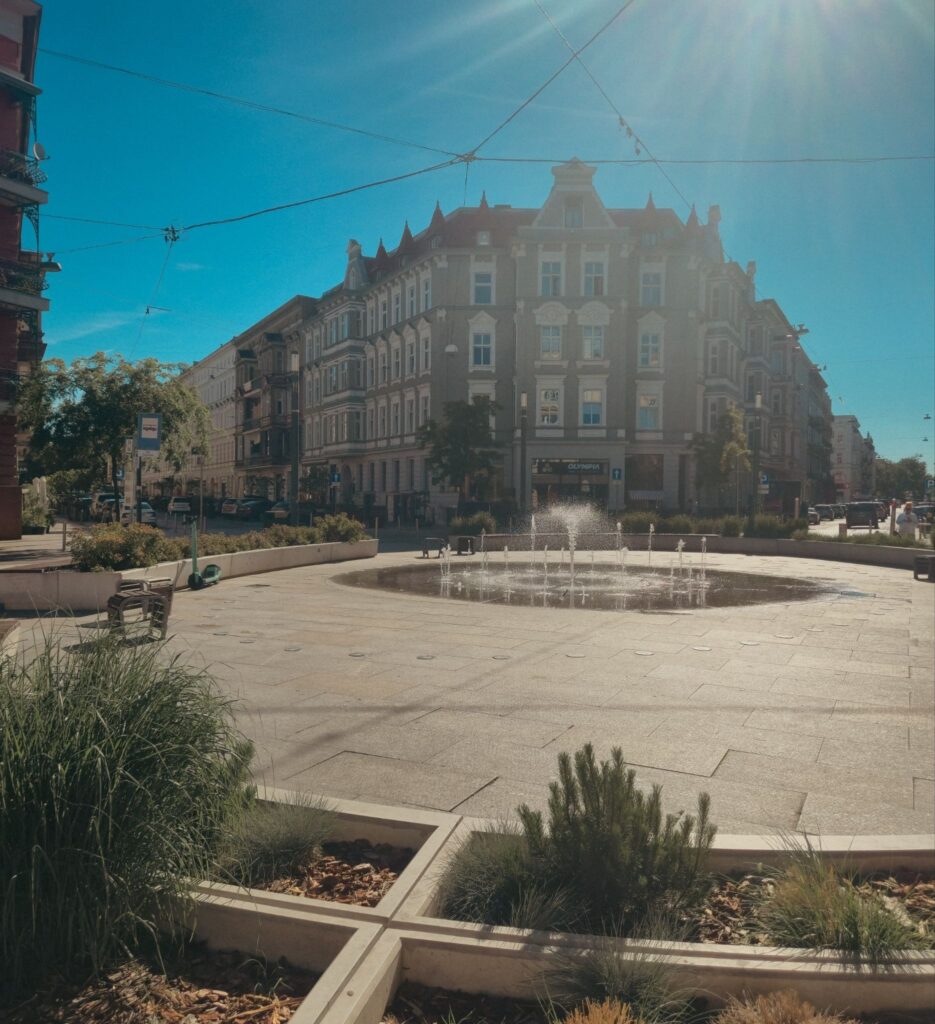
Streets are among the largest public spaces cities have, yet we rarely think of them that way. Szczecin’s intersections remind us that the spaces between the roads are neither empty nor untouchable, instead they are full of possibilities. Perhaps not every intersection requires a trampoline or a fountain, but each could embrace all of the street’s users in its own way.
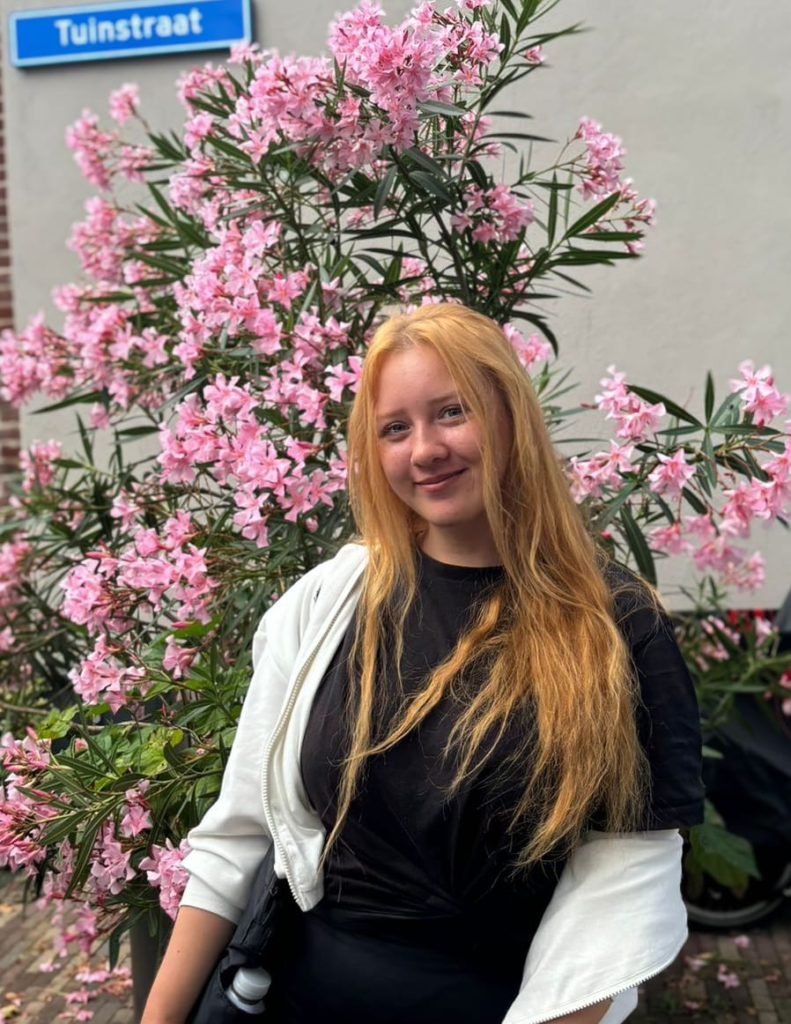
Yuliia is a master’s student within the EIT Urban Mobility Master School program, pursuing her internship with Pedestrian Space in Spring and Summer 2026. Having lived in several different countries, she has developed a growing curiosity about how public space is experienced and understood across different local contexts. Her internship at Pedestrian Space focuses on observing the ways in which people interact with public space during daily life and how storytelling influences the way urban innovations are perceived and discussed.
Yuliia’s current thesis work is focused on understanding the communication of urban changes in Poland as they unfold and the ways in which those contribute to the broader conversation around urban mobility in Europe.
Read more about Yuliia’s work during her Pedestrian Space internship here: https://pedestrianspace.org/tag/yuliia-polozova/
Read more on Pedestrian Space academic placements and internships here